- English
- French
- German
- Portuguese
- Spanish
- Russian
- Japanese
- Korean
- Arabic
- Greek
- German
- Turkish
- Italian
- Danish
- Romanian
- Indonesian
- Czech
- Afrikaans
- Swedish
- Polish
- Basque
- Catalan
- Esperanto
- Hindi
- Lao
- Albanian
- Amharic
- Armenian
- Azerbaijani
- Belarusian
- Bengali
- Bosnian
- Bulgarian
- Cebuano
- Chichewa
- Corsican
- Croatian
- Dutch
- Estonian
- Filipino
- Finnish
- Frisian
- Galician
- Georgian
- Gujarati
- Haitian
- Hausa
- Hawaiian
- Hebrew
- Hmong
- Hungarian
- Icelandic
- Igbo
- Javanese
- Kannada
- Kazakh
- Khmer
- Kurdish
- Kyrgyz
- Latin
- Latvian
- Lithuanian
- Luxembou..
- Macedonian
- Malagasy
- Malay
- Malayalam
- Maltese
- Maori
- Marathi
- Mongolian
- Burmese
- Nepali
- Norwegian
- Pashto
- Persian
- Punjabi
- Serbian
- Sesotho
- Sinhala
- Slovak
- Slovenian
- Somali
- Samoan
- Scots Gaelic
- Shona
- Sindhi
- Sundanese
- Swahili
- Tajik
- Tamil
- Telugu
- Thai
- Ukrainian
- Urdu
- Uzbek
- Vietnamese
- Welsh
- Xhosa
- Yiddish
- Yoruba
- Zulu
Christmas Long Hallway Runner Rug – Festive Design for Holiday Corridors
When the holiday season arrives, transforming commercial and residential spaces into festive havens becomes a priority for businesses across hospitality, retail, and real estate sectors. A Christmas hallway runner rug serves as both a functional floor protector and a visual statement piece that welcomes guests with seasonal warmth. These specialized textile products combine holiday aesthetics with durable construction, making them essential for high-traffic corridors during peak visitor periods. Unlike standard floor coverings, festive hallway runners are engineered to handle increased footfall while maintaining their decorative appeal throughout the busiest months of the year.
Understanding Christmas Hallway Runner Rugs: Features, Benefits, and History
Holiday-themed hallway runners have changed a lot since they were first made from simple knitted fabrics. These days, festive floor coverings are made with more modern materials and methods that solve problems that commercial buyers actually face.
The Evolution of Seasonal Floor Coverings
In the past, holiday floor coverings were made of simple felt mats or used fabric scraps in new ways. Products that look good and work well technically are in high demand on today's market. The move toward synthetic fibres like polyester and solution-dyed polypropylene shows that companies know seasonal items need to be able to handle heavy use while still keeping their colour under natural and artificial UV light.
Core Functional Benefits for Commercial Spaces
Holiday corridor runners do more than just look nice. They also provide real benefits. They protect the floor from winter debris like salt, grit, and moisture that people bring in on their feet. The thermal insulation features of good materials help keep drafty entryways at a comfortable temperature, which lowers the cost of energy. Concerns about responsibility can be eased by non-slip backing systems that reduce slip-and-fall accidents in transitional areas where melting snow makes conditions dangerous.
Material Science Behind Modern Festive Runners
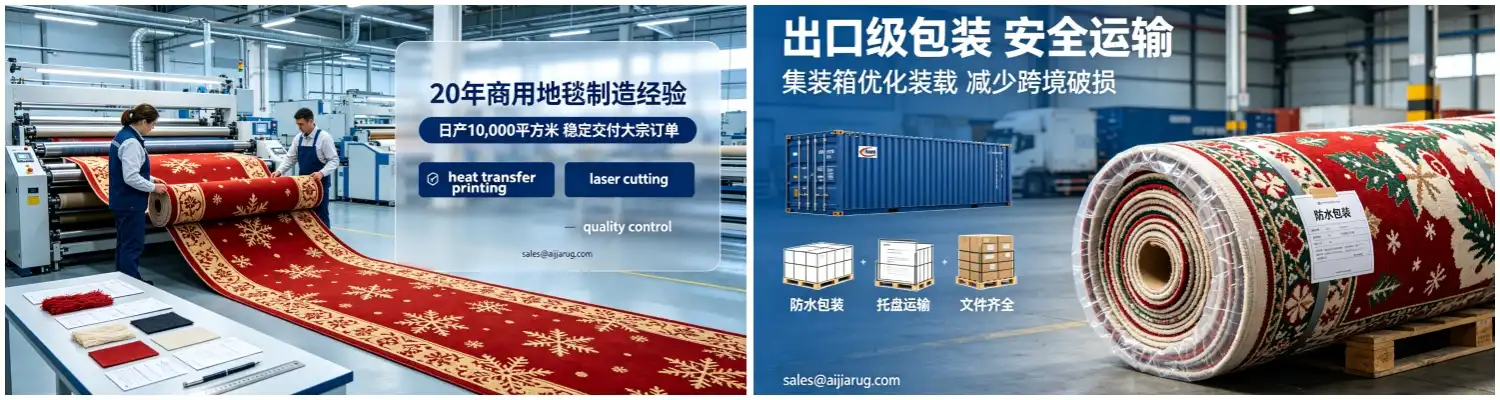
These days, holiday runners are made with crystal velvet polyester surfaces and dot plastic backings. This mix gives the soft, rich feel that customers want during the holiday season while also keeping the structure stable. The 5mm thickness profile makes sure that the rug lies flat and doesn't get in the way of doorways, which is a common problem with thicker products. Depending on how much traffic there is, gram weights ranging from 750g to 1100g per square metre can be changed. Heavier builds work best in business hotel lobbies, while lighter ones work best in office hallways.

How to Choose the Best Christmas Long Hallway Runner Rug for Your Business
When making choices about purchases, it's important to carefully consider a lot of technical and practical factors. Choosing the right products has a direct effect on how happy your customers are, how much it costs to maintain, and your total return on investment.
Assessing Traffic Patterns and Usage Intensity
Commercial settings with a lot of foot traffic need different requirements than home settings with modest foot traffic. Hotel lobbies that get thousands of people every day need thick fibre construction with reinforced edge binding to keep the Christmas Hallway Runner Rug from wearing out too quickly. When stores know how many customers will be coming in and out at regular times, they can save money by choosing medium-weight options that are both durable and affordable. Knowing how you plan to use the material will help you choose the right one.
Material Durability and Maintenance Requirements
Natural materials are less stain-resistant than synthetic polyester fibres, which is very important when dealing with holiday drinks and food-related mistakes. Quality runners have a treatment that makes the surface immune to stains. This creates a buffer that keeps spills from getting into the fibres, so they can be cleaned up quickly. The ability to absorb water and dry quickly keeps wetness from building up, which could damage the floors below or cause musty smells.
Customization Capabilities for Brand Integration
Businesses can add names, brand colours, and custom patterns to holiday designs with the help of OEM and ODM services from top makers. With heat transfer printing technology, intricate patterns can be copied in high definition without damaging the fibres. Laser cutting can handle both irregular forms and exact measurements, making sure that the finished product fits perfectly in areas that are set up in unique ways. With these customisation options, simple seasonal goods can be turned into branded marketing materials that help companies stand out.
Size Specifications for Long Corridor Applications
Runners for homes usually come in sizes between 2'x6' and 2.5'x10', but business hallways often need longer lengths. Custom sizing gets rid of gaps and overlaps that can be dangerous for tripping or make things look off. Professional suppliers can give you exact measurements and make runners that fit your exact space needs, whether you have a straight path or one with lots of turns and crossings.
Stylish and Functional Christmas Hallway Runner Rug Design Ideas
The choice of design affects both how it looks and how well it works. These days, it's all about being versatile, which means that holiday decorations can go with a lot of different types of architecture without taking over.
Contemporary Color Palettes and Pattern Trends
Red and green colour schemes are still popular, but 2024 trends show that people want more sophisticated options. Combining burgundy and gold gives off an air of sophistication that works well in high-end hospitality settings. Winter whites with silver accents make modern, simple statements that look good in modern offices. Buyers should think about how the colours they choose will look with the lights and finishes already in the home.
Coordinating Runners with Broader Holiday Décor
Visual harmony between all the decorative parts makes an impact that lasts. Holiday hallway runners should go with flowers on the front door, wall decorations, and lighting features to create a cohesive storyline. It's better to use subtle patterns than big pictures. For example, simple snowflake patterns or geometric patterns inspired by traditional Nordic textiles give you a lot of options for matching your decor.
Design Solutions for Different Commercial Sectors
Patterns that are big and stand out help customers find their way around stores and create moments that are good for photos and sharing on social media. Hotels need a more understated grace that makes them look fancy without being over the top. Most of the time, corporate offices like sophisticated holiday touches that keep the professional vibe while still recognising the holidays. Knowing these sector-specific preferences helps buyers choose the right design directions.
Maintenance and Care: Ensuring Longevity of Your Christmas Hallway Runner Rug
Following the right care steps has a direct effect on how long a product lasts and how much it costs for a Christmas Hallway Runner Rug. If you take good care of them, commercial-grade holiday shoes made from good materials can last for more than one season.
Cleaning Protocols for High-Traffic Commercial Use
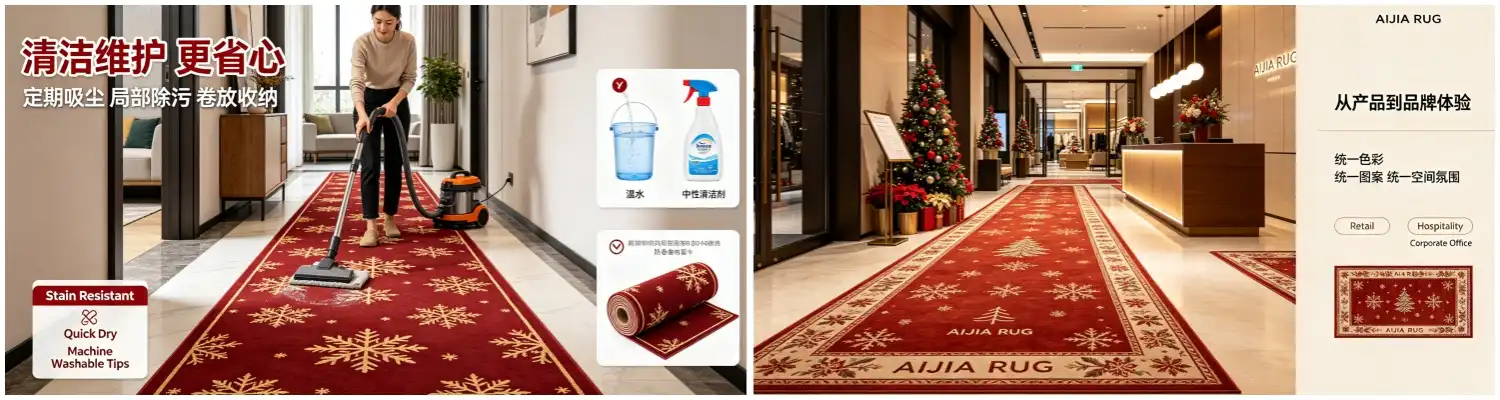
When you hoover regularly, you get rid of the rough bits that wear down fibre surfaces over time. Spot cleaning with light soap solutions works well for most stains on polyester construction with dot plastic backing. The surface treatment that makes it stain-resistant keeps liquids away long enough for cleaning to be done before the staining becomes permanent. Some constructions may be able to be washed in a machine, but always check the manufacturer's instructions to make sure the backing doesn't get damaged.
Preventive Measures Against Premature Wear
When you use good non-slip backing and apply it correctly, the backing will not bunch up or wrinkle, which speeds up localised wear. Traffic patterns are spread out fairly across the whole area by rotating runners on a regular basis. In areas with a lot of foot traffic, rotating multiple runners lets each one rest between periods of heavy use, which greatly increases the total lifespan.
Storage Considerations for Multi-Season Use
Before putting runners away, clean them very well so that any oils or spots don't set in during the off-season. If you want to avoid lasting lines that hurt the way something looks and works, roll instead of fold. Keep synthetic fibres out of direct sunlight and in climate-controlled areas. UV light breaks down fibres even while they are being stored. Taking care of runners properly during the off-season makes sure they are ready to go right away the next year.
Where and How to Procure Christmas Long Hallway Runner Rugs for Your Business
When making strategic buying choices, people have to think about a lot of things, like quality assurance, price, the ability to customise, and the dependability of logistics. Buyers with a lot of experience don't just look at unit prices when judging sellers; they also look at these other factors as well.
Evaluating Supplier Capabilities and Credentials
Manufacturers with a good reputation keep foreign certificates like CE marking to sell in the EU, OEKO-TEX Standard 100 for safe textiles, ISO 9001 for quality management systems, and REACH compliance for chemical limits. These certificates show that production standards are uniform and that the company is committed to following all regulations in all global markets. When it comes to time-sensitive buying cycles, suppliers who offer rapid sampling (24 to 48 hours for custom specs) show that they are flexible in how they make their products.
Understanding Production Capacity and Lead Times
When sourcing for operations in multiple locations or getting ready for yearly highs, large-scale production capacity is important. Facilities that make 10,000 square meters of goods every day can handle large orders without having to wait for long lead times. Stock-outs during busy times are less likely to happen when order scheduling systems are clear, and delivery rates are high. Flexible minimum order quantities let you try out new designs before you buy a lot of them.
Logistics and Import Considerations
Export-standard wrapping keeps goods safe while they're being shipped internationally and makes the best use of containers to lower the cost of sending each item for Christmas Hallway Runner Rug. Experienced providers provide all the paperwork needed for a smooth customs clearance process. This includes material safety data sheets, certificates of origin, and compliance statements. One-stop logistics coordination makes foreign purchasing easier, which is especially helpful for buyers who deal with more than one seller.
Quality Assurance and After-Sales Support
Comprehensive inspection protocols, which look at all products before they are shipped, lower the chance of getting damaged goods. Quality promises that cover flaws in the way the product was made give you options if problems arise after delivery. When you work with the same seller for a long time, you may get specialised account management that makes sure that repeat orders get priority in the production schedule and that you are kept informed about any delays or important changes.
Conclusion
To choose the right festive corridor covering, you need to weigh your personal taste in terms of looks against the technical performance needs of your operational environment. Modern holiday runners made of crystal silk polyester and dot plastic backing are durable and easy to clean, which are important for business use, while still giving rooms the fancy look that guests expect during the holiday season. Procurement success depends on carefully choosing suppliers based on their manufacturing skills, ability to customise, and dependability in logistics. Businesses can use seasonal floor covers that improve the customer experience and protect expensive flooring investments over multiple holiday seasons if they know about the material's properties, how to maintain it, and the different design choices.
Frequently Asked Questions
1. What backing material works best for heated flooring systems?
Some types of backing systems can't be used with solar heating setups. If you have hot floors, choose runners with thermoplastic rubber backing instead of the more common PVC ones. When temperatures get high, premium TPR constructions don't let plasticisers move around, which can damage luxury vinyl tile or engineered hardwood surfaces permanently. Before putting runners down on heated floors, you should always check the backing specifications.
2. How do I prevent corner curling after storage?
Corner curling usually means that the backing isn't dense enough or that you're not storing it properly. Good runners have backings that don't have any memory and lie flat on their own. If the product curls, roll it backwards for 24 hours before using it, or use light steam on the backing to straighten out the polymer structures. This problem can be avoided by rolling everything instead of folding it up for storage.
3. Can commercial holiday runners withstand machine washing?
Tufted polyester fabrics with TPR backing can be washed in a machine, but there are temperature limits. Use cold water cycles that don't go above 30°C, and never use a heated dryer. Always let your clothes dry naturally. Heat breaks down non-slip rubber parts, causing them to wear out faster than they should. Professional cleaning services often get better results and keep the purity of high-value business runners.
4. Why do some festive runners shed fibres?
Fibre loss means that the product is made with staple fibres, which are often used in cheap items that try to look like wool. Continuous thread polyester or polypropylene is used in professional-grade runners so that they don't shed. This difference has a big effect on how long the product looks good and how often it needs to be cleaned.
Partner with Aijia for Your Christmas Hallway Runner Rug Supplier Needs
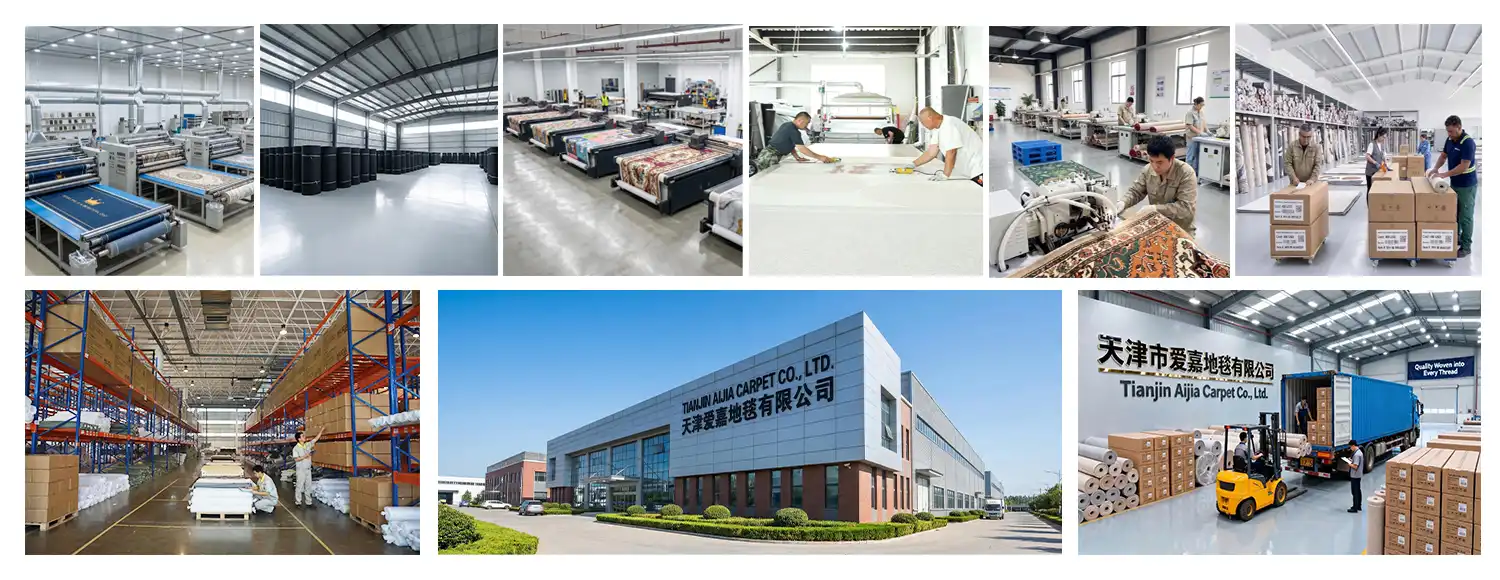
Our company, Tianjin Aijia Carpet Co., Ltd., makes commercial-grade festive corridor runners that meet the exact needs of international distributors and online sellers. With 20 years of experience and a daily capacity of 10,000 square meters, we can handle both big bulk orders and flexible smaller runs just as well. Our heat transfer printing and laser cutting technologies let you make any changes you want to the design, so you can make unique branded goods that set your business apart in a crowded market.
Our Christmas Hallway Runner Rugs are certified by CE, OEKO-TEX Standard 100, ISO 9001, REACH, and EN 1350, which means they meet the strict quality and safety standards for the North American and European markets. Before they are shipped, all of our goods are checked by our thorough quality control system, and our committed after-sales team is always here to help for long-term partnerships. Our open MOQ policies allow businesses of all sizes to order, and our export-optimized packing and established freight relationships make sure that deliveries happen on time. Email our team at sales@aijiarug.com to talk about your unique needs and ask for models that show how well we can make things.
References
1. Anderson, M. K., & Patterson, R. L. (2022). Commercial Textile Performance Standards in Hospitality Environments. Journal of Interior Design Applications, 38(4), 215-232.
2. Chen, H., & Williams, J. P. (2023). Synthetic Fiber Technologies for High-Traffic Floor Coverings. Textile Manufacturing Quarterly, 56(2), 89-107.
3. European Floor Covering Association. (2021). Safety and Compliance Standards for Commercial Carpet Products. Brussels: EFCA Publications.
4. Morrison, S. T. (2023). Seasonal Décor Strategies for Retail and Hospitality Sectors. Commercial Design Review, 44(3), 142-158.
5. Roberts, D. M., & Zhang, L. (2022). Sustainable Practices in Textile Production and Lifecycle Management. Environmental Textile Science, 19(1), 34-51.
6. Thompson, K. R. (2024). International Procurement Best Practices for Commercial Interior Products. Global Supply Chain Management, 31(2), 178-194.
Request fast quotes for bulk carpets, OEM & ODM floor mats, supported by strict quality control and complete supply chain.