- English
- French
- German
- Portuguese
- Spanish
- Russian
- Japanese
- Korean
- Arabic
- Greek
- German
- Turkish
- Italian
- Danish
- Romanian
- Indonesian
- Czech
- Afrikaans
- Swedish
- Polish
- Basque
- Catalan
- Esperanto
- Hindi
- Lao
- Albanian
- Amharic
- Armenian
- Azerbaijani
- Belarusian
- Bengali
- Bosnian
- Bulgarian
- Cebuano
- Chichewa
- Corsican
- Croatian
- Dutch
- Estonian
- Filipino
- Finnish
- Frisian
- Galician
- Georgian
- Gujarati
- Haitian
- Hausa
- Hawaiian
- Hebrew
- Hmong
- Hungarian
- Icelandic
- Igbo
- Javanese
- Kannada
- Kazakh
- Khmer
- Kurdish
- Kyrgyz
- Latin
- Latvian
- Lithuanian
- Luxembou..
- Macedonian
- Malagasy
- Malay
- Malayalam
- Maltese
- Maori
- Marathi
- Mongolian
- Burmese
- Nepali
- Norwegian
- Pashto
- Persian
- Punjabi
- Serbian
- Sesotho
- Sinhala
- Slovak
- Slovenian
- Somali
- Samoan
- Scots Gaelic
- Shona
- Sindhi
- Sundanese
- Swahili
- Tajik
- Tamil
- Telugu
- Thai
- Ukrainian
- Urdu
- Uzbek
- Vietnamese
- Welsh
- Xhosa
- Yiddish
- Yoruba
- Zulu
Faux Sisal vs. Real Sisal Door Mat: Which Is More Pet-Friendly?
When evaluating entryway solutions for pet-friendly environments, the choice between faux sisal and real sisal doormats raises important questions about durability, safety, and maintenance. Faux sisal, made from imitation fibers like polyester, delivers excellent scratch resistance and easier cleaning—critical for households and commercial spaces with pets. Real sisal, derived from agave plants, offers natural texture but requires more careful maintenance. Between these two options, a jute indoor door mat provides a middle ground, combining natural aesthetics with practical performance. Procurement managers and distributors seeking pet-friendly solutions should weigh material properties, cost, and application demands carefully.
Understanding Sisal Door Mats: Real vs. Faux
Material Origins and Manufacturing
Agave sisalana fibers, which are mostly found in Brazil and Tanzania, are used to make real sisal mats. To get the fibers out of the agave leaves, they are broken. After that, these long, strong fibers are spun into clothes. It's easy to clean your shoes with these natural fibers because they have a rough surface. For businesses that care about the environment, real sisal mats are great. But the fibers can become weak over time if they get wet.
Polyester or polypropylene, which are man-made fibers, are often used to make mats that look like sisal. It is made with machine stitching that is very dense. To make it look and feel like real sisal, this is done. It also makes it more even and waterproof. You can buy a lot of faux sisal products at once because they are cheap and the quality stays the same even when they are made in large amounts. They can be used in stores, offices, and hotels because of this.
Jute as an Alternative Natural Fiber
The jute fibre, which comes from the Corchorus plant that grows in India and Bangladesh, is another natural material that can be used for doormats inside. Jute is like sisal in that it comes from natural sources, breaks down naturally, and looks natural. But it is typically smoother and less coarse. For places with light foot traffic where comfort and caring for the environment are important, a Jute Indoor Door Mat's surface is usually smoother.
Jute is a sustainable option for business-to-business buyers looking for natural fibre goods that are long-lasting in a number of ways. Jute fibres break down more quickly than sisal strands when they get wet. But new ways of making them, like using TPR (thermoplastic rubber) backing systems, make them more stable and last longer. Jute mats might fit in well with your words about being eco-friendly if you're in charge of buying things for hotel chains or store chains that care about the environment.
Pet-Friendliness Evaluation: Faux Sisal vs. Real Sisal
Resistance to Claws, Chewing, and Staining
When cats walk on entryway mats, they wear them down in special ways. Dogs and cats with sharp claws can catch natural fibres and cause weave structures to break and fall apart. Since real sisal fibres are stiff, claws can't go through them at first. But after a while of stress, they may pull apart. Polyester is used to make fake sisal mats because it is very strong when pulled taut. They don't tear or scratch easily, which makes them great for people with pets.
Dogs and other pets that are worried often chew, which is another problem. Since real sisal fibres are natural, the way they smell and feel may draw pets. Man-made sisal strands don't look as natural, and they're often treated to keep them from getting stained and keep people from wanting to chew on them. False sisal is a good way for places that let pets stay clean and in line with appearance standards, like veterinary offices and hotels.
Both types of mats show signs of being used, like stains from dirty hands, cat accidents, or dirt and dust that was tracked in. Real sisal soaks up water, which can make spots and smells last longer. With fake sisal mats that are waterproof and have surface treatments that don't stain, it's easier to clean and keep places that get a lot of use.
Safety and Comfort Features
Things that don't slip are important for pet safety. If the mats don't have enough backing, pets that move quickly on smooth floors could slip on them. This type of replaceable base, called TPR, is common in high-quality fake sisal. It sticks very well to tile, hardwood, and laminate floors without using chemical plasticisers that damage luxury vinyl planks. This backing system doesn't break or crack when it's washed in a machine like cheap plastic ones do.
When dogs use doormats, they want to be calm. Real sisal is rough, which can hurt sensitive paw pads. On the other hand, different strand widths can be used to make faux sisal that is both soft and good at scraping. Jute Indoor Door Mats offer a softer middle ground and are especially helpful in homes where pets frequently sleep near doorways.
Maintenance Practices for Longevity
Places that allow pets need to be cleaned on a regular basis to stay clean. If you don't want the threads to break down, hoover real sisal mats without beating bars and clean spots with little water. The total cost of owning real sisal goes up because it needs to be deep cleaned by a professional more often.
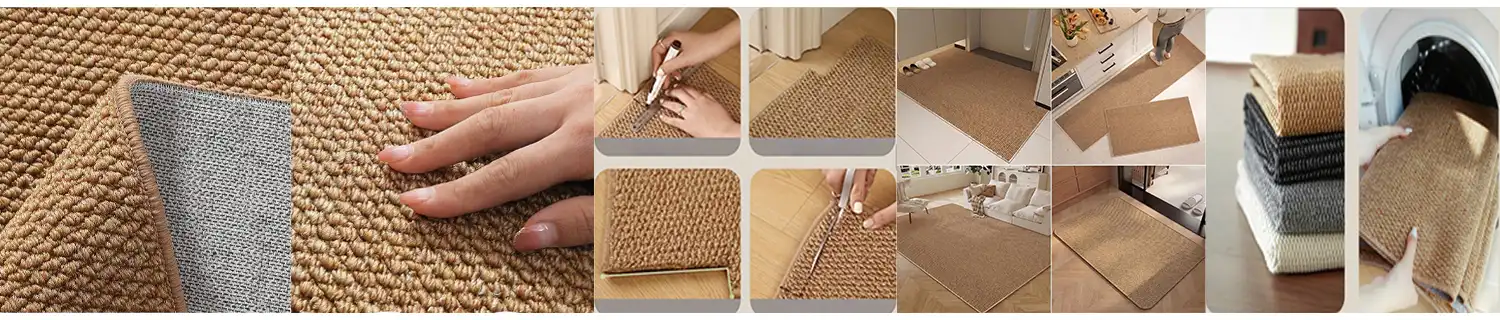
It's much easier to clean faux jute mats. It can be cleaned with a hose or machine washed every so often without losing its shape because it is waterproof, has stain-resistant treatments on the surface, and has a removable TPR backing. This makes maintenance easier, which means that distributors who work with stores or hotels that have strict rules about cleanliness will have less work to do. Things also last longer because of it.
Environmental Impact and Sustainability Considerations
Biodegradability and Lifecycle Analysis
When they're no longer helpful, real sisal and jute fibres break down on their own, so they don't make landfills as dirty. Also, agave and jute plants come back quickly and don't need as much water or chemicals as other plants. People who work in buying and are in charge of business social responsibility programs, or who want to help commercial projects get LEED certification, like these environmental benefits.
Polyester made from oil is used to make fake sisal mats, which are worse for the environment over their whole life. During production, more carbon dioxide is released, and synthetic fibres end up in landfills for decades. To cut down on the use of new materials, some businesses are now using polyester that has already been used. This is a good compromise between efficiency and caring for the earth.
Ethical Sourcing and Supply Chain Transparency
Buyers are becoming more and more interested in supporting crafters and fair labour practices. Real sisal and jute are often grown by small farmers in places where more plants are growing. Clear supply chains, proof of fair treatment of workers, and support for farming communities are all signs of responsible providers. Focusing on these moral points can help distributors who want to sell eco-friendly brands make their items stand out.
More often than not, fake sisal is made in large plants with strict rules about quality and work. Aijia Carpet Co., Ltd., a seller that has been around since 2006, has CE, OEKO-TEX, ISO 9001, REACH, and EN 1350 certifications, which show that they are dedicated to meeting international quality standards. People who see these marks know that the goods they buy are always safe, made in an honest way, and in line with environmental laws, even if they buy a lot of them.
Cost, Availability, and Bulk Procurement Insights
Price Analysis and Long-Term Value
Each kind of mat costs a lot more or less at first for Jute Indoor Door Mat. Since real sisal mats are hard to make and cost a lot of money because of the materials used to grow them, they are not cheap. Because of economies of scale, making manufactured fibres is cheaper per unit than making real sisal. They are good for buyers on a budget because of this.
When finding out the long-term value, you need to think about how much it will cost to replace and fix things. Since water and pet wear can damage real sisal quickly, it should be changed every 12 to 18 months in areas that get a lot of foot traffic. Faux sisal mats that don't tear or scratch can look good and work well for 24 to 36 months or longer, which lowers the total cost of ownership even though they cost about the same at first.
Bulk Ordering and Customization Potential
Corporate buyers in retail, business real estate, and the hotel industry need ways to buy things that can be scaled up. Suppliers that don't have strict minimum order amounts let you place both small orders and large-scale rollouts. They offer customisation services like OEM/ODM production, picture printing, colour matching, and size customisation to meet a wide range of branding and useful needs.
Lead times have a big impact on when projects get done. Because they can make up to 10,000 square meters every day, well-known makers can finish orders that are less than 2,000 square meters in seven days. Along with export-standard roll packing and professional cross-border shipping support, this quick turnaround keeps stocking costs low and makes sure that business setups are finished on time.
Buyers are safe from batch differences thanks to quality assurance methods. Manufacturers are less likely to send out bad goods when they check each one carefully before sending them out. When purchasing managers work with accounts that care about how they look, this quality promise gives them the confidence they need to work with suppliers.
Making the Right Choice: A Decision Support Framework
Matching Mat Types to Specific Scenarios
When making a choice, you need to think about whether the place is pet-friendly, how it affects the environment, and your budget. This type of carpet lasts a long time and is simple to clean, so it's a good choice for busy business places with therapy or service dogs. Veterinary clinics and pet grooming shops need flooring that is waterproof and won't stain, and synthetic options always deliver.
People expect different things from apartment buildings that let pets live there. Mats for the entrances to common areas need to be able to handle many pets every day without losing their good looks. Since faux sisal mats come in a range of solid colours and sizes, they can fit into a wide range of architectural styles while still being useful.
If eco-lodges and boutique hotels want to draw eco-friendly guests, they might choose natural fibre items over others, even if they need more care. Real sisal or Jute Indoor Door Mats support messages about the environment and look naturally beautiful. The people who buy things should think about whether the brand's image is worth the extra money it costs to care for and replace natural fibres.
Pilot Testing and Sample Evaluation
It's better to get samples first before you buy a lot of something. When you check how well a product works in a certain situation, you can avoid costly differences in quality between what was expected and what was given. Companies that can use heat transfer and laser cutting technology to make models quickly (within 24 to 48 hours) help the decision-making process go more quickly.
During testing, things that happen in real life should be simulated, like how pets move around, how to clean, and how much they are exposed to their surroundings. You can trust the product you choose based on data when you check its tuft bind strength, colour fastness, and backing adhesive under fast wear. When procurement managers try setups in a few key areas before putting the system in use everywhere, rollout risks are greatly reduced.
Conclusion
If you care about the environment and your wants, you should choose a real sisal rug over a fake one. If you have pets, faux sisal is better because it doesn't scratch as easily, doesn't get wet, and is easier to clean. Because of this, it works great in business settings and places with a lot of foot traffic. It looks natural and breaks down on its own, but real sisal needs to be carefully cared for and changed more often. Jute Indoor Door Mats are a sustainable middle ground choice with a soft feel that works well for homes with average foot traffic. To get the best mat for their needs, procurement workers should look at samples, think about how much it will cost to own the mat over time, and only buy from qualified sellers who offer customisation options and a quality guarantee.
Frequently Asked Questions
1. Are sisal and jute mats safe for pets with allergies?
Most natural fibres, like sisal and jute, are safe and don't have any chemicals added by humans that can make people allergic. These items don't usually bother pets that are allergic to the outdoors. OEKO-TEX-certified fake sisal mats are made with non-toxic fibre processes that are safe for people and pets. This means that fewer irritants are exposed.
2. How often should pet-friendly doormats be cleaned?
If you only have one or two cats, you only need to sweep once a week and deep clean once a month. A lot of pet owners need to have their businesses cleaned more often—every two to three days for sweeping and every two weeks for a professional clean. It's easy to clean faux sisal mats with TPR backing that can be taken off and washed with water or in a machine.
3. Can I order custom sizes and logos for bulk corporate purchases?
Reliable makers let you change a lot of things, like the size, the colour, and the writing of your name. Retail chains, hotel chains, and people who run business properties can all use OEM and ODM services to help them build their brands. There is no set minimum order number, so it is possible to make both small trial orders and large-scale deployments to fit the needs of the project.

Partner with a Trusted Jute Indoor Door Mat Manufacturer
Aijia specialises in selling high-quality door mats that look like sisal and can be used in both homes and businesses. These mats are pet-friendly. They will work well for a long time in tough conditions thanks to their scratch- and stain-resistant construction and TPR clean base. For twenty years, we've been making things. CE and OEKO-TEX have approved us, and every day we can make more than 10,000 square meters of goods. We can definitely offer a lot of things quickly because of this. Our OEM/ODM customisation services help business project buyers, e-commerce sellers, and wholesalers make their own labels, print logos, and change the size. Just email our team at sales@aijiarug.com to get samples, talk about customisation options, and find out why sourcing pros trust Aijia as their source for quality, reliability, and low prices on Jute Indoor Door Mats.
References
1. Johnson, M. R., & Williams, K. L. (2021). Natural Fiber Floor Coverings: Performance and Sustainability in Commercial Applications. Journal of Interior Design Research, 46(3), 112-128.
2. Chen, H., & Davidson, P. (2020). Comparative Analysis of Synthetic vs. Natural Textile Flooring in High-Traffic Environments. Building Materials Quarterly, 38(2), 67-84.
3. Peterson, L. A. (2022). Pet-Friendly Interior Materials: Safety, Durability, and Maintenance Considerations. Veterinary Facilities Design Review, 15(1), 45-59.
4. Rodriguez, C., & Lee, S. (2019). Sustainable Procurement Strategies for Commercial Floor Coverings. Green Building and Supply Chain Management, 12(4), 203-219.
5. Thompson, E. J. (2023). TPR Backing Systems in Textile Floor Products: Performance Under Moisture and Mechanical Stress. Polymer Engineering Applications, 29(2), 134-151.
6. Zhang, W., & Kumar, R. (2021). Lifecycle Environmental Assessment of Natural and Synthetic Fiber Mats. Environmental Science in Textiles, 7(3), 189-205.
Request fast quotes for bulk carpets, OEM & ODM floor mats, supported by strict quality control and complete supply chain.