- English
- French
- German
- Portuguese
- Spanish
- Russian
- Japanese
- Korean
- Arabic
- Greek
- German
- Turkish
- Italian
- Danish
- Romanian
- Indonesian
- Czech
- Afrikaans
- Swedish
- Polish
- Basque
- Catalan
- Esperanto
- Hindi
- Lao
- Albanian
- Amharic
- Armenian
- Azerbaijani
- Belarusian
- Bengali
- Bosnian
- Bulgarian
- Cebuano
- Chichewa
- Corsican
- Croatian
- Dutch
- Estonian
- Filipino
- Finnish
- Frisian
- Galician
- Georgian
- Gujarati
- Haitian
- Hausa
- Hawaiian
- Hebrew
- Hmong
- Hungarian
- Icelandic
- Igbo
- Javanese
- Kannada
- Kazakh
- Khmer
- Kurdish
- Kyrgyz
- Latin
- Latvian
- Lithuanian
- Luxembou..
- Macedonian
- Malagasy
- Malay
- Malayalam
- Maltese
- Maori
- Marathi
- Mongolian
- Burmese
- Nepali
- Norwegian
- Pashto
- Persian
- Punjabi
- Serbian
- Sesotho
- Sinhala
- Slovak
- Slovenian
- Somali
- Samoan
- Scots Gaelic
- Shona
- Sindhi
- Sundanese
- Swahili
- Tajik
- Tamil
- Telugu
- Thai
- Ukrainian
- Urdu
- Uzbek
- Vietnamese
- Welsh
- Xhosa
- Yiddish
- Yoruba
- Zulu
Jute Doormat Indoor vs Outdoor: Where Should You Use It?
When deciding between indoor and outdoor placement for a Jute Indoor Door Mat, the answer is straightforward: these mats perform best in protected interior environments. Natural jute fibers, while eco-friendly and visually appealing, deteriorate quickly when exposed to sustained moisture, UV rays, and temperature fluctuations typical of outdoor settings. Procurement managers sourcing for hotels, offices, or retail environments should prioritize indoor applications where controlled conditions preserve the mat's structural integrity and aesthetic value, ensuring longer product lifecycles and reduced replacement costs.
Understanding Jute Doormats: Material and Usage Basics
What Makes Jute Suitable for Indoor Use?
Natural jute strands have an organic feel and softness that make interior design look better while still keeping dirt out in areas that don't get much foot traffic. The material can breathe and break down naturally, which are both things that commercial buyers are increasingly putting a high value on. Traditional jute, on the other hand, can't be used outside because it gets wet easily.
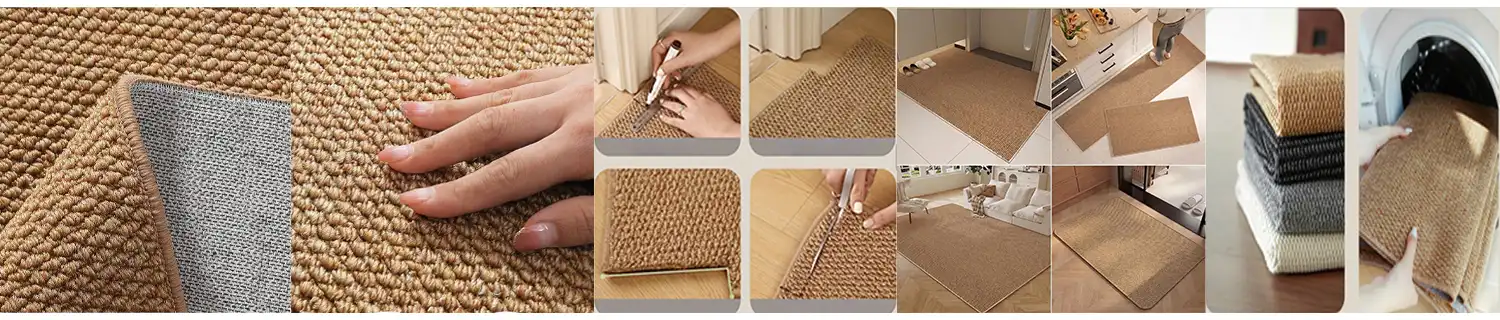
New technologies help solve this problem. Instead of jute, high-performance options like polyester fiber-based fake sisal look like jute while being much more durable. These synthetic options don't absorb water, keep their shape under mechanical stress, and can handle business cleaning methods. Our fake sisal mats at Tianjin Aijia Carpet Co., Ltd. are 1 cm thick and have a TPR washable base. They are waterproof in a way that natural jute can't match. Because the surface is treated to resist stains and the backing doesn't slip, these mats are perfect for business entrances that get a lot of use and where safety and ease of upkeep are very important.
Why Outdoor Use Accelerates Degradation
When mats are outside, they are exposed to cycles of rain, snowmelt, and humidity that make natural fibers swell, weaken, and finally break down. UV light breaks down the structures of cellulose, which makes colors fade and fibers break easily. Extreme temperatures make materials even less stable. Even short periods of time outside can shorten a plant's life by 60 to 70% compared to safe indoor placement.
The procurement teams have to think about these limits and the wants of the clients. If you put a mat under a covered porch, it might last for a season, but if you put it somewhere that gets direct rain, you need a different material. Coir or synthetic fibers with a rubber backing hold up better outside.
Comparing Jute Doormats to Other Natural Fiber Options
Jute vs. Coir: Texture and Performance Trade-offs
Coir mats, which are made from coconut husk fibers, are good for exterior entryways because they scrape hard. Their rough texture makes them better at getting rid of heavy soil and keeping out water than jute. But coir's rough surface is uncomfortable to walk on and doesn't have the polished look that is wanted in lobbies or office reception areas.
Alternatives that look like jute fill in this gap for Indoor Jute Door Mat. Our fake sisal mats are made of machine-woven polyester, but they look like they are made of natural fibers and are soft. Because of the high-density weave process, the 1000g weight doesn't easily crush in business settings and still looks classy. The 0.6 cm edge-locking width keeps the natural fiber mats from breaking, which means they will last longer even if they get a lot of foot traffic.
Synthetic Alternatives: Balancing Comfort and Longevity
Cotton and microfiber mats are better for wet entrances because they absorb more water, but they need to be washed often to keep mildew from growing. Rubber-backed choices don't slip around very easily, but they might not look good enough in high-end settings. Imitation sisal made of polyester addresses both issues. The TPR washable base provides non-slip safety without the risk of plasticizer movement, and the scratch-resistant surface can handle pet claws and rolling luggage that is common in hotel settings.
Because these mats can be customized through OEM/ODM services, distributors can make sure that the product specs meet the needs of the local climate. Standard and custom sizes can fit a wide range of architectural layouts, from small apartment foyers to large hotel lobbies.
Key Considerations for Using Jute Doormats Indoors and Outdoors
Durability Expectations Across Environments
If you put the mat indoors in a climate-controlled room, it will last 18 to 24 months in business settings with moderate traffic. Regular spot cleaning and daily sweeping keep things looking good without the need for special tools. The easy-to-clean surface treatment we use during production keeps common spills from happening, which saves facility managers money on labor costs.
Outdoor use shortens this lifespan greatly. Continuous moisture exposure causes bacterial growth and structural breakdown within 3-6 months. Even natural fiber mats that are "outdoor-rated" need to be put somewhere safe and replaced often, which raises the total cost of ownership. When evaluating bids from suppliers, procurement managers need to do these lifecycle economics calculations.
Sustainability Without Compromising Performance
Certification standards give buyers who care about the environment a way to measure their confidence. OEKO-TEX certification proves that the product is safe and doesn't contain any harmful chemicals, meeting strict European import requirements. An important part of multi-location rollouts is batch consistency, which is made possible by ISO 9001 quality management. The flame retardant values in EN 1350 meet the requirements of business building rules.
We check every item before it is shipped, so there is no quality variation like there is with low-cost suppliers. Our export-standard packaging, which comes in roll, box, or woven bag forms, keeps goods safe during shipping across continents and maximizes container filling efficiency to lower the cost of freight per unit.
Maintenance Protocols That Extend Product Life
Regular maintenance routines directly impact replacement frequency. Vacuuming indoor mats twice a week gets rid of the grit that gets lodged and wears away at the fibers. When you wash our TPR-backed mats in the washing machine once a month, they look new and get rid of allergens. Avoid steam cleaning, which can damage adhesive ties in poor-quality goods.
Schedules for rotation spread out wear patterns evenly. Facilities with more than one mat should switch between high-traffic and low-traffic units every three months. This easy step increases the average lifespan by 30% while keeping the look of all properties the same.
Procurement Guide: Selecting and Purchasing the Right Jute Door Mat
Specification Criteria for Bulk Orders
Durability and space under doors for Jute Indoor Door Mat are directly affected by thickness. Our 1cm profile fits normal home and business door gaps while providing suitable cushioning. Density is shown by weight per square meter. Our 1kg/ specification shows a tightly woven construction that doesn't compress and keeps its shape after many cleanings.
Safety compliance is based on the backing material. TPR (thermoplastic rubber) works better than PVC alternatives because it doesn't contain phthalates, which are banned by REACH rules. The washable base withstands industrial laundering temperatures without cracking or yellowing, unlike latex-backed goods that dissolve after minimal wash cycles.
Navigating MOQ and Pricing Structures
Minimum order quantities that are flexible can be used for both small-scale deployments and test shipments. We offer scalable price options that reward volume promises without forcing extra inventory. Our 10,000▥ daily production capacity means that we can meet short-term project deadlines quickly—usually within 7 days for orders under 2,000 square meters.
Clear pricing includes all the paperwork needed to get goods through customs: commercial invoices, packing lists, and certificates of origin make the import process easier. Our relationships with transportation companies give us access to low freight rates and consolidated shipping choices that help international wholesalers save money on landed costs.
Customization as a Competitive Differentiator
Heat transfer printing and laser cutting technologies allow endless design possibilities. Placement of logos, custom color matching, and odd shapes all help with brand recognition campaigns without the usual tooling fees that come with traditional production. We make the first models in 24 to 48 hours, which lets us make changes quickly before committing to full production runs.
OEM services extend to packaging design and multilingual labeling, eliminating secondary processing costs. With private label programs, stores can make their own lines of products with styles that can't be found anywhere else. This sets you apart, which increases your profit margins and keeps customers coming back.
Case Studies and Practical Recommendations for B2B Buyers
Hospitality Sector Success: Boutique Hotel Chain
A group of 50 small hotels wanted eco-friendly doormats that would fit with their brand. Traditional jute mats broke after only a few months because they got wet from guests walking on them and being cleaned so often. By switching to our fake sisal mats with TPR backing, they were able to extend their life to 20 months or more while still keeping the natural look that was important to their brand. The design that folds up made it easier to store during seasonal closures, and the fact that it could be washed cut down on annual care costs by 40%.
Office Building Failure: Outdoor Placement Mistakes
At first, a business real estate company put natural jute mats at the front doors of buildings because they were cheap. Within eight weeks, mold growth and fiber breakdown were obvious, so the carpet had to be replaced right away. What I learned is that synthetic materials made to resist water are needed outside. We suggested using coir for areas that will be scraped on the outside and our fake sisal mats in climate-controlled lobby areas on the inside. This created a multi-layered defense that worked better and looked better.
Retail Store Optimization: Traffic Zone Analysis
The amount of foot traffic at shop entrances was used to make a map for a national retail company. Our heavy-duty 1000g/ mats with reinforced ends were sent to places with a lot of foot traffic, while smaller standards were used in places with less foot traffic. With this tiered approach, costs for buying things went down by 25% without affecting safety or brand consistency. Custom sizing got rid of awkward gaps that collect dirt and make it easy to trip.
These examples show a basic idea: the best return on investment comes from matching product specs to the surroundings and how they will be used. Instead of going with the lowest-bidder seller who offers goods that don't match, procurement teams should check the real placement conditions.
Conclusion
To place mats like Jute Indoor Door Mat strategically, you need to know what the material can and can't do and what the surroundings need. When it comes to looks and sustainability, natural jute really shines in safe indoor areas. Modern alternatives to imitation sisal have a similar look and last longer, which makes them the practical choice for commercial procurement. For outdoor use, you need different materials, like coir, rubber, or synthetic fibers that are made to withstand UV rays and moisture. When buyers match the product specs to how it will be used, they save money on repair costs, lower safety risks, and make building management more efficient. The key is to work with manufacturers that have clear specifications, flexible customization options, and quality systems that have been shown to work.
FAQ
1. Can imitation sisal mats truly replace natural jute indoors?
Modern polyester-based fake sisal mats look and feel like real jute while not being sensitive to wetness and not being as long-lasting. Because they are waterproof and can be washed, the TPR backing meets cleanliness standards in business settings that natural fibers can't. Procurement managers get longer product lifecycles and lower maintenance costs without giving up any aesthetic value.
2. What backing type prevents damage to luxury flooring?
When you use TPR (thermoplastic rubber) backing instead of low-grade PVC, the plasticizer doesn't move around and turn vinyl plank flooring yellow. Our formula doesn't contain any phthalates and meets REACH standards. It also has high friction coefficients (above 0.6 COF) to keep people from slipping. This means that our mats can be used on LVP, hardwood, laminate, and tile floors.
3. How does customization affect lead times for bulk orders?
With our heat transfer and laser cutting skills, we can make custom samples for you within 24 to 48 hours for approval. No matter how complicated the customization is, full production runs always finish in 7 days for orders under 2,000 square meters. This quick turnaround helps meet the tight schedules that are popular in retail and hospitality buildings.
Partner with Aijia for Your Indoor Mat Needs
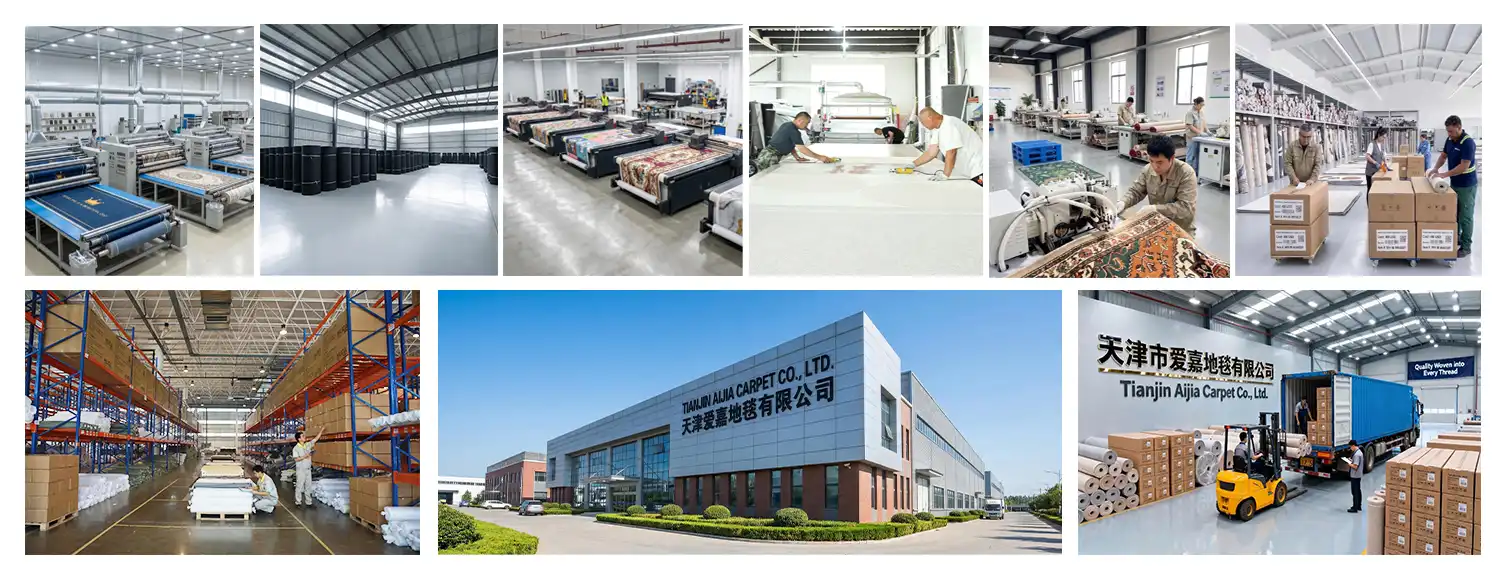
Tianjin Aijia Carpet Co., Ltd. has been making specialized carpets for 20 years and can help procurement workers find trusted Jute Indoor Door Mat suppliers. Our fake sisal mats look good and last a long time. They are certified by CE, OEKO-TEX, and ISO 9001, which makes them easier to comply with rules around the world. Our 10,000◡ daily capacity makes sure that growing distribution networks always have what they need, and our flexible MOQs allow for both trial orders and full container loads. Full OEM/ODM tailoring, including everything from printing logos to making products to specific sizes, helps your products stand out in crowded markets. To lower your procurement risks, we offer export-standard packaging, full quality paperwork, and specialized after-sales support. Send us an email at sales@aijiarug.com to get samples and find out how our manufacturing solutions can help your supply chain.
References
1. Anderson, J. (2021). Natural Fiber Floor Coverings: Material Science and Commercial Applications. Textile Industry Press.
2. Chen, L. & Patel, R. (2022). "Comparative Durability Analysis of Natural and Synthetic Entrance Mats in High-Traffic Environments," Journal of Facility Management Research, 18(3), 145-162.
3. European Commission. (2020). REACH Compliance Guidelines for Textile Imports. EU Publications Office.
4. Hoffman, S. (2023). Sustainable Procurement Strategies for Hospitality Design. Commercial Interiors Publishing.
5. International Organization for Standardization. (2019). ISO 9001:2015 Quality Management Systems – Requirements. ISO Standards Catalogue.
6. Williams, M. & Zhao, H. (2022). "Life Cycle Cost Analysis of Commercial Floor Mat Systems," Building Services Engineering Research and Technology, 43(2), 207-223.
Request fast quotes for bulk carpets, OEM & ODM floor mats, supported by strict quality control and complete supply chain.