- English
- French
- German
- Portuguese
- Spanish
- Russian
- Japanese
- Korean
- Arabic
- Greek
- German
- Turkish
- Italian
- Danish
- Romanian
- Indonesian
- Czech
- Afrikaans
- Swedish
- Polish
- Basque
- Catalan
- Esperanto
- Hindi
- Lao
- Albanian
- Amharic
- Armenian
- Azerbaijani
- Belarusian
- Bengali
- Bosnian
- Bulgarian
- Cebuano
- Chichewa
- Corsican
- Croatian
- Dutch
- Estonian
- Filipino
- Finnish
- Frisian
- Galician
- Georgian
- Gujarati
- Haitian
- Hausa
- Hawaiian
- Hebrew
- Hmong
- Hungarian
- Icelandic
- Igbo
- Javanese
- Kannada
- Kazakh
- Khmer
- Kurdish
- Kyrgyz
- Latin
- Latvian
- Lithuanian
- Luxembou..
- Macedonian
- Malagasy
- Malay
- Malayalam
- Maltese
- Maori
- Marathi
- Mongolian
- Burmese
- Nepali
- Norwegian
- Pashto
- Persian
- Punjabi
- Serbian
- Sesotho
- Sinhala
- Slovak
- Slovenian
- Somali
- Samoan
- Scots Gaelic
- Shona
- Sindhi
- Sundanese
- Swahili
- Tajik
- Tamil
- Telugu
- Thai
- Ukrainian
- Urdu
- Uzbek
- Vietnamese
- Welsh
- Xhosa
- Yiddish
- Yoruba
- Zulu
Kitchen Comfort Runner: Perfect Size and Placement Guide
A kitchen comfort runner is an anti-fatigue floor mat engineered for high-traffic cooking zones — built to absorb standing pressure, resist spills, and keep floors slip-free. Unlike a standard decorative rug, a purpose-built kitchen comfort runner combines ergonomic support with practical durability. Whether you manage a home kitchen, a café prep line, or source floor mats for retail, choosing the right size and placement determines how much real protection the runner delivers. This guide breaks down sizing logic, placement strategy, material differences, and care routines so you can make a confident purchasing decision.
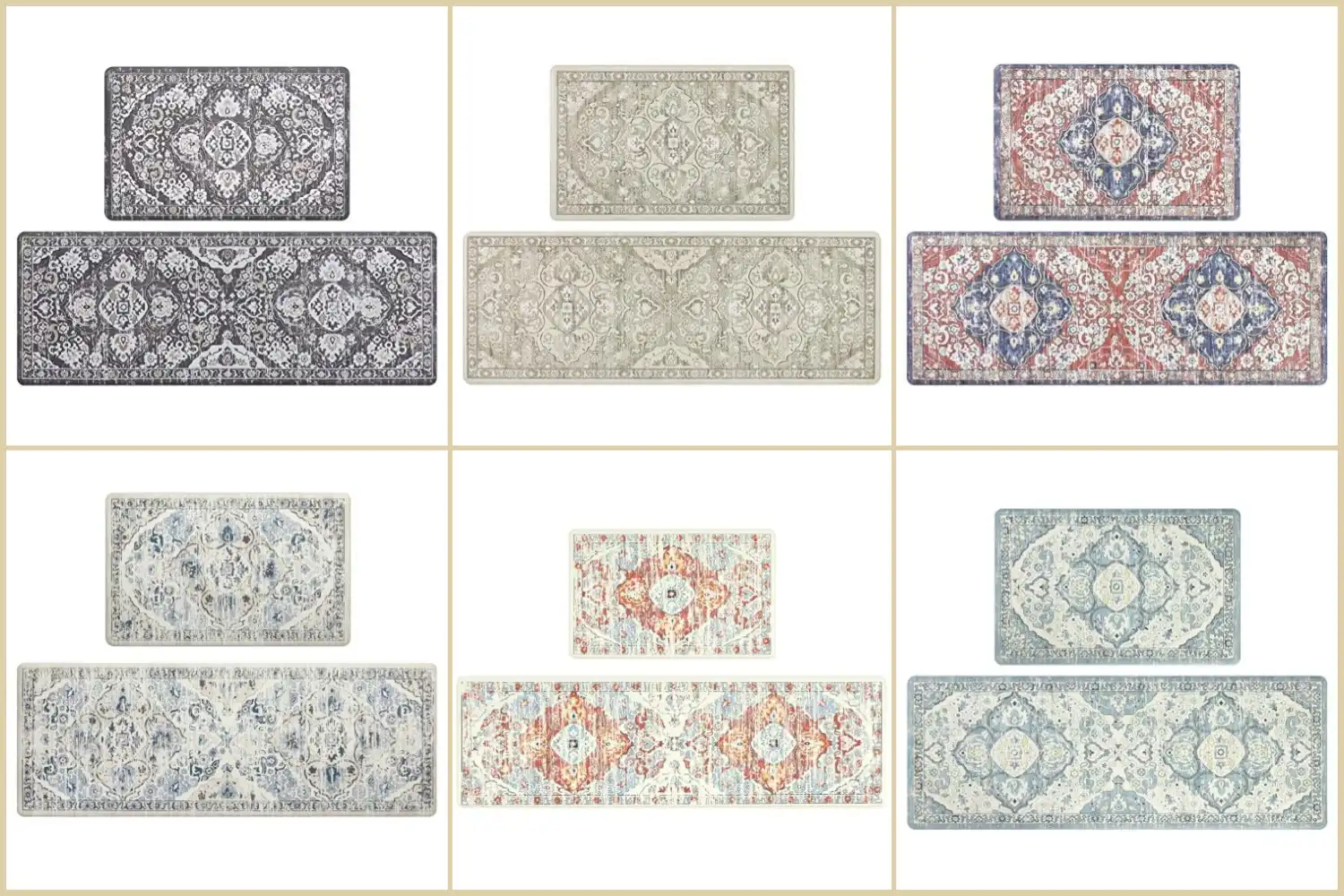
Understanding Kitchen Comfort Runners and Their Importance
What Makes a Kitchen Runner Different From a Regular Mat
A kitchen runner has a long shape (20 to 24 inches wide and 48 to 72 inches long) so it can cover long work areas like sink-to-counter runs or the sides of a prep island. Normal decorative mats don't have the structural density that people need to stand on for a long time. A good kitchen runner that keeps you from getting tired has a high-density base and a layer on top that cushions each step without sinking into the floor.
The Role of Construction Materials
The materials on the surface and the backing directly affect how comfortable, gripping, and easy to clean they are. The top layer of Aijia's kitchen comfort runner is made of Fine Imitation Cashmere (polyester fiber, 350 g/⎡), which is soft against bare feet and doesn't pull on fibers. The base is made of a TPR (Thermoplastic Rubber) layer that can be washed and sticks to tile and hardwood without glue. The mat is 5 mm thick all the way through and weighs 1000 g/. It stays flat under doors and doesn't curl at the edges even when people walk on it every day.
Why Anti-Fatigue Support Matters in the Kitchen
A study in Applied Ergonomics (2002) found that standing on padded surfaces instead of hard ground can cut lower-limb tiredness by up to 50%. For line cooks who work in restaurants and stand for 6–8-hour shifts or home cooks who are making holiday meals, that means fewer injuries and longer work hours. An anti-fatigue shoe that fits your needs is not a luxury item; it is essential safety gear.
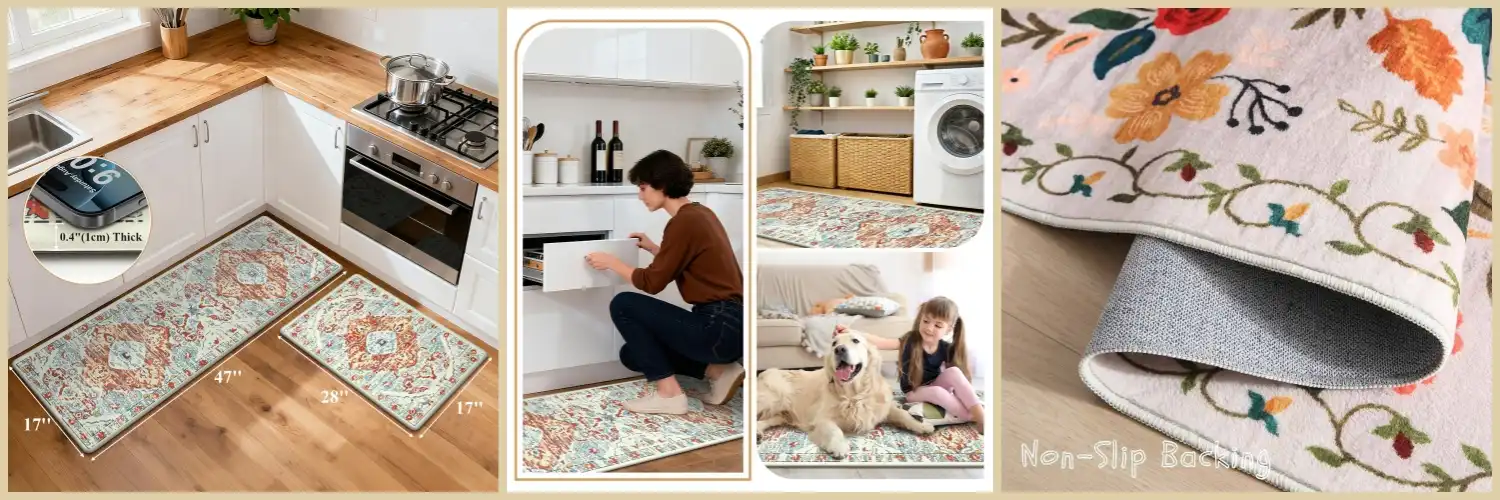
How to Choose the Perfect Size for Your Kitchen Comfort Runner
Standard Size Ranges and Their Best Applications
The size of the runner depends on the work area it covers. Here is an easy-to-use guide for matching runner sizes to kitchen layouts:
| Zone Type | Recommended Width | Recommended Length | Best For |
|---|---|---|---|
| Single sink/prep counter | 18–20 in (45–50 cm) | 24–36 in (60–90 cm) | Home kitchens |
| Kitchen island/galley line | 20–24 in (50–60 cm) | 48–72 in (120–180 cm) | Residential & light commercial |
| Commercial prep line | 24–30 in (60–75 cm) | 72–120 in (180–300 cm) | Restaurants, café kitchens |
| Custom made-to-measure | Any width | Any length | OEM / DTC brands |
These numbers are based on typical sell-through data from kitchen mat retail outlets and are in line with how kitchens are usually set up in North America.
Measuring Your Kitchen Work Zone Accurately
Measure the standing area, not the whole floor space, before you place your order for a kitchen comfort runner. As you stand in your main work position, measure how far you can turn left and right without leaving the mat. Add 6 inches to each end to make room for coverage. In galley kitchens or narrow prep areas, the width should never be more than 4 inches wider than the aisle space. This is to keep people from tripping over the edges.
Custom Sizing for OEM and Wholesale Buyers
Sizes that are already made don't always fit between fixed appliances or island supports. Any length of runners can be made to order at Aijia using their own laser cutting system. The edges are clean and don't fray. You can place pilot orders of 500 to 1,000 pieces to test the A/B size before committing to a quarterly restocking. This is most important for direct-to-consumer brands and Amazon sellers who need unique measurements to make their products stand out.

Strategic Placement: Where to Install Kitchen Comfort Runners
The Three Primary Placement Zones
Placement is based on how long you stand, not how nice the floor looks. The three areas in kitchens where accidents related to fatigue happen the most are:
- Sink and dishwasher line: This area sees constant water exposure and prolonged standing. The runner must sit flat with no raised edges that catch wet feet. A TPR base provides the grip needed on wet tile without suction-cup adhesion.
- Primary prep counter or cooking line: Line cooks and home chefs pivot repeatedly here. The runner length should cover the full reach zone of the cook — left-to-right arm span plus standing footprint.
- Coffee station or beverage prep zone: Often overlooked in both home and commercial settings, this zone generates spills from hot liquids. A short-pile surface (3mm pile height) dries faster and traps fewer grounds or residue.
These three zones cover the most common places where people get tired from standing and slip in home and business kitchens.
Floor Compatibility and Anti-Slip Performance
It's hard for tiles and flooring to scratch Aijia's runner because it has a TPR base. When used on smooth stone or polished ceramic, dot-pattern TPR backing works better than flat rubber because it spreads out the grip points over a larger area. If your kitchen has underfloor heating, make sure the base material can handle heat. TPR can handle mild radiated heat without deforming or giving off a smell.
Placement Mistakes That Reduce Safety
If you put a runner too close to the toe-kick of a cabinet, the mat can curl up against the face of the cabinet. This is called an edge-lift zone. Leave at least an inch of space between you and fixed cabinets. Do not stack two runners on top of each other to add extra cushioning; this makes the surface less stable. One high-grammage runner at 1000 g/◡ provides real anti-fatigue performance without the need for additional layers.
Comparison of Kitchen Comfort Runner Types and Features
Material Performance Comparison
You can choose from different runner constructions for a kitchen comfort runner based on what's most important to you: comfort depth, washability, or commercial durability. The two are shown next to each other here:
The material is a blend of fine imitation cashmere and TPR (Aijia), and the runner is made of gel-core PVC. The surface feels soft and gentle on the skin, firm and smooth, or hard and textured. You can wash it by hand or in a machine, but you can only wipe it clean or use a hose to dry it. The pile height is 3 mm short pile or N/A (flat).
Height: 5 mm, 12–25 mm, 6–10 mm; Edge curl resistance: High (locked edge, 0.6 cm); Moderate; Low; Slip resistance base: Washable TPR; PVC dot grip; natural rubber; Odor resistance: No oil absorption; may off-gas; may off-gas;
| Feature | Fine Imitation Cashmere + TPR (Aijia) | Gel-Core PVC Runner | Standard Rubber Mat |
|---|---|---|---|
| Surface feel | Soft, skin-friendly | Firm, smooth | Hard, textured |
| Washability | Machine & hand washable | Wipe-clean only | Hose down only |
| Pile height | 3mm short pile | N/A (flat) | N/A (flat) |
| Total thickness | 5mm | 12–25mm | 6–10mm |
| Edge curl resistance | High (locked edge, 0.6cm) | Moderate | Low |
| Slip resistance base | Washable TPR | PVC dot grip | Natural rubber |
| Odor resistance | No oil absorption | May off-gas | May off-gas |
The fake cashmere surface on top of a TPR base is a good compromise between softness and durability. It's not as heavy as thick PVC builds but also not as hard to clean as gel-core runners. This makes it ideal for both home kitchens and commercial prep areas that need to be cleaned every day.
Certifications That Matter for B2B Procurement
Compliance paperwork lowers the chance of buying things in North America and the EU. It is certified by OEKO-TEX, ISO 9001, REACH, CE, and EN 1350. These cover things like chemical safety, stable quality systems, access to EU markets, and flame resistance. These are all normal requirements for people who buy things in supermarkets, hotels, and on Amazon in controlled markets.
Maintenance and Longevity: Caring for Your Kitchen Comfort Runner
Daily and Weekly Cleaning Routine
The 3mm short-pile surface of this runner keeps dust from building up and doesn't hold grease as high-pile rugs do. For daily care, a quick shake or vacuum pass gets rid of any loose dirt or dust. You can wash the mat in the washing machine once a week to keep it clean. It's enough to use cold or warm water with regular soap. The TPR base doesn't come apart during normal machine washing, which is a common problem with cheap runners that have glued foam bases.
Extending Runner Lifespan in Commercial Settings
If you switch between two runners in a restaurant or café kitchen where the runner is used for 8 to 12 hours a day, each one will last longer. Every month, check the edges for curling or peeling. If the TPR base cracks or the surface pile flattens out oddly, it's time to get a new one. The machine-woven edge-lock design (0.6 cm locked edge) keeps the threads from coming loose, so surface shedding shouldn't happen during normal use.
Storage and Packaging for Bulk Orders
Aijia's runner ships folded, but the folds don't damage it permanently; it lies flat right away after being unpacked. Packaging options like PE bags or cartons protect the surface while the container is in transit. With a daily production capacity of 10,000 yen, repeat bulk sales of 2,000 yen or more ship within seven days, which works for both Amazon FBA and grocery chain buyers who need to restock.
Conclusion
If you choose the right size and place for your floor covering, it can really help keep you safe and comfortable. If you put down a kitchen comfort runner that is the right length for your work area at your main standing point and has a TPR base that is made for your floor type, you will notice a big drop in tiredness and slips. The fake cashmere surface on Aijia's products, combined with a washable TPR base, gives buyers in home kitchens and business buying teams the right mix of softness, grip, and cleanliness. If you want to use it, make sure the size fits your area, put it where you stand, and wash it regularly.
Frequently Asked Questions
1. What is the standard size for a kitchen comfort runner?
Most residential kitchen runners run 20 inches wide by 48 to 60 inches long. Commercial kitchens often require 24-inch widths and lengths up to 120 inches. The best approach is to measure your primary standing zone and add 6 inches on each end. Custom lengths are available from Aijia for OEM and wholesale buyers who need sizes that fit between fixed appliances or counters.
2. Can I use a kitchen comfort runner on hardwood floors?
Yes. A TPR base provides grip on hardwood without scratching the finish or leaving adhesive residue. Avoid placing any runner over an existing rug or mat on hardwood — layered mats create trip hazards. A single 5mm runner with a TPR base is stable on hardwood, tile, and polished stone floors.
3. Is a washable kitchen runner suitable for commercial kitchens?
A washable anti-fatigue runner works well in light commercial settings such as café kitchens and small restaurant prep lines. The key requirements are oil resistance, fast drying after cleaning, and a non-curling edge. Aijia's construction meets these criteria. For heavy industrial kitchens with hot oil splatter, a thicker rubber-back construction may be more appropriate for the highest-intensity zones.
4. What certifications should I require from a kitchen mat supplier?
For North American and EU markets, require OEKO-TEX (chemical safety), REACH (EU chemical restrictions), ISO 9001 (quality management), and anti-slip test data showing coefficient of friction results. CE and EN 1350 certifications are required for hospitality and engineering applications in Europe.
Source Your Kitchen Comfort Runner From Aijia — Request a Sample Today
Since 2006, Aijia's factory in Tianjin has been making kitchen mats and comfort runners. The factory can make 10,000 yuan worth of products every day and has full control over the supply of TPR and rubber backing. Aijia is a legitimate company that makes kitchen comfort runners. They offer private label packaging, laser cutting for custom sizes, and a flexible minimum order quantity (MOQ) for pilot orders. Every item comes with paperwork for OEKO-TEX, REACH, and ISO 9001. You can email the sales team at sales@aijiarug.com to get construction examples and a low price for your next order.
References
1. Applied Ergonomics — Madeleine, P. et al., "The Effects of Anti-Fatigue Mats on Standing Comfort," 2002.
2. Journal of Safety Research — Cham, R. & Redfern, M.S., "Heel Contact Dynamics During Slip Events on Smooth and Textured Floors," 2002.
3. Ergonomics — Zander, J.E. et al., "Anti-Fatigue Matting in the Workplace: A Review of the Literature," 2004.
4. OEKO-TEX Association — OEKO-TEX Standard 100: Testing for Harmful Substances, Edition 2023.
5. National Safety Council — Injury Facts: Workplace Slips, Trips, and Falls Data Report, 2022.
6. International Journal of Industrial Ergonomics — Hinnen, U. et al., "Standing on Compliant Flooring: Biomechanical and Subjective Assessment," 1992.
Request fast quotes for bulk carpets, OEM & ODM floor mats, supported by strict quality control and complete supply chain.