- English
- French
- German
- Portuguese
- Spanish
- Russian
- Japanese
- Korean
- Arabic
- Greek
- German
- Turkish
- Italian
- Danish
- Romanian
- Indonesian
- Czech
- Afrikaans
- Swedish
- Polish
- Basque
- Catalan
- Esperanto
- Hindi
- Lao
- Albanian
- Amharic
- Armenian
- Azerbaijani
- Belarusian
- Bengali
- Bosnian
- Bulgarian
- Cebuano
- Chichewa
- Corsican
- Croatian
- Dutch
- Estonian
- Filipino
- Finnish
- Frisian
- Galician
- Georgian
- Gujarati
- Haitian
- Hausa
- Hawaiian
- Hebrew
- Hmong
- Hungarian
- Icelandic
- Igbo
- Javanese
- Kannada
- Kazakh
- Khmer
- Kurdish
- Kyrgyz
- Latin
- Latvian
- Lithuanian
- Luxembou..
- Macedonian
- Malagasy
- Malay
- Malayalam
- Maltese
- Maori
- Marathi
- Mongolian
- Burmese
- Nepali
- Norwegian
- Pashto
- Persian
- Punjabi
- Serbian
- Sesotho
- Sinhala
- Slovak
- Slovenian
- Somali
- Samoan
- Scots Gaelic
- Shona
- Sindhi
- Sundanese
- Swahili
- Tajik
- Tamil
- Telugu
- Thai
- Ukrainian
- Urdu
- Uzbek
- Vietnamese
- Welsh
- Xhosa
- Yiddish
- Yoruba
- Zulu
Living Room Area Rugs: Buying & Styling Guide 2026
Picking out the right indoor rugs for living room can take your space from ordinary to amazing. As 2026 draws near, the rug business continues to change with new materials, patterns that can be customised, and performance features that meet both useful and aesthetic needs. Knowing the ins and outs of rug picking will help you make smart investments, whether you're buying for retail, e-commerce, or business projects. This complete guide tells you about materials, sizes, fashion trends, how to maintain them, and how to buy them so that you can make smart choices that will appeal to your market.
Understanding Indoor Rugs for Living Rooms: Materials, Sizes & Styles
Material Options That Define Performance
The material that a rug is made of is what makes it good. Modern Indoor Rugs For living rooms, they are made with carefully designed fibre systems that make them both comfortable and long-lasting. Made from 350 g/m² polyester fibres, imitation cashmere surfaces have a soft feel that looks and feels like real cashmere but doesn't cost as much. This man-made option is soft on the skin and strong enough to stand up to daily foot traffic.
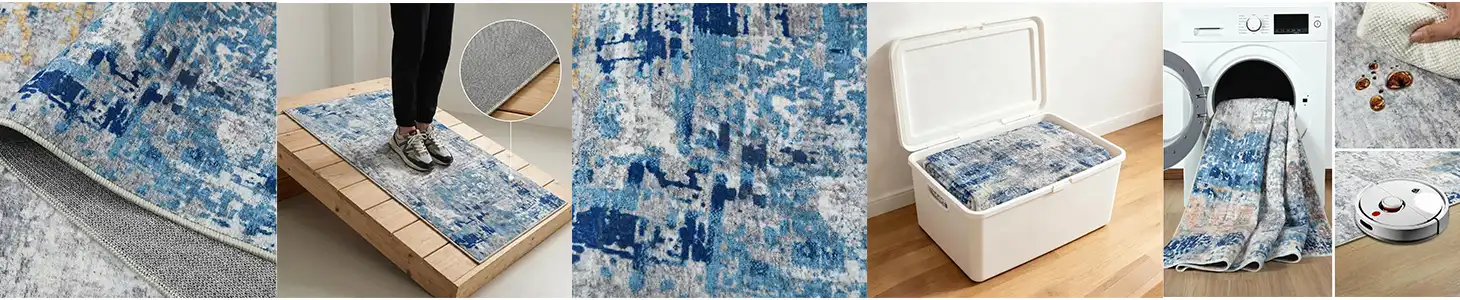
What's playing in the background is just as important. The TPR thermoplastic rubber feet are washable and don't slip, and they work well on both tile and wooden floors. Traditional rubber backings can break down or turn yellow over time, but TPR stays strong even after being cleaned many times. With a thickness of only 5 mm and a pile height of 3 mm, these rugs are thin enough to fit under doors but thick enough to provide enough padding.
For high-end uses, natural fibres like New Zealand wool are still popular because they naturally resist fire and dirt. But now synthetic choices are just as good as or better than natural fibres at resisting stains and keeping their colour. This makes them perfect for homes and light businesses with a lot of foot traffic.
Size Selection and Spatial Planning
The right rug size holds furniture in place and creates useful zones in open-concept living rooms. Standard sizes range from 5x7 feet for small sitting areas to 9x12 feet for bigger rooms where the rug goes under all the legs of all the furniture. Custom sizing lets procurement teams define exact sizes for business setups, taking into account different architectural plans.
The rule of leaving 18 inches of bare floor around the edge of the rug creates visible balance in rooms with standard sizes. Instead, covering entire walls with multiple rugs can bring large rooms together while still letting you move the rugs around, unlike fixed carpeting. Machine-woven construction with locked edges at 0.6 cm ensures physical stability, stopping products from warping and rolling that happens with lower-quality goods.
Styling Trends Shaping 2026
Surfaces with lots of roughness and natural colour schemes are becoming more popular in design. Short-pile designs with a 3mm height offer modern simplicity while making upkeep easier, which is very important for business buyers who have to keep track of a lot of stock. With 1000 g/㎡ high-density weave, gentle shading effects add depth to the look without the need for complicated designs.
Brand-specific designs and logos can be added with customisation options like heat transfer printing and laser cutting. Because of this, private label production for store chains and promotional uses for business branding projects are both possible. Being able to fold without folding makes it easier to store and use right away, cutting down on the time it takes from receiving an order to installing it.
How to Choose the Best Indoor Rugs for Living Rooms: A Decision Support Approach?
Evaluating Durability and Performance Criteria
When making procurement choices, you have to weigh a lot of different performance factors against your budget. The tuft bind strength tells you if the fibres stay in place when you dust or walk on them. Edge-locking technology in machine-woven fabrics stops the tearing and unravelling that happens with heat-cut edges, so they last longer in harsh settings.
Different types of fabric have very different stain-resistance skills. Because the dyes are built into the fibres during extrusion rather than being added later, solution-dyed polyester keeps the colour consistency. This construction doesn't fade when exposed to UV light or chemical cleaners, which is important for places near big windows or in homes with pets.
Specifications for weight give us a way to measure quality that we can touch. Premium synthetic rugs weigh 1000 g/㎡, which gives them a solid feel underfoot while still being light enough for one person to move during installation. This weight range means that the fibres are dense enough without being too big, which makes shipping and storage harder.
Addressing Pet-Friendly and Family-Oriented Requirements
Indoor rugs for living rooms that can handle spills, accidents, and constant use are needed in homes with kids and pets. Latex-backed alternatives break down when they get wet, but washable TPR bottoms can be completely submerged and cleaned. Because the piles are 3 mm high, liquids don't pool on the top. Instead, they soak up quickly so that the area can be cleaned right away.
Backing systems that don't slip get rid of the risk of rugs moving under kids running or pets playing. TPR sticks well to smooth surfaces without the need for extra pad layers. This lowers the total floor height and the chance of tripping. This function is especially helpful for older people or businesses that need to worry about risk.
Testing for colourfastness makes sure that dyes won't rub off on shoes or socks. Look for goods that meet the AATCC 8 crocking standards. These make sure that the colour stays the same when rubbed dry or wet. This licence helps protect your image when you sell to stores that accept returns, which can hurt your bottom line.
Comparing Indoor Versus Outdoor Suitability
When it comes to indoor rugs for living rooms, softness and good looks are more important than weather protection. For indoor use, UV protectors and mildew inhibitors are not as important as choosing the right fibres and building the pile in a way that feels good to the touch. The fake cashmere surface has a luxurious feel that materials that are meant to be used outside can't match because of how they are treated to keep out the weather.
Indoor rugs and outdoor mats are different in how well they keep heat in or out. The polyester fibres keep heat in during the cooler months, which lowers heating costs in rooms with hard floors. The structure of the dense fibres absorbs sound waves and lowers echo in areas with high ceilings or few soft furnishings, which is another benefit.

Maintaining and Cleaning Indoor Rugs for Long-Term Performance
Daily Care and Periodic Deep Cleaning
Regular repair keeps things looking good and extends the time between replacements. The small 3mm pile makes cleaning easier because dirt and dust stay close to the surface instead of getting deep into the long fibres. When you clean once a week, you get rid of dirt that has been tracked in before it can damage fibre surfaces by grinding against them.
The washable material lets you do deep cleanings on a regular basis that fully return the original look. Without professional tools, you can get rid of built-up oils and dirt by washing by hand in cool water with a light cleanser. The TPR base dries quickly and stops mould from growing, so it can be used again the same day it was cleaned. Smaller rugs can be washed in a machine, but bigger ones need to be cleaned in the bathroom or outside.
Spot treatment takes care of spills right away, before the colour sets in for good. Instead of rubbing, blotting stops the colour from spreading beyond the first touch area. Cleaners that are based on enzymes break down organic matter like food and pet accidents without burning fake fibres. This keeps the colour of the rug the same all over.
Avoiding Common Maintenance Mistakes
If you use too much water to clean lower-quality goods, the backing may not stick as well, but TPR construction doesn't delaminate. Don't use steam to clean your indoor rugs for the living room because it can melt vinyl materials and change the size of the rug. Use cool or cold water mixed with cleaning products made for synthetic fibres instead.
Harsh chemical cleaners break down the structure of fibres and speed up wear. Products with bleach or ammonia change the colour of fibres and make them less strong when pulled apart. Always test cleaning products on a small area of the rug before using them all over. This is especially important for custom-dyed or printed rugs, where colour stability can vary.
Even though manufactured fibres are not as damaged by direct sunlight as natural fibres, they still fade over time when they are exposed to it every day. By rotating rugs with the seasons, wear and sun exposure are spread out fairly. This keeps high-contrast fading designs from showing up in traffic lanes or sun spots.
Determining Repair Versus Replacement Timing
For asset lifecycle management, commercial buying teams need to set criteria. Re-binding services can fix small edge damage caused by moving furniture, which can add several years to the useful life of the rug. However, extensive pile crushing, lasting stains over large areas, or backing degradation are all signs that it's time to replace the structure.
Find the total cost of ownership for living room interior rugs, which includes the price you paid for the item, the cost of repairs, and how long you think it will last. If the starting costs are very different, a moderately priced living room interior rug that needs to be replaced every three years may be a better deal than a high-end choice that lasts seven years. Include the cost of storage, disposal, and work for fitting when figuring out how much a replacement really costs.
Comparing Leading Indoor Rugs: Features, Performance & Price
Material Performance Analysis
Synthetic fibre indoor rugs for living rooms are the most popular in the value market because they are easy to clean and don't stain easily. Polyester materials, like the fake cashmere surface, have a look that is similar to natural fibres while still being easy to clean and drying quickly. These traits work well in stores with a lot of stock that needs to move quickly without giving customers a lot of time to learn.
Wool substitutes are stronger and have a better feel, but they need to be dry-cleaned and maintained by professionals. Wool mixes are worth the extra money when they are used in hospitality settings where the impression of wealth is important. But more and more people in household and light business settings are choosing synthetic options that are good at both performance and cost.
As environmental approvals become more important, choices about materials are affected by sustainability issues. More people want eco-friendly goods that don't skimp on efficiency, and recycled polyester options meet that need. OEKO-TEX approval confirms tests for harmful substances, which is important for nurseries and homes where people are sensitive to chemicals.
Price Tier Segmentation
Options that cost less than $100 usually have less dense piles, easier designs, and simple backing systems. These are used for short-term setups or rental homes, where how often they are replaced is more important than how long they last. Expect good performance in areas with light traffic, but be aware of limits in areas with a lot of traffic.
Quality materials, like the 1000 g/㎡ density standard and long-lasting TPR backing, are used in mid-range goods that cost between $100 and $300. This segment strikes a good mix between initial investment and long-term service life, making it perfect for homes and businesses that want to get the most out of their money. At this level, customisation choices let brands stand out without charging more.
Premium options that cost more than $300 have hand-knotted construction, natural fibres that aren't found in many places, or advanced production methods. These are made for high-end home projects, boutique hotels, and store displays where rugs are more of a fashion statement than a practical way to cover the floor.
Procurement & Buying Guide for Indoor Rugs in 2026
Direct Manufacturer Sourcing Advantages
Partnering with well-known makers like Aijia has many benefits for buying, not just lowering unit costs. With a daily production capacity of 10,000 square metres, large orders can be filled without having to wait for long lead times that throw off project plans. This throughput can handle both big orders placed all at once and contracts for ongoing restocking for delivery networks.
Quality standards like CE, OEKO-TEX, ISO 9001, REACH, and EN 1350 compliance lower the risk for buyers when they enter controlled markets. By making sure products are safe, made in a way that doesn't harm the environment, and consistently, these standards get rid of the need for buyers to pay for expensive testing and approval processes. Full paperwork packages make clearing customs faster, which cuts down on port delays and demurrage fees.
Customisation options set factory-direct connections apart from buying through a middleman. Any image can be printed with heat transfer printing, and custom forms and sizes can be made with laser cutting without the tooling fees or minimum amounts that come with standard die-cutting. Low customisation limits let you try out new styles without having to commit to a lot of inventory, including living room indoor carpets.
Negotiating Bulk Orders and Lead Times
When you make a volume promise, you can get better prices and sure production slots. Setting up quarterly or yearly buy deals gives manufacturers a clear picture of production, which leads to competitive pricing structures. Talk about payment terms, quality promises, and how to fix problems right away so there are no mistakes during fulfilment.
Before committing to production runs, sampling procedures make sure that standards are met. Rapid sample return, which can be done in 24 to 48 hours thanks to improved production techniques, speeds up the decision-making process. To make sure everything is the same, make sure that the samples match the final production specs for things like fibre type, backing material, and finishing details.
Total landing costs are affected by shipping processes in a big way. The best ways to load containers make the best use of room, which lowers the cost of freight per unit. Export teams with a lot of experience handle paperwork, work with freight forwarders, and make sure that the goods are packed properly so that they don't get damaged by wetness or transport. Putting goods in a PE bag or box protects them and makes it easier to handle them in the building when they arrive.
Conclusion
When choosing the right area rugs for the living room, you have to think about how they look, how well they work, and your budget. Knowing about the qualities of materials, standard sizes, and upkeep needs helps you make better purchasing choices. The development of synthetic fibre technologies has made things last longer without losing comfort, and the ability to customise them lets businesses stand out in the market. Working with makers that offer full certifications, quick production cycles, and flexible buying cuts down on risk and maximises value for both home and business use.
FAQ
1. What size rug will look best with the furniture I already have in my living room?
Check the size of your sitting area and choose indoor rugs for the living room that are at least 6 inches longer on all sides than the edges of your furniture. An 8x10-foot rug can usually fit sofas and chairs with the front legs on it while still leaving enough space around the edges for the floor. Custom sizing takes into account room sizes or couch layouts that aren't standard.
2. How can I clean mats that can be washed without hurting them?
Don't use harsh chemicals or too much heat; instead, use cool water and a light cleanser. Small rugs can be washed by hand in baths by gently scrubbing them to get rid of dirt. Clean it well, then hang it up to dry or lay it flat on a clean surface. The TPR backing dries quickly—usually between 4 and 6 hours—but it depends on how hot it is.
3. Can mats be used on floors that are warm inside?
With a TPR backing, synthetic indoor rugs for living rooms can handle natural floor warmth without melting or giving off smells. Keep the floor below 82°F to keep the backing in good shape. The 5mm thickness lets enough heat pass through while also providing thermal shielding that makes heating more efficient.
Partner With Aijia for Your Indoor Rug Requirements
Aijia specialises in making high-quality Indoor Rugs For Living Room. They work with foreign wholesalers and online stores in North America and Europe. With CE, OEKO-TEX, and ISO 9001 standards and 20 years of experience in production, you can be sure of steady quality. We offer flexible OEM and ODM services with low minimum order amounts to help you get into new markets or grow existing ones. Get in touch with our sales team at sales@aijiarug.com to talk about your needs with a reliable Indoor Rugs For Living Room seller who wants you to succeed.
References
1. Textile Research Journal, "Synthetic Fiber Performance in High-Traffic Floor Coverings," 2024.
2. International Interior Design Association, "Commercial Flooring Trends and Specifications," 2025.
3. Journal of Applied Polymer Science, "Thermoplastic Rubber Applications in Textile Backing Systems," 2023.
4. National Floor Covering Association, "Area Rug Selection and Maintenance Best Practices," 2025.
5. Building and Environment Journal, "Acoustic Properties of Textile Floor Coverings in Residential Spaces," 2024.
6. Global Trade Magazine, "Export Compliance and Certification Requirements for Textile Products," 2025.
Request fast quotes for bulk carpets, OEM & ODM floor mats, supported by strict quality control and complete supply chain.