- English
- French
- German
- Portuguese
- Spanish
- Russian
- Japanese
- Korean
- Arabic
- Greek
- German
- Turkish
- Italian
- Danish
- Romanian
- Indonesian
- Czech
- Afrikaans
- Swedish
- Polish
- Basque
- Catalan
- Esperanto
- Hindi
- Lao
- Albanian
- Amharic
- Armenian
- Azerbaijani
- Belarusian
- Bengali
- Bosnian
- Bulgarian
- Cebuano
- Chichewa
- Corsican
- Croatian
- Dutch
- Estonian
- Filipino
- Finnish
- Frisian
- Galician
- Georgian
- Gujarati
- Haitian
- Hausa
- Hawaiian
- Hebrew
- Hmong
- Hungarian
- Icelandic
- Igbo
- Javanese
- Kannada
- Kazakh
- Khmer
- Kurdish
- Kyrgyz
- Latin
- Latvian
- Lithuanian
- Luxembou..
- Macedonian
- Malagasy
- Malay
- Malayalam
- Maltese
- Maori
- Marathi
- Mongolian
- Burmese
- Nepali
- Norwegian
- Pashto
- Persian
- Punjabi
- Serbian
- Sesotho
- Sinhala
- Slovak
- Slovenian
- Somali
- Samoan
- Scots Gaelic
- Shona
- Sindhi
- Sundanese
- Swahili
- Tajik
- Tamil
- Telugu
- Thai
- Ukrainian
- Urdu
- Uzbek
- Vietnamese
- Welsh
- Xhosa
- Yiddish
- Yoruba
- Zulu
The Allure of Multicolor Boho Rug: A Style That Inspires
A well-selected boho area rug is something very fascinating. A Multicolor Boho Rug is more than just a floor covering; it anchors a space, adds personality, and speaks to a design style that has global appeal. Whether you are a wholesale distributor sourcing for North American shops, an Amazon FBA seller establishing a distinct catalog, or a hospitality buyer outfitting boutique hotel lobbies, the eclectic brightness of a boho-style floor covering will always turn browsers into purchasers. In this post, we’ll take a look at what makes these carpets so commercially enticing – and how to obtain them with confidence.
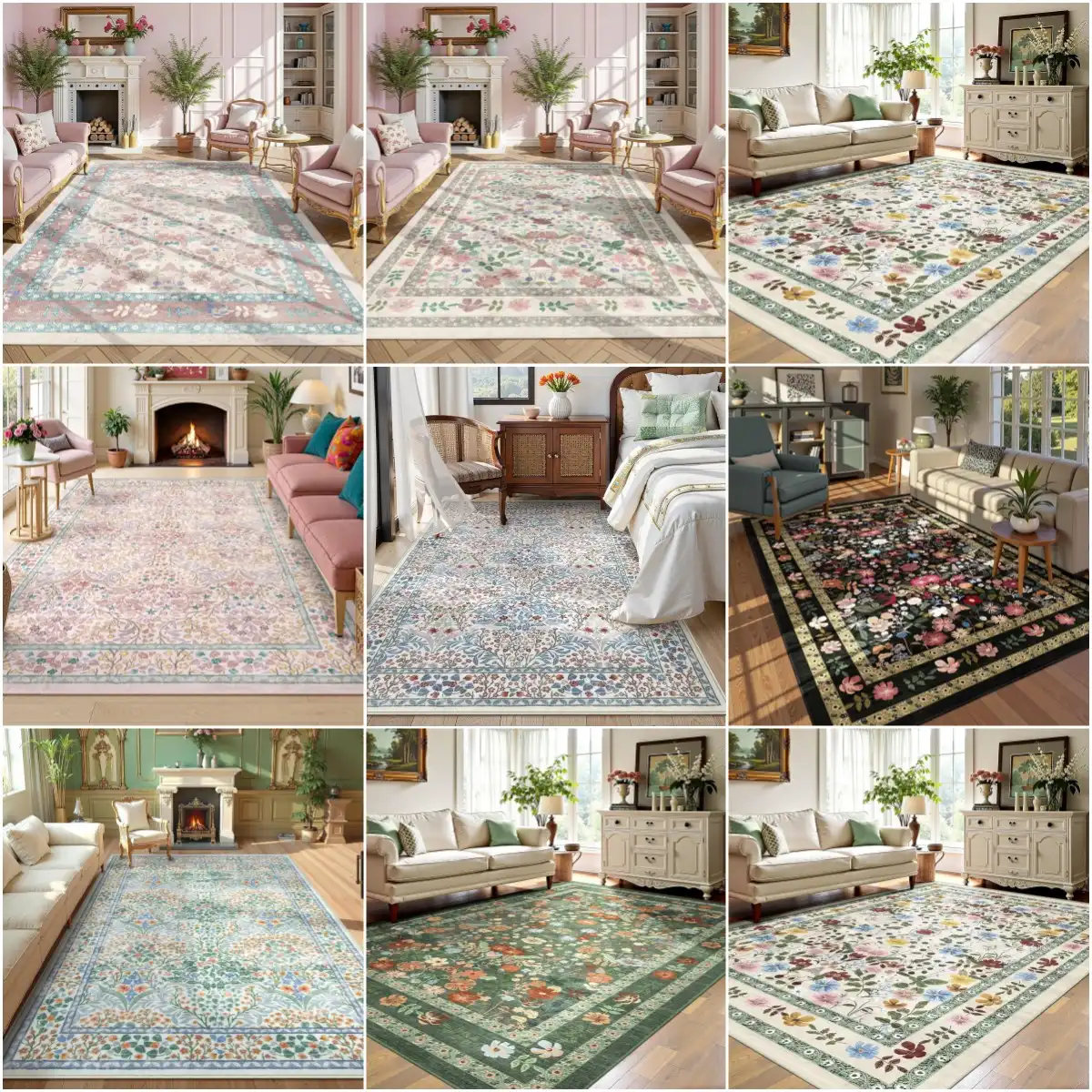
Understanding Multicolor Boho Rugs: Style, History, and Materials
The bohemian aesthetic takes inspiration from Central Asian tribal weaving, Moroccan Berber patterns, and mid-century worldwide folk art. What sets a boho rug apart from a mere decorative textile is the deliberate use of high-contrast polychromatic palettes, geometric designs, and purposeful pattern irregularity — what craftsmen call abrash — to create an organic, handmade authenticity.
Material Composition and Construction Standards
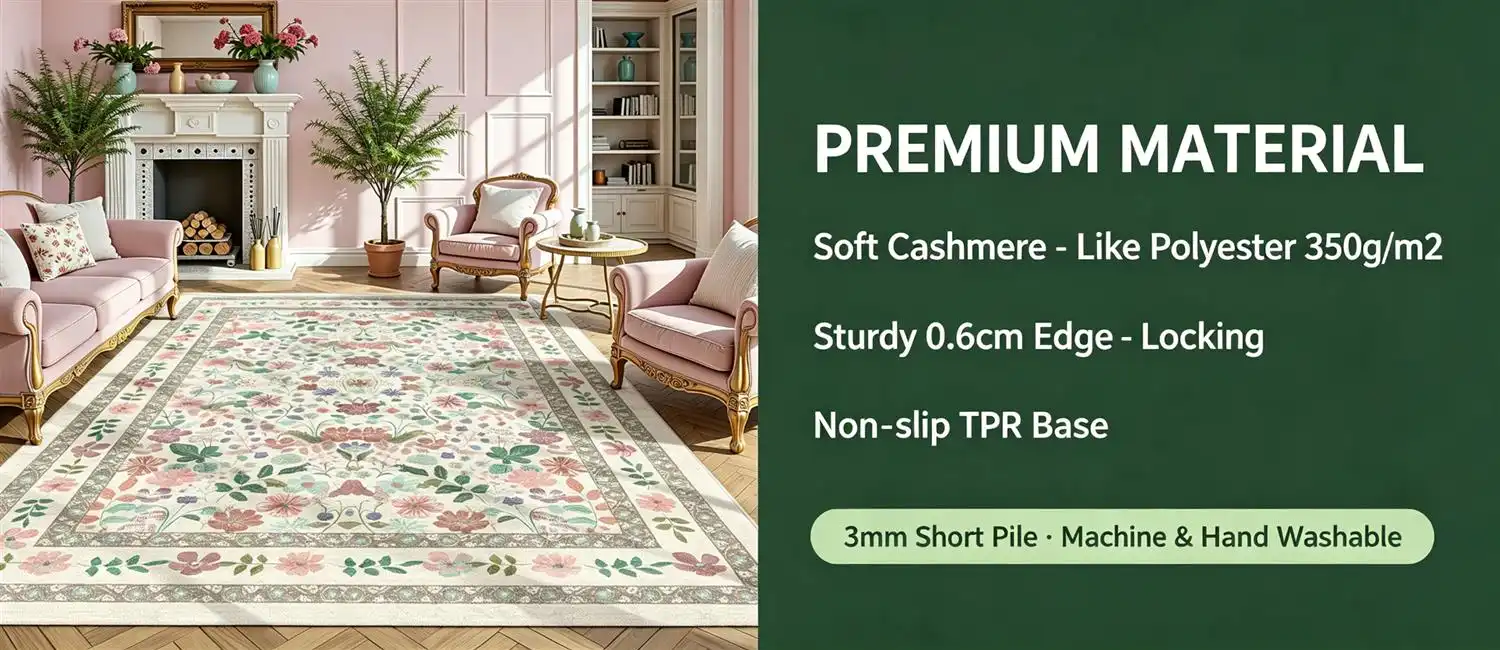
The market positioning and the buyers’ confidence depend directly on the choice of material. Featuring a surface of 350g/㎡ imitation cashmere polyester fiber, Aijia’s multicolor boho rugs provide the touch of cashmere and the warmth of genuine cashmere at a far lower cost. The base layer has a washable TPR (Thermoplastic Rubber) bottom that offers consistent grip on tile and hardwood floors without adhesives. It is a short 3mm pile carpet which helps to prevent dust from building up and makes it easy to clean. At 1000g/㎡ the total thickness is 5mm; this light material can pass most interior door frames without any hindrance.
Machine-Woven Precision vs. Handmade Variation: Machine-woven construction has tangible benefits for B2B buyers controlling quality consistency for large quantities. Aijia’s high-density machine weaving method has 0.6cm edge-locking on all four sides, avoiding the fringe unraveling that is a common cause of bad ratings in handmade boho rug categories. According to ASTM D1335 testing standards, tuft bind strength in machine-woven synthetic carpets is always higher than in lower-density hand-tufted options, leading to fewer returns and fewer customer complaints.
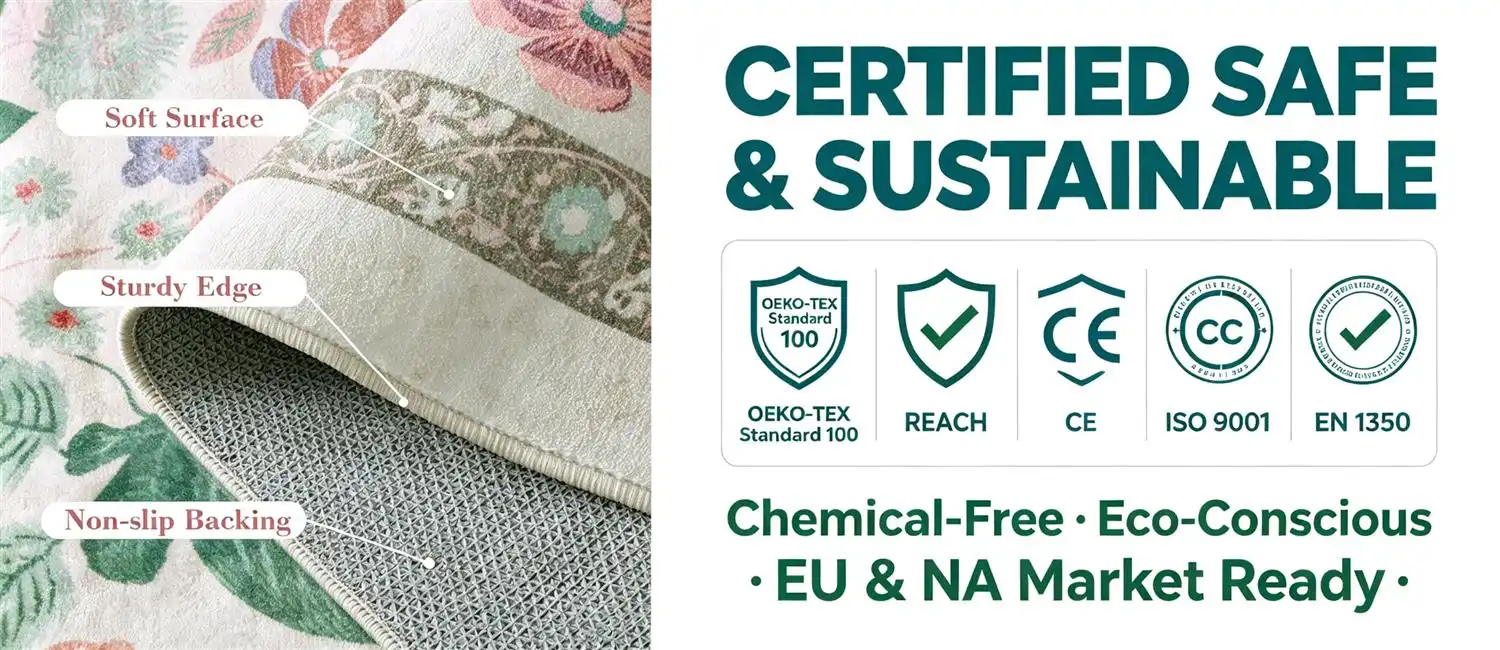
How to Style Multicolor Boho Rugs in Commercial and Residential Spaces
Placement strategy matters as much as product quality when it comes to driving end-user satisfaction. A bohemian-patterned Multicolor Boho Rug performs a specific design function: it unifies mismatched furniture groupings, introduces warmth into minimalist spaces, and — crucially for commercial buyers — photographs well for e-commerce listings and hospitality marketing materials.
Proven Placement Strategies Across Commercial Settings
Here are the placement approaches that consistently drive buyer satisfaction across different commercial environments:
- Living room and lounge areas: A boho-patterned rug placed beneath a central coffee table creates visual zoning in open-plan layouts. The complex color palette naturally conceals foot traffic wear, extending the perceived lifecycle of the product between replacements.
- Boutique hotels and Airbnb properties: Hospitality buyers in the short-term rental sector consistently choose eclectic floor coverings for their "Instagrammable" quality. A visually rich rug increases guest photography and organic social sharing — measurable marketing value at minimal added cost per square foot.
- Dining rooms and bedroom floors: The 5mm total thickness and non-slip TPR base make this rug suitable for multi-room installations. Chair legs do not snag on the low pile, and the washable base means spill incidents do not necessitate full replacement.
These placement strategies apply equally to residential retail buyers and commercial procurement managers. The versatility of the boho aesthetic is a genuine selling point, not merely a marketing claim.
Maintenance Considerations for High-Traffic Environments
The 3mm short pile architecture prevents the embedding of particulate matter, and the surface of the polyester fiber is very receptive to machine washing and spot cleaning. For commercial customers with several units – hotel chains, co-working spaces, event venues – this simplicity of maintenance translates into a lower total cost of ownership across a product lifespan.
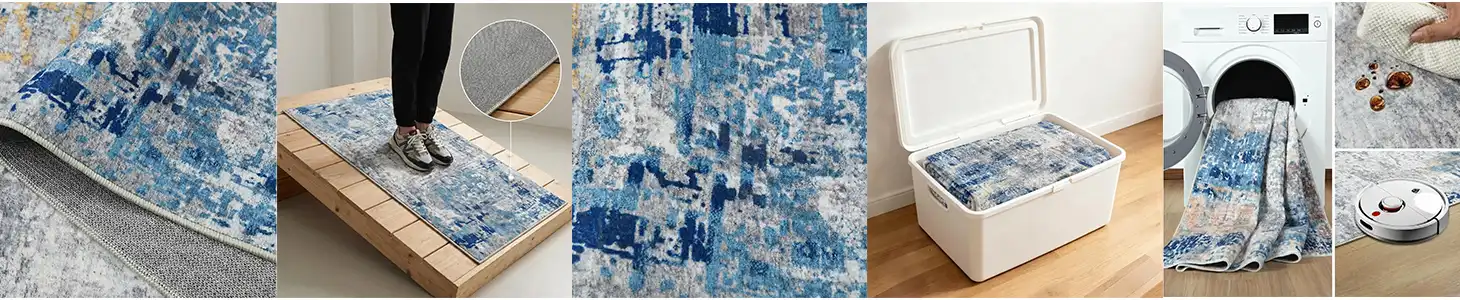
Comparing Multicolor Boho Rugs Against Other Rug Types for Optimal Procurement
The sophistication of solid-color carpets is contingent on a perfectly clean environment. Vintage carpets provide authenticity, but they also come with supply inconsistencies and colorfastness fluctuations, making mass purchase challenging. The multicolor boho rug takes a commercially sensible middle-of-the-road approach: the intricacy of its design hides wear, the eclectic palette works with a range of interior color schemes, and the rug can be produced in a standardized way for consistent bulk delivery.
Indoor Performance Metrics That Matter to Procurement Managers
When evaluating bohemian rugs against category alternatives, the following technical parameters carry the most weight in professional procurement decisions:
- Colorfastness rating: AATCC 107 standard testing ensures dyes remain stable during wet cleaning — critical for hospitality clients managing frequent laundering cycles.
- Dimensional stability: A tolerance below 1.5% after packaging and acclimation prevents shape distortion upon delivery, a common complaint with lower-cost alternatives.
- Backing integrity: TPR lamination must resist delamination under repeated washing. Aijia's washable TPR base meets this standard without the brittleness associated with excessive filler-loaded latex backings.
These technical differentiators separate reliable bulk suppliers from inconsistent ones — and they are the metrics sophisticated procurement managers should demand documentation for before committing to an order.
Procurement Guide: How to Source Multicolor Boho Rugs for Your Business
Sourcing decisions in the Multicolor Boho Rug category hinge on four variables: quality consistency, customization depth, delivery reliability, and compliance documentation.
Key Supplier Evaluation Criteria for Distributors and Importers
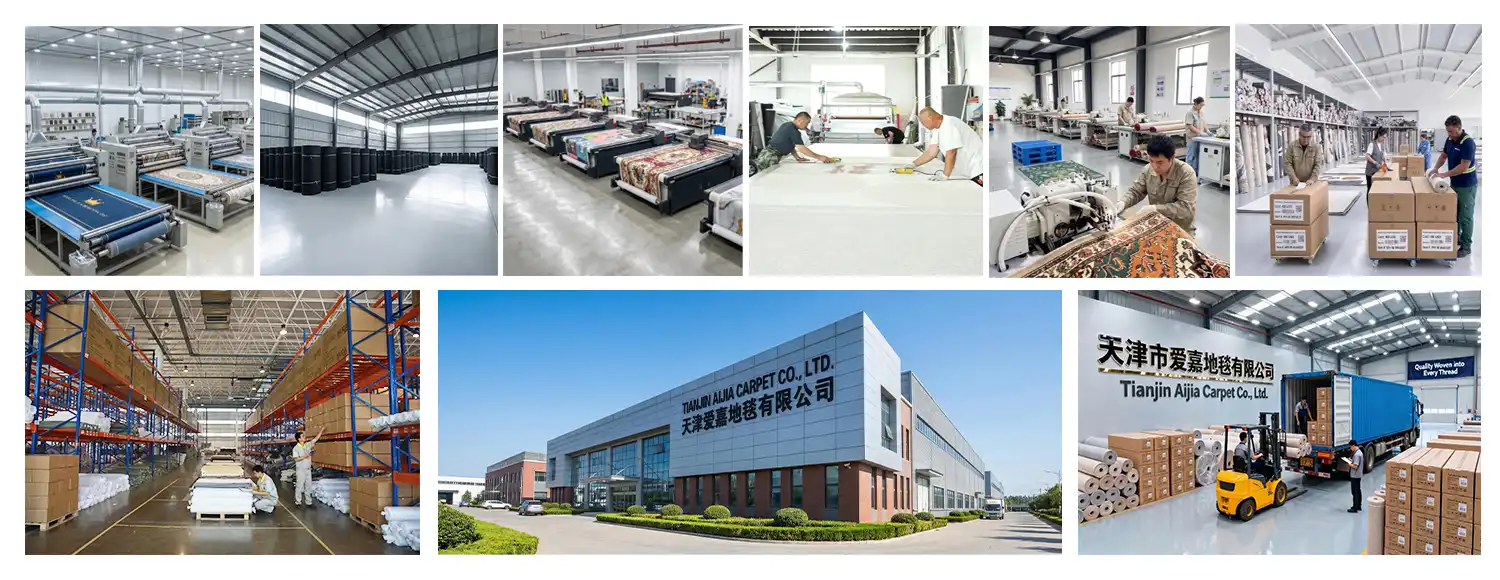
Aijia's production capacity stands at 10,000㎡ per day, with a standard delivery cycle of approximately 7 days for orders under 2,000 square meters. For bulk international shipments, Aijia provides export-grade packaging — both PE bag and carton formats — alongside optimized container loading calculations that reduce per-unit logistics costs for overseas distributors.
Customization flexibility is a genuine differentiator at Aijia. The factory supports OEM and ODM production, including custom size, color palette, and LOGO integration, with a flexible minimum order quantity that accommodates both small e-commerce restocking cycles and large-volume seasonal container orders. Certifications include ISO 9001, OEKO-TEX, CE, REACH, and EN 1350 flame retardancy — documentation that facilitates smooth customs clearance in the EU, North America, and the Middle East.
Why Choose Multicolor Boho Rugs? Benefits for B2B Clients and End Users
The commercial case for stocking or distributing boho-patterned rugs is grounded in consistent consumer demand. According to the Home Décor Trend Report published by HGTV and corroborated by Wayfair's annual category sales data, eclectic and global-inspired textiles have maintained strong year-over-year growth in the U.S. home furnishing market.
The core product advantages that buyers consistently prioritize include the following:
- Premium texture at accessible price points: The imitation cashmere surface delivers a sensory quality — soft, smooth, skin-friendly — that elevates perceived product value without the cost volatility of natural fiber sourcing.
- Non-slip reliability across floor types: The washable TPR base provides grip on both tiles and hardwood, removing a common friction point for end users and reducing the return rates that affect Amazon seller metrics.
- Foldable, crease-resistant packaging: The rug ships flat or folded without permanent creasing, arriving ready for immediate display or use — a practical advantage for e-commerce fulfillment and retail floor setups alike.
- Compliance-ready documentation: With OEKO-TEX and REACH certifications in place, importers distributing into EU and U.S. markets face no additional compliance burden.
These advantages collectively reduce procurement risk for distributors and improve conversion rates for online sellers. The product works as hard commercially as it does aesthetically.
Conclusion
A well-sourced boho area rug is both a design asset and a commercial one. The combination of imitation cashmere softness, machine-woven durability, TPR non-slip performance, and deep customization capability makes Aijia's Multicolor Boho Rug line a genuinely competitive option for distributors, e-commerce brands, and commercial project buyers. With 20 years of production experience, certified quality systems, and a daily output of 10,000㎡, Aijia offers the supply reliability that bulk buyers require and the design range that end-user markets reward.
FAQ
1. What sizes are available for commercial orders?
Aijia supports full-size customization, meaning procurement managers can specify dimensions tailored to specific room layouts — hotel corridors, office zones, or event floor coverage — without being constrained by standard retail dimensions.
2. How do I verify colorfastness before committing to a large order?
Request pre-shipment samples tested against AATCC 107 standards. Aijia provides 24–48-hour sample production, allowing buyers to evaluate color accuracy and dye stability before bulk production begins.
3. Are these rugs suitable for high-traffic commercial environments?
The 3mm short pile and high-density machine-woven construction are appropriate for moderate commercial traffic — boutique hotels, showrooms, and co-working lounges. For extremely high-traffic zones, discussing pile density specifications with the factory team is advisable.
4. Can I order with private label or custom branding?
Yes. Aijia's OEM capability includes custom LOGO integration, branded packaging, and proprietary colorway development — with a flexible MOQ that accommodates both emerging brands and established retail chains.
Partner with Aijia for Your Next Boho Rug Order
Aijia has supplied certified, export-ready carpets to global markets for over 20 years. As a trusted Multicolor Boho Rug manufacturer, we offer flexible customization, reliable bulk production, and full compliance documentation. Reach our team directly at sales@aijiarug.com to explore the product range and request a sample.
References
1. Carpet and Rug Institute. (2022). Standard Guide for Carpet and Rug Performance and Construction. CRI Technical Standards. https://www.carpet-rug.org/
2. ASTM International. (2021). ASTM D1335: Standard Test Method for Tuft Bind of Pile Floor Coverings. https://www.astm.org/d1335-21.html
3. Wayfair. (2023). Annual Home Trend Report: Global and Eclectic Textiles. https://www.wayfair.com/ideas-and-advice/home-style/
4. AATCC. (2022). AATCC 107: Colorfastness to Water — Standard Test Method. https://www.aatcc.org/testing/
5. OEKO-TEX Association. (2023). OEKO-TEX Standard 100: Testing for Harmful Substances in Textiles. https://www.oeko-tex.com/en/our-standards/oeko-tex-standard-100
6. Grand View Research. (2023). Rugs and Carpets Market Size, Share & Trends Analysis Report. https://www.grandviewresearch.com/industry-analysis/rugs-carpets-market
Request fast quotes for bulk carpets, OEM & ODM floor mats, supported by strict quality control and complete supply chain.