- English
- French
- German
- Portuguese
- Spanish
- Russian
- Japanese
- Korean
- Arabic
- Greek
- German
- Turkish
- Italian
- Danish
- Romanian
- Indonesian
- Czech
- Afrikaans
- Swedish
- Polish
- Basque
- Catalan
- Esperanto
- Hindi
- Lao
- Albanian
- Amharic
- Armenian
- Azerbaijani
- Belarusian
- Bengali
- Bosnian
- Bulgarian
- Cebuano
- Chichewa
- Corsican
- Croatian
- Dutch
- Estonian
- Filipino
- Finnish
- Frisian
- Galician
- Georgian
- Gujarati
- Haitian
- Hausa
- Hawaiian
- Hebrew
- Hmong
- Hungarian
- Icelandic
- Igbo
- Javanese
- Kannada
- Kazakh
- Khmer
- Kurdish
- Kyrgyz
- Latin
- Latvian
- Lithuanian
- Luxembou..
- Macedonian
- Malagasy
- Malay
- Malayalam
- Maltese
- Maori
- Marathi
- Mongolian
- Burmese
- Nepali
- Norwegian
- Pashto
- Persian
- Punjabi
- Serbian
- Sesotho
- Sinhala
- Slovak
- Slovenian
- Somali
- Samoan
- Scots Gaelic
- Shona
- Sindhi
- Sundanese
- Swahili
- Tajik
- Tamil
- Telugu
- Thai
- Ukrainian
- Urdu
- Uzbek
- Vietnamese
- Welsh
- Xhosa
- Yiddish
- Yoruba
- Zulu
The Definitive Guide to the Thick Front Door Mat
A thick front door mat is more than a decorative piece at your entrance—it's a functional asset that protects flooring, reduces maintenance costs, and enhances safety. Whether you manage a hotel lobby, a retail chain, or an Amazon storefront, choosing the right thick front door mat directly impacts operational efficiency and customer experience. This guide walks through everything procurement professionals and bulk buyers need to know: material science, sourcing strategy, maintenance, and supplier selection—all grounded in real product specifications and industry practice.
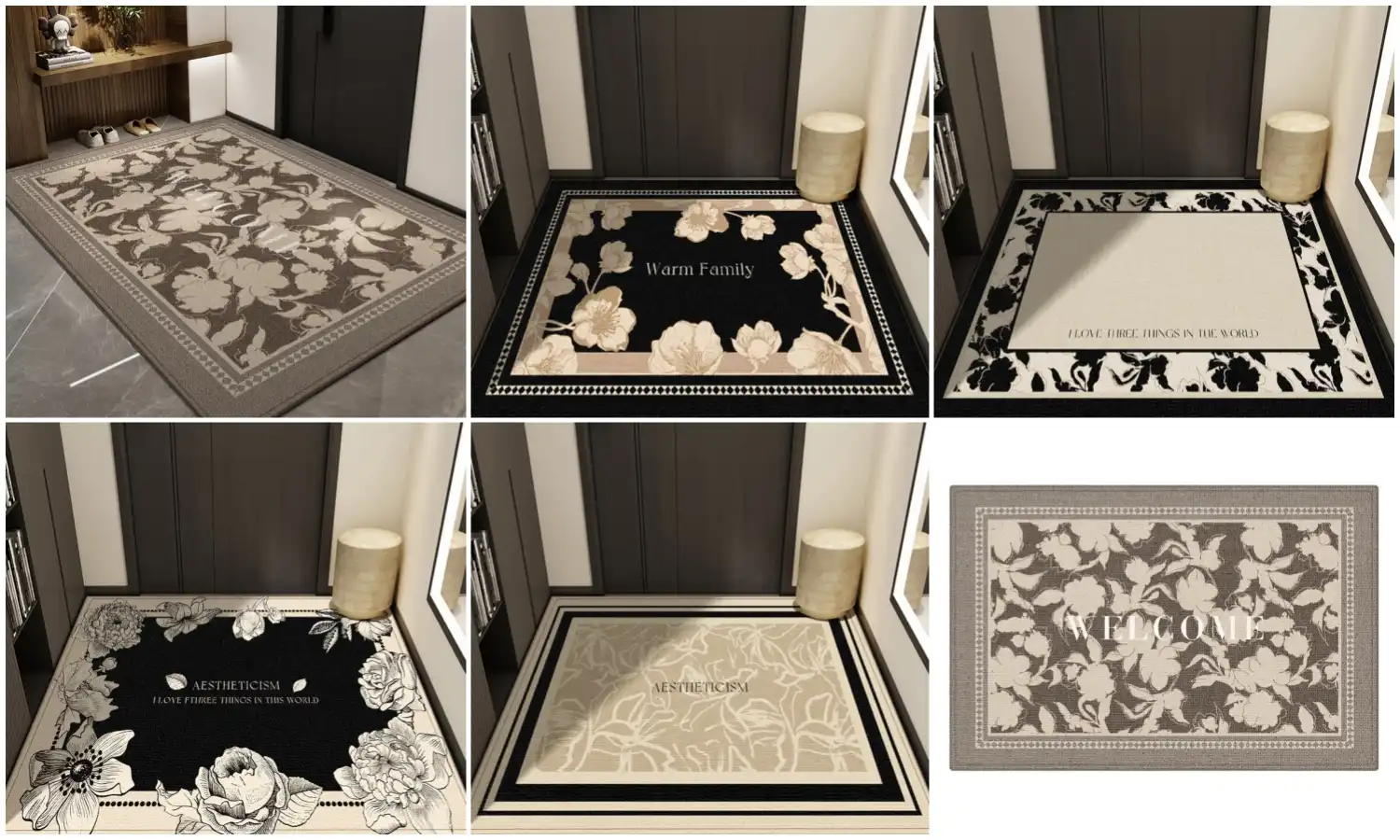
Understanding Thick Front Door Mats: Definition, Benefits, and Key Features
There is one clear way that a heavy-duty entrance mat is different from a regular floor covering: it can absorb mechanical stress, trap particles, and keep its shape even after being walked on over and over again. According to research from the Building Owners and Managers Association, up to 80% of indoor trash comes in through building entrances. This means that thick front door mats are one of the best ways to keep floors from wearing down.
What Makes a Mat "Thick" Enough for Commercial Use?
In this field, a mat is considered really thick when its total thickness is at least 6mm. At this depth, the pile structure can hold on to fine dust, soak up some water, and keep its shape even when there is a lot of traffic. The following product specifications show what a high-quality mat should be able to do:
| Parameter | Specification |
|---|---|
| Surface Material | Polyester |
| Bottom Material | Dot Plastic |
| Total Thickness | 6mm |
| Gram Weight | 900g/m² |
| Pile Height | 2mm |
| Edge-locking Width | 0.6cm |
| Surface Treatment | Stain-resistant, Anti-slip |
| Production Capacity | 10,000m²/Day |
The 6 mm profile makes the mat light and easy to get through doors, and the 900 g/m² weight density keeps the surface flat and stops it from curling or buckling at the edges.
Core Performance Advantages
These mats provide measurable functional value in three areas that procurement teams often look at:
- Wear resistance and easy upkeep: The tight loop pile design makes a dense tufted surface that doesn't get worn down by shoes, people walking on it, or moving equipment. Regular sweeping brings back the pile height, and spot cleaning gets rid of stains without harming the fibres with chemicals.
- Thermal and acoustic buffering: Dense looped polyester fibres make an insulating layer that keeps cold air from escaping from the ground in the winter. In hard-floored areas, these fibres also reduce impact noise and echo.
- Dimensional stability over time: Polyester fibre is better at resisting stretching and shrinking than natural fibres. A thick front door mat made with polyester fibre stays flat during long periods of use, which is important in plans where exact coverage sizes need to be known.
These benefits mean that they need to be replaced less often and require less work to clean, which is great for facilities managers who are trying to stick to tight upkeep budgets.
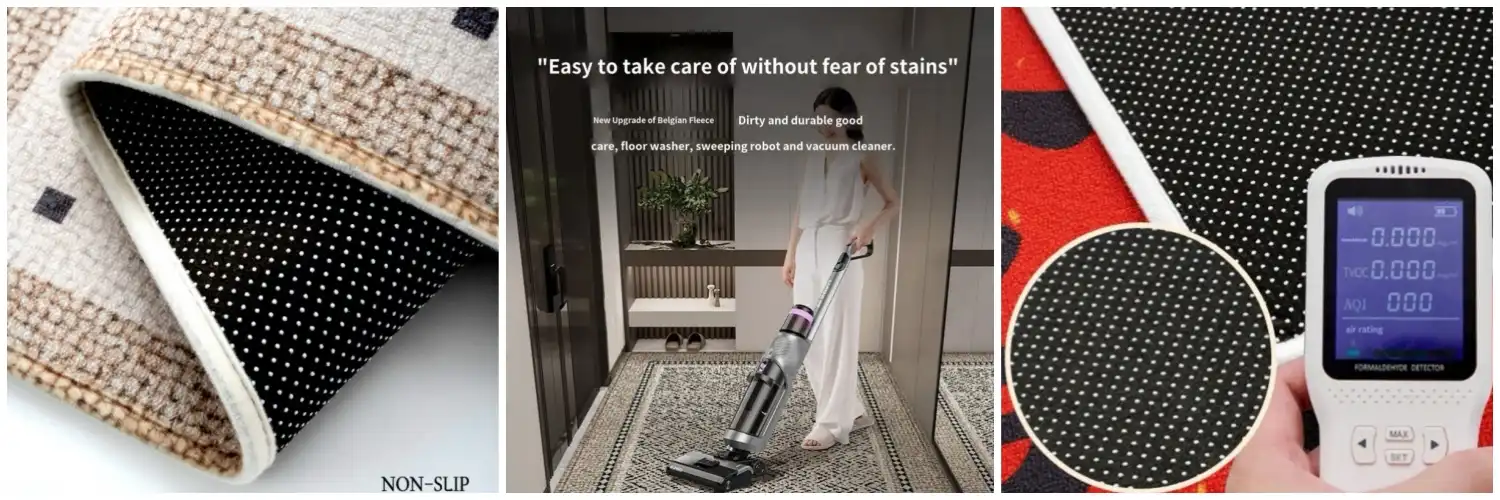
Comparing Thick and Thin Front Door Mats: Making the Right Procurement Choice
Thin mats work well for light-use home thresholds where looks are more important than longevity. In business settings like hotel hallways, office lobbies, show halls, and store doors, a thick front door mat always does a better job of lasting longer, keeping dirt in, and meeting safety standards.
Key Comparison Factors at a Glance
| Criteria | Thin Mat (≤4mm) | Thick Mat (≥6mm) |
|---|---|---|
| Traffic Tolerance | Light residential | Heavy commercial |
| Dirt Containment | Surface-level capture | Deep pile trapping |
| Non-Slip Safety | Variable | PVC dot backing standard |
| Replacement Frequency | Higher | Lower |
| Custom Branding | Limited | OEM/ODM available |
When purchasing managers look at the total cost of ownership instead of the price per unit, thick entrance mats have a better lifecycle value. The initial investment is balanced out by fewer purchases and less work needed for upkeep over the product's useful life.
Procurement and Buying Guide: How to Source Thick Front Door Mats for Your Business?
To source in bulk, you need to do more than just look through a product list. When buyers place large orders every month or three months for delivery in North America, Europe, or the Middle East, they need to be sure of the production capacity, the compliance paperwork, and the logistics for every thick front door mat shipment.
What to Priorise When Evaluating Suppliers?
To find a reliable business-to-business supplier of heavy-duty entrance mats, you need to look at four operational pillars:
- Certifications: Make sure the seller has approvals from CE, OEKO-TEX, ISO 9001, REACH, and EN 1350. These credentials show that the company meets the standards for quality control, safety, and the environment in all of the big import markets.
- Customisation capability: OEM and ODM services let retailers and distributors choose logo printing, custom colourways, and sizes that aren't standard, including options for a thick front door mat tailored to specific branding and space requirements. Laser cutting and heat transfer printing can handle large-scale drawings with complex forms and high resolutions.
- Packaging and logistics: Roll, box, or woven bag export-grade packaging should be able to handle pressure and wetness during ocean freight. Customs clearance risk is lower for suppliers who have long-term partnerships with freight forwarders.
- Sample lead time: For buyers who need things quickly, a factory that can make accurate samples in 24 to 48 hours cuts down on the cost of trial and error and speeds up the whole order process.
Sustainability is also a factor in buying things. With OEKO-TEX certification, you can be sure that the mat material has been tested against more than 100 harmful chemicals. This is in line with the growing demand for business responsibility from stores in Europe and North America.

Trusted Manufacturers and Suppliers: Who to Consider?
In the North American market, Mohawk, Gorilla Grip, Apache Mills, and Coco Mats are all well-known brands. Each has a well-known brand name among end users, especially in shopping outlets. Amazon Basics also has entry-level mats for e-commerce sites that are priced fairly.
For buyers who want to buy a thick front door mat directly from manufacturers — especially those who need OEM production, private label options, or large-volume replenishment — Tianjin Aijia Carpet Co., Ltd. is an export-focused manufacturer with 20 years of carpet production experience. Aijia is in Cuihuangkou Town, Wuqing District, Tianjin, which is in the middle of China's main carpet industry area. It can make 10,000 m² of carpets every day and inspect every single one of them before sending them out.
Orders smaller than 2,000 m² are shipped in about seven days. The plant offers one-stop compliance adaptation for customers in Europe, North America, and the Middle East. This includes full inspection results and export paperwork.
Maintenance and Longevity: Caring for Your Entrance Mats
Even a business mat that is well put together needs regular maintenance to keep working well. Regular vacuuming is a good way to keep polyester loop pile mats clean. Vacuuming removes particles from the pile channels without harming the fibre structure. Deeper dirt can be removed by wet cleaning with a mild detergent and a low-pressure rinse. This works especially well in places with a lot of wetness, like hotel hallways or food service areas.
Moving the thick front door mat around every couple of weeks spreads out the wear better and increases its useful life. Edge-locking seams should be checked every so often; a broken 0.6cm edge lock can lead to splitting that speeds up damage from the edges inward. When you can see pile compression that doesn't go away after cleaning, it's time to get a new one. Slip hazards can be avoided with proactive mat management, and the look that is needed in commercial settings is kept up.
Conclusion
To choose the best heavy-duty entrance mat, you need to look at the construction of the material, the pile density, the backing type, the safety certifications, and the reputation of the provider all at the same time. Hotels, offices, shops, and business projects can all use a 6 mm polyester loop pile thick front door mat with a PVC dot backing, a weight of 900g/m², and a surface treatment that makes it stain-resistant. When purchasing teams put total cost of ownership over unit price and work with qualified makers who can do OEM production, they set up their businesses to have stable quality and supply chains.
FAQ
1. What thickness is recommended for high-traffic commercial entrances?
For business settings, it's best to have a total thickness of at least 6mm. This depth gives the pile enough volume to trap particles and keep its shape even when it's being walked on for a long time without getting in the way of doors.
2. How does a thick mat outperform a thin one in moisture and dirt control?
The high-density loop pile structure keeps small amounts of water and debris inside the piles instead of letting them spread out on the floor. The PVC dot backing stops moisture from moving to the subfloor, which lowers the risk of slipping and damage to the floor.
3. Can entrance mats be customised with corporate logos or brand colours?
Yes, OEM and ODM production can do name printing with heat transfer, custom colours, and non-standard sizes and shapes with laser cutting for your thick front door mat order. These choices are good for hotel chains, store brands, and event planners who need to make sure that all of their locations look the same.
4. What certifications should I verify before placing a bulk import order?
Top the list with CE, OEKO-TEX, ISO 9001, REACH, and EN 1350. These are, in order, market entry compliance, material safety, quality control, chemical limits, and flame retardancy.
Partner with Aijia — Your Trusted Thick Front Door Mat Manufacturer
Aijia offers certified entrance mats that are ready to be exported and are made for bulk purchases. Aijia is the thick front door mat provider that brands and wholesalers across North America trust. They have 20 years of experience making products, can produce 10,000m²/day, and offer full OEM/ODM customisation, which includes name printing, custom sizing, and compliance with multiple markets. Every shipment goes through a full inspection before it leaves. To get examples or a price for a lot of items, email sales@aijiarug.com.
References
1. Building Owners and Managers Association (BOMA) International. Facility Management Best Practices Guide. 2022.
2. OEKO-TEX Association. OEKO-TEX Standard 100: Testing for Harmful Substances. 2023.
3. National Floor Safety Institute (NFSI). American National Standard for Safety Requirements for Floor Covering Products. 2021.
4. International Organisation for Standardisation. ISO 9001:2015 Quality Management Systems — Requirements. 2015.
5. European Committee for Standardisation. EN 13501-1: Fire Classification of Construction Products and Building Elements. 2019.
6. Textile World. Commercial Matting: Material Performance and Lifecycle Cost Analysis. 2023.
Request fast quotes for bulk carpets, OEM & ODM floor mats, supported by strict quality control and complete supply chain.