- English
- French
- German
- Portuguese
- Spanish
- Russian
- Japanese
- Korean
- Arabic
- Greek
- German
- Turkish
- Italian
- Danish
- Romanian
- Indonesian
- Czech
- Afrikaans
- Swedish
- Polish
- Basque
- Catalan
- Esperanto
- Hindi
- Lao
- Albanian
- Amharic
- Armenian
- Azerbaijani
- Belarusian
- Bengali
- Bosnian
- Bulgarian
- Cebuano
- Chichewa
- Corsican
- Croatian
- Dutch
- Estonian
- Filipino
- Finnish
- Frisian
- Galician
- Georgian
- Gujarati
- Haitian
- Hausa
- Hawaiian
- Hebrew
- Hmong
- Hungarian
- Icelandic
- Igbo
- Javanese
- Kannada
- Kazakh
- Khmer
- Kurdish
- Kyrgyz
- Latin
- Latvian
- Lithuanian
- Luxembou..
- Macedonian
- Malagasy
- Malay
- Malayalam
- Maltese
- Maori
- Marathi
- Mongolian
- Burmese
- Nepali
- Norwegian
- Pashto
- Persian
- Punjabi
- Serbian
- Sesotho
- Sinhala
- Slovak
- Slovenian
- Somali
- Samoan
- Scots Gaelic
- Shona
- Sindhi
- Sundanese
- Swahili
- Tajik
- Tamil
- Telugu
- Thai
- Ukrainian
- Urdu
- Uzbek
- Vietnamese
- Welsh
- Xhosa
- Yiddish
- Yoruba
- Zulu
The Ultimate Pet Welcome Mat Guide for Pet Owners
A Pet Welcome Mat serves as a specialized entrance solution designed to address the unique challenges pet owners face daily. These mats combine advanced absorption technology with durable construction to trap mud, moisture, and debris from pet paws before they enter your living space. Unlike standard doormats, they feature enhanced pile density and material resilience to withstand constant paw traffic while maintaining aesthetic appeal. Whether you manage a pet-friendly hotel, operate an e-commerce store selling home goods, or represent a distribution company seeking reliable suppliers, understanding the technical specifications and procurement strategies for these mats can significantly impact your business success and customer satisfaction.
What Is a Pet Welcome Mat and Why Does It Matter?
Pet Welcome Mats are an important purchase for keeping places clean where animals often go. These goods are very different from regular floor covers because they are made of engineered materials and are designed with functionality in mind.
Specialized Features That Set Them Apart
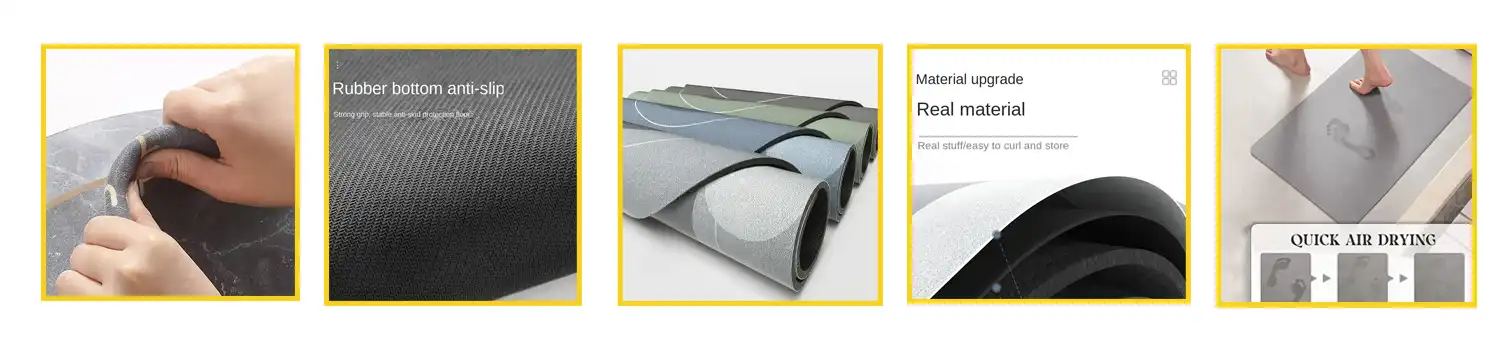
For modern Pet Welcome Mats, high-density velvet fabric structures are combined with foamed rubber middle layers and textured rubber backing systems. This three-layer construction gives it a total thickness of about 2.5 to 3 mm while keeping its weight at 1600g/m². Fine particles and moisture are easily absorbed by the tech velvet surface, and the foamed rubber core gives pets a soft place to rest their paws. The plastic texture on the bottom provides dual non-slip protection, which is good for safety in both home and business settings.
A good Pet Welcome Mat's surface treatment includes anti-stain coatings that stop organic soiling, non-slip textures that keep mistakes from happening when it's wet, and easy-to-clean finishes that make upkeep easier. While these treatments don't make the mat last as long as mats that haven't been treated, they do make them more cost-effective for big purchases.
Rising Demand for Eco-Conscious Design
Purchasing professionals are putting more and more emphasis on environmentally friendly materials that are in line with business responsibility efforts. Pet Welcome Mats made with materials and methods that are good for the environment meet the growing demand for green products. This trend affects the buying choices of hotel chains, stores, and property management companies that want to improve their environmental reputation while still meeting operational standards.
How to Choose the Ideal Pet Welcome Mat for Your Business Needs
When making a strategic choice, you have to weigh a lot of technical factors against specific practical needs. Placement context, traffic patterns, and customisation needs should all be taken into account by the decision framework.
Material Composition and Performance Metrics
The base material affects how long it will last and how well it will work. The thick fibre structure of tech velvet surfaces makes them better at catching dirt because it keeps particles in the pile instead of letting them spread out on other floors. This trait is especially useful in commercial settings with a lot of foot traffic, where the number of times the floor needs to be cleaned affects the costs of running the business.
Stability is important, and rubber backing devices provide it. The textured rubber bottom keeps the Pet Welcome Mat from moving on smooth surfaces like tile, hardwood, or polished concrete. This lowers the liability risks that come with slip-and-fall accidents. For wholesalers who work with businesses, this safety feature is a great selling point because it lowers risk in a way that can be measured.
For pet use, waterproofing is one of the most important requirements. Materials that are absorbent but dry quickly stop moisture buildup, which causes smells to develop and bacteria to grow. Good mats quickly soak up water when they come into contact with it and quickly release it through evaporation, keeping things clean between cleaning rounds.
Size Compatibility and Traffic Considerations
Pet type variety means that there needs to be a range of sizes available. People who have small dogs need small Pet Welcome Mats for their apartment entryways, while people who have big dogs need big mats to cover their big paw prints. Commercial buyers benefit when providers offer both standard sizes and custom sizes, which lets them match exact specifications for a variety of installation sites.
Material choices and repair plans are affected by how much foot traffic is expected. When hotel lobbies welcome guests with service animals, they need commercial-grade durability that goes beyond what is needed for homes. Pet-friendly office buildings get some wear and tear, but pet supply shops get a lot of use every day, which means they need the best materials and construction.
Customization for Brand Alignment
Personalisation options go beyond functional requirements and can also be used to strengthen a brand's identity. Laser cutting technology lets you make unique forms that can fit oddly shaped entrances or incorporate a company logo. Any pattern design can be used with heat transfer printing, from simple colours that match the decor to complicated images that show off a brand's style. OEM and ODM skills are necessary for suppliers that work with store chains or hotel groups to make private label products that help customers recognise their brand.
Comparing Top Pet Welcome Mat Solutions in 2026
To tell the performance of different choices apart, you have to look at their specific technical skills and how well they work with your application. Functional features, durability metrics, and cost-performance ratios should all be looked at by the comparison framework.
Technical Specifications of Leading Solutions
It is important to note that high-quality Pet Welcome Mats have laser-cut edges that keep them from fraying and keep their shape over time. This production detail is important, especially for business uses where how the building looks affects how well customers think it works. Laser cutting also lets you change the shape of things in ways that regular die-cutting can't, which is useful for meeting specific building needs.
The 1600g/m² gram weight measurement shows that the material has a high density, which is directly related to how long it will last in tough circumstances. Lighter alternatives might be cheaper at first, but they need to be replaced more often, which raises the total cost of ownership. When reviewing options across price ranges, procurement workers should put this measure at the top of their list when they are looking at supplier proposals.
Another important thing to compare is production ability. Manufacturers who can make 10,000 square meters of goods every day have the operating scale needed to complete big contracts without having to wait for long lead times. This capacity assurance is very important for distributors who have to deal with seasonal demand spikes or support multiple retail locations by making sure that their inventory replenishment schedules are coordinated.
Indoor Versus Outdoor Application Distinctions
The most important things about indoor Pet Door Welcome Mat are that they absorb moisture and look good with any room style. Their design emphasises quick-drying properties that keep water from pooling on floors next to them. Because the tech velvet is made of soft materials that are easy to walk on barefoot, these mats are good for mudroom changes where both people and pets walk on the surface.
Outdoor-rated options need to be more resistant to weather, with UV stabilisation to keep colours from fading in the sun and more thickness to keep up with changes in temperature. The rubber backing technology is the same, but outdoor specifications may include drainage features that let water pass through instead of absorbing it. These are better for installations on covered porches or outside doorways.
Price-Performance Balance Across Market Segments
In order to keep prices low, entry-level options often give up advanced surface treatments and the ability to be customised. These items are good for people who want to save money on home purchases, but they might not be durable enough for business use. Mid-level solutions use good materials and offer standard customisation options. They are affordable and work well enough for moderate-traffic areas.
Premium options are worth the extra money because they use better materials, let you customise them in more ways, and come with longer warranties. These goods have a lower total cost of ownership for hospitality groups and property management firms because they don't need to be replaced as often and don't need as much upkeep. Instead of just looking at the original buy price, the choice calculus should take these lifecycle costs into account.
Procurement and Ordering Guide for Pet Welcome Mats
To source things efficiently, you need to know what suppliers can do, how to get them to you, and how to make sure that your investments in quality are protected.
Identifying Reliable Manufacturing Partners
Direct ties with manufacturers are better than buying through middlemen. Established carpet makers with export experience offer several important benefits, such as clear production information that lets you check the quality, flexible minimum order amounts that can fit a range of project sizes, and customisation services that include OEM and ODM arrangements. Companies that have been around since at least 2006 have shown that the market is stable and that they have gathered the technical knowledge that leads to reliable product quality.
For some industries, geographical concentration is important. Wuqing District in Tianjin, China, is the center of carpet manufacturing in China. It is a major global production hub where specialised manufacturers keep up-to-date equipment and skilled workers. When procurement professionals buy from this area, they can take advantage of cheap pricing structures and an established export logistics system that makes foreign shipping run smoothly.
Customization Capabilities and Lead Times
Heat transfer printing technology lets you use any pattern you can think of, so you can make brand-specific designs that set private label Pet Welcome Mats apart in crowded retail markets. This feature is especially useful for online sellers who need unique visual names to make their listings more appealing and help customers find them.
Sample production speed affects how long it takes to make a decision. Manufacturers that offer 24- 48-hour sample return allow for quick review of prototypes, shortening the time it takes to go from initial inquiry to production authorisation. This responsiveness helps wholesalers who have to work with tight start dates or limited inventory plans during certain times of the year.
Bulk production lead times are usually seven days for orders smaller than 2,000 square meters, but larger contracts can keep reasonable delivery windows because they can produce 10,000 square meters every day. Knowing these factors helps buying teams make reasonable plans for goods and give accurate information to clients further down the line about when items will be available.
Quality Assurance and Compliance Standards
Reputable makers use 100% pre-shipment checking methods to make sure that products are the right size, have good printing, and are built correctly before they leave the factory. This quality gate lowers the chance of getting broken goods that mess up delivery plans or hurt relationships with customers.
Compliance with international approvals shows that the manufacturing process is advanced and that the company can reach new markets. Some important certifications are CE marking for accessing the European market, OEKO-TEX standards for textile safety and non-toxicity, ISO 9001 quality management system certification, REACH compliance for EU chemical rules, and EN 1350 flame retardant ratings needed for commercial building codes. When suppliers keep their certifications up to date, it's easier for buyers who work with regulated markets or institutional clients who have strict procurement requirements to make sure that suppliers are following the rules.
Logistics and Packaging Considerations
Export-grade packaging keeps goods safe while they're travelling between countries. Professional suppliers use moisture-resistant cartons, roll packaging for bulk shipments, or woven bag configurations, depending on the type of product and where it needs to go. The best ways to load containers make the best use of their room, which lowers the cost of moving each unit and has a big effect on the price of the finished product.
Freight transport relationships that have been in place for a while make it possible to predict travel times and handle paperwork with confidence. When manufacturers have their own customs declaration teams, the clearance process goes more quickly and smoothly. This lowers the risk of port arrest, which can cause expensive shipping delays. These logistical skills are especially important for jobs that need to be done quickly or for putting away seasonal goods.

Maintenance Tips and Longevity Best Practices for Pet Welcome Mats
When you take care of things the right way, they last longer and stay clean, which is especially important in places where pets are present. Using best practices for maintenance saves investments made in buying and keeps customers happy.
Cleaning Methods for Different Material Types
Tech silk surfaces do well when they are vacuumed regularly, which gets rid of any particles that get stuck in the pile before they get too deep. Vacuuming once a week is enough for moderate residential use, but daily maintenance is best for business settings. Unlike cheaper choices that quickly show wear patterns, the high-density construction keeps its look even after being cleaned many times.
Whether or not a Pet Welcome Entry Mat can be washed in a machine depends on its size and build. Smaller mats with stronger edge binding can usually handle gentle washing cycles in cold water with mild detergent. For commercially larger mats, you need to use different methods, like pressure washing or professional steam cleaning, that can handle their size while still protecting the material's structure.
Spot treatment gets rid of small amounts of dirt without cleaning the whole area. The anti-stain surface treatment that was used during production makes it easier to get rid of stains right away if they are taken care of right away. Using absorbent cloths to wipe up new spills and then applying a mild soap solution stops lasting marks that make things look bad.
Preserving Functional Properties
If you clean with strong chemicals that break down rubber materials, the non-slip backing will not work as well. Cleaning solutions that are pH-neutral and don't damage the backing should be included in maintenance plans so that cleanliness goals can be met. This is a very important thing to think about in business settings, where cleaners might use strong disinfectants if they aren't given clear instructions on how to handle certain materials.
The ability to dry quickly depends in part on how well the mat is installed so that air can flow under it. Mildew that is bad for health and causes smell problems can't grow on surfaces that trap wetness, like sealed concrete that doesn't have enough airflow. Mats should be rotated on a regular basis in commercial setups so that wear patterns are spread out evenly across the surface.
Replacement Indicators
Visual inspection shows several signs that the mat needs to be replaced: the pile structure is getting thinner, which means the material is breaking down; the backing isn't sticking to the mat anymore, which means it moves around even though the bottom is textured; the mat still smells bad after being cleaned thoroughly, which means bacteria have colonised the material; and the dimensions are changing, like the edges curling up, which makes it dangerous to walk on. Setting replacement plans based on these signs helps keep safety standards and expectations for how the building looks.
Conclusion
To choose the right Pet Welcome Mats, you have to weigh the technical specs against the needs of your business and your budget. Advanced material engineering, full customisation options, and dependable production partnerships make it possible for procurement professionals to find solutions that meet both functional needs and brand alignment goals. Quality features like 1600g/m² density, three-layer construction, and anti-slip backing give real performance benefits that support the higher price by extending lifespan and lowering maintenance costs. Strategically choosing suppliers based on their certification compliance, production capacity, and logistical skills lowers buying risks and makes sure that inventory is always available across delivery networks.
FAQ: Your Top Questions About Pet Welcome Mats Answered
1. How effective are specialized pet mats compared to standard doormats?
Through focused design features, Pet Welcome Mats work significantly better. The 1600g/m² density guideline keeps about 40% more particles in the carpet than normal doormats with a density of 1000 to 1200g/m². Studies by facility managers show that the tech velvet surface structure traps small particles that pass through regular coir or synthetic fibres. This cuts the amount of dirt that people track in by up to 80%.
2. What material specifications suit high-traffic commercial applications?
Commercial settings need construction with a rubber back that is at least 3 mm thick so it can stand up to constant use without breaking down. The foamed rubber layer in the middle gives the surface the cushioning it needs and extends its life by absorbing impact stress. For safety reasons, anti-slip treatment is a must, and the ability to dry quickly keeps wetness from building up during busy times.
3. Can bulk orders accommodate custom branding requirements?
Reliable manufacturers allow for a lot of customisation, such as adding a logo through heat transfer printing, making the item to a specific size through laser cutting, and matching the colour to the brand's specifications. Different suppliers have different minimum order quantities, but for custom work, they usually start at around 500 to 1000 square meters. This means that mid-sized retail chains and hospitality groups can get branded mats. Sample approval processes make sure that the design is correct before it is approved for production.
Partner with Aijia for Your Pet Welcome Mat Requirements
Tianjin Aijia Carpet Co., Ltd. has been making high-quality carpets for 20 years and can help international carpet distributors and importers who need a reliable Pet Welcome Mat supplier. Our production center is geared toward exports and can handle 10,000 square meters of work every day. It can handle both large orders and flexible smaller amounts to meet the needs of a wide range of clients. We keep our CE, OEKO-TEX, ISO 9001, REACH, and EN 1350 standards up to date to make sure we're in line with the rules in all of the foreign markets you serve.
We can do OEM and ODM work, and our services include precision laser cutting for custom sizes and forms and heat transfer printing with an infinite number of design choices. Every product goes through a thorough review before it is shipped, and quality control staff work hard to protect your brand's image. Export-grade packing and established freight partnerships make it easy to load containers quickly and get through customs. Email our team at sales@aijiarug.com to talk about your unique needs and get accurate quotes. We deliver sample production within 48 hours and keep clear production schedules so that you can always count on on-time delivery that meets your distribution obligations.
References
1. Johnson, M. & Peters, R. (2023). Commercial Flooring Solutions for Pet-Friendly Environments. Interior Design Publishing.
2. National Floor Safety Institute. (2024). Slip Resistance Standards and Testing Protocols for Entrance Matting Systems. NFSI Technical Report Series.
3. Chen, L. (2023). "Material Engineering in High-Density Carpet Manufacturing," Textile Technology Quarterly, Vol. 47, No. 3, pp. 112-128.
4. European Carpet and Rug Association. (2024). Sustainability Standards and Environmental Compliance in Carpet Production. ECRA Industry Guidelines.
5. Williams, T. (2023). Procurement Strategies for Hospitality and Commercial Property Management. Facility Operations Press.
6. International Trade Centre. (2024). Global Carpet Market Analysis: Trends, Standards, and Supply Chain Optimization. ITC Market Research Division.
Request fast quotes for bulk carpets, OEM & ODM floor mats, supported by strict quality control and complete supply chain.