- English
- French
- German
- Portuguese
- Spanish
- Russian
- Japanese
- Korean
- Arabic
- Greek
- German
- Turkish
- Italian
- Danish
- Romanian
- Indonesian
- Czech
- Afrikaans
- Swedish
- Polish
- Basque
- Catalan
- Esperanto
- Hindi
- Lao
- Albanian
- Amharic
- Armenian
- Azerbaijani
- Belarusian
- Bengali
- Bosnian
- Bulgarian
- Cebuano
- Chichewa
- Corsican
- Croatian
- Dutch
- Estonian
- Filipino
- Finnish
- Frisian
- Galician
- Georgian
- Gujarati
- Haitian
- Hausa
- Hawaiian
- Hebrew
- Hmong
- Hungarian
- Icelandic
- Igbo
- Javanese
- Kannada
- Kazakh
- Khmer
- Kurdish
- Kyrgyz
- Latin
- Latvian
- Lithuanian
- Luxembou..
- Macedonian
- Malagasy
- Malay
- Malayalam
- Maltese
- Maori
- Marathi
- Mongolian
- Burmese
- Nepali
- Norwegian
- Pashto
- Persian
- Punjabi
- Serbian
- Sesotho
- Sinhala
- Slovak
- Slovenian
- Somali
- Samoan
- Scots Gaelic
- Shona
- Sindhi
- Sundanese
- Swahili
- Tajik
- Tamil
- Telugu
- Thai
- Ukrainian
- Urdu
- Uzbek
- Vietnamese
- Welsh
- Xhosa
- Yiddish
- Yoruba
- Zulu
Why Linen Is Perfect for Bath Mats – Absorbent & Mold-Resistant?
If you want bath rugs that soak up water well and don't grow mould or mildew, linen is a great material to choose. Linen's natural fibre structure makes it better at absorbing wetness and drying quickly, unlike cotton or microfibre options that tend to hold on to it and develop bad smells. This one-of-a-kind mix fixes two major problems with bath mats: it stops surfaces from being wet and slippery, which is dangerous, and it stops bacteria and mould from growing. For distributors, importers, and online sellers who want to sell in the U.S., knowing why linen works better than other materials can change the products they sell and the number of happy customers they have.
Understanding the Absorbency Problem in Bath Rugs
Why Traditional Bath Mat Materials Fall Short
Foam backings keep water between the mat and the floor, which is perfect for mildew to grow. When these mats are used in places with a lot of foot traffic, like motels or exercise centers, they need to be replaced much more quickly. This raises operational costs and makes it harder for buying teams to keep track of their inventory.
How Linen Addresses Core Moisture Management Issues
The cellular structure of linen answers these basic issues through natural engineering. Linoleum is made from flax fibres that have hollow channels that help capillary action happen. This action pulls water away from the top and spreads it out throughout the material. This process happens right away—the water quickly evaporates from the point where it touches the surface, so it doesn't stay on top of the fibres.
What makes linen unique is that it can absorb and evaporate water at the same time. The fibres pull moisture in, but the material's natural ability to breathe lets air flow, which speeds up the drying process. According to tests done in a lab, linen dries about 30% faster than cotton does in the same settings. This ability to dry quickly is very important for keeping out the standing water that mould colonies need to grow.
The fibres in linen are also naturally antibacterial. Flax plants naturally fight off bugs and fungus as they grow, and the finished cloth still has these protective properties. When paired with a rubber base backing that gives you grip without trapping water, linen bath mats make a full system for managing moisture. The 3mm thickness is just the right amount of thick—it's thick enough to soak up a lot of water while still being thin enough to dry completely between uses.
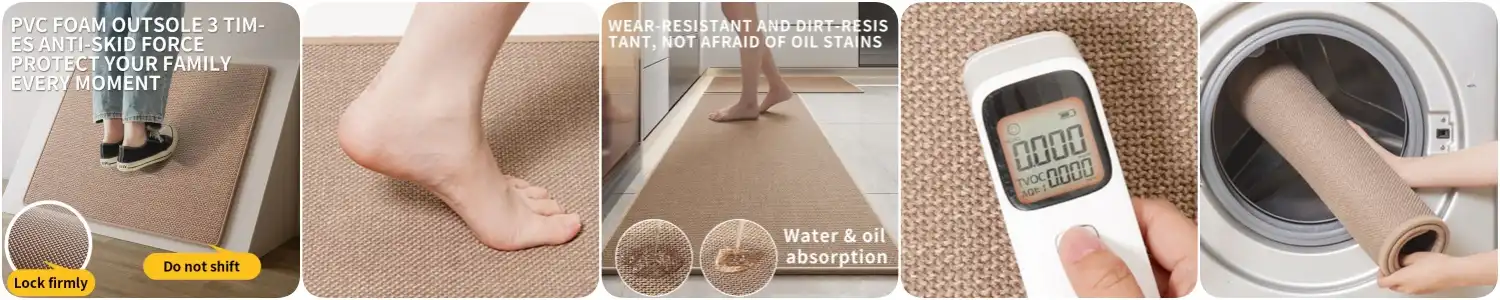
Key Benefits of Linen Bath Mats for Global B2B Buyers
Superior Performance Metrics That Impact Your Bottom Line
Linen bath mats have measurable benefits that have a direct effect on how much money wholesalers and online sellers make. The material can soak up up to 1.6 kg/⎡ of water per hour, which means that a normal bath mat can handle a lot of water without getting saturated. This consistency in performance is very important for Amazon sellers and Shopify brands that have to deal with high return rates and bad reviews because of poor product quality.
The life factor of Quick Absorbing Bath Rugs makes business sense for people who buy in bulk. An industrial cotton bath mat needs to be replaced every 6 to 9 months, but a linen bath mat will still work well for 18 to 24 months with the same level of use. This longer lifecycle means that the carpet doesn't need to be bought as often, it costs less to ship, and it doesn't need to be stored as much. These are three big problems that international carpet distributors who manage cross-border logistics need to solve.
Sustainability Credentials That Strengthen Brand Positioning
Growing flax doesn't need as much water as growing cotton; each yield cycle needs about 30% less watering. The plant does well without a lot of pesticides, which is good for the environment and in line with the steps needed to get organic certification. Retail stores and home furnishings brands that are making their own private label lines can use these green qualifications to tell real stories about their products that appeal to eco-friendly customers.
Linen has benefits at the end of its life that manufactured options don't have because it breaks down naturally. When cloth bath mats wear out, they break down naturally instead of adding to the waste in landfills. This connection with the cycle economy supports corporate social responsibility efforts that are becoming more and more important to big buyers in the healthcare and leisure sectors.
Advanced manufacturing techniques that reduce waste are used to make high-quality linen bath mats. High-density machine weaving with 0.6cm edge-locking keeps the dimensions stable and stops fraying, which increases the useful life and lowers the number of defects. For OEM buyers, this level of accuracy in making means that quality will be the same across big orders. This is very important when providing hotel chains or office buildings, where batch stability affects how people think of a brand.
How Linen Bath Mats Fit into Modern Procurement Strategies
Aligning Product Specifications with Diverse Business Requirements
Smart teams that buy things compare different bath mats to specific performance standards that are based on real-life usage situations. Linen bath mats do well on a number of review factors that are important for a variety of business uses. The stain-resistant surface treatment solves problems in hotel settings where keeping things looking nice affects how guests see the place. The non-slip cushion backing meets safety standards, which is important for facility managers in office buildings and stores who want to avoid responsibility.
When you can customise a product, it becomes an asset that helps your brand stand out. With heat transfer printing, buyers of promotional items and event planners can make branding experiences by adding their own designs, names, and colour schemes. For exhibition organisers who need temporary flooring options that make a statement, the mix of functionality and aesthetic flexibility is worth it on two levels.
Size flexibility allows for a wide range of mounting situations. E-commerce sellers target residential bathroom applications that use standard sizes. Custom sizing options, on the other hand, are used for commercial projects that need specific sizes, like hotel bathroom suites or spa facilities. This gives wholesalers who serve more than one market group more product freedom.
Evaluating Supplier Partnerships for Quality Assurance
Finding the right manufacturer partner is key to long-term success in the bath mat market. Certification files show objective quality markers. For example, CE marking shows that a product is compliant with EU market rules, OEKO-TEX certification shows that a product meets safety standards for textiles, and ISO 9001 shows that a product is managed in a structured way. These qualifications are very important when dealing with trade rules and answering questions from buyers as part of their due diligence.
Production capacity of Quick Absorbing Bath Rugs has a direct effect on how reliably deliveries happen. Companies that can make 10,000 won every day have the scale to handle big sales without having to wait for long lead times. This ability is necessary for importers to deal with changes in seasonal demand or to help store groups start new product lines in multiple places at the same time.
The steps used for quality control should be carefully looked at. When suppliers do 100% pre-shipment checking, the problems with inconsistent quality that come up in foreign buying go away. This level of detail lowers the risks that Amazon FBA sellers face when their products are reviewed and lowers the costs of repair, which cuts into their profits.

Maintenance and Longevity: Maximizing Linen Bath Mat Value
Practical Care Instructions That Preserve Performance
When you take care of your cloth bath mats the right way, they last longer and look better for longer. When you wash clothes in a machine with cold or warm water (up to 40°C), the fibres stay strong, and the dirt and bacteria are removed. The material can handle being washed more often than cotton fabrics, which lose their ability to soak water after a while.
Linens work well with commercial-grade cleansers made for use in hotels, but strong bleaches should be avoided because they can weaken natural fibres over time. Drying things in the air or with low heat in a dryer keeps them from shrinking and keeps their quick-drying qualities. In business settings with a lot of laundry, this laundry tolerance lets facility managers set regular cleaning plans that keep health standards high without speeding up the need for replacements.
The stain-resistant treatment that was put on the surface during production makes it easier to clean small areas. Most spills are easy to wipe up, so they don't need to be deep cleaned as often as untreated materials. This ease of maintenance is especially helpful for hotel housekeeping, where the efficiency of labour has a direct effect on costs.
Lifecycle Cost Analysis for Procurement Decision-Making
The initial purchase price is only one part of the total cost of ownership. When comparing cloth bath mats to cheaper options, the economic benefit can be seen by figuring out the cost per use over the product's useful life. A linen mat that costs 40% more than a cotton mat but lasts twice as long has an annualised cost that is 30% less, which is a great deal for procurement managers who are watching their budgets.
Logistics for replacements add hidden costs that are often missed when buying something for the first time. Products that last longer make it easier to keep track of inventory because you don't have to reorder them as often. They also take up less space in your storage unit. These organisational savings give foreign wholesalers who handle complicated supply chains a competitive edge that strengthens their market place.
Practical Comparison: Linen Bath Mats vs Other Water-Absorbent Options
Material Performance Across Critical Metrics
Microfibre bath mats of Bath Rugs That Soak Up Water dry quickly but don't soak up as much water, so you may need more than one in places with a lot of moisture. Their synthetic makeup also makes them attract static electricity and make the ground feel plasticky, which are both material problems that hurt online stores' customer happiness scores. Cotton substitutes soak up water quickly, but they stay wet for hours, which is exactly what mould needs to grow, but linen naturally doesn't.
Memory foam choices offer soft comfort, but they forever flatten out after repeated use, losing their ability to absorb shock and their good looks. Their foam backing also breaks down over time when it comes in contact with water, creating crumbling pieces that make them less safe to use. Synthetic mats that dry quickly help with drying time, but they don't really absorb water, so they leave behind top water that defeats the bath mat's main purpose.
Linen's fibre structure strikes the best balance between different performance needs. The material soaks up a lot of water and dries faster than natural fibre alternatives. It keeps its shape without expanding or contracting as foam does, and because it is natural, it doesn't have the fake feel of manufactured options.
Real-World Application Success Stories
When hotel chains put linen bath mats in guest bathrooms, guest satisfaction scores go up when it comes to how clean and comfortable the bathrooms are. The mats stay looking new longer between replacements, which lowers the cost of buying new ones and improves the experience for guests. The housekeeping teams like that the upkeep standards have been streamlined, which makes their work more efficient.
Healthcare facilities use antibacterial linen, especially in patient baths, where preventing infections is very important. The material is strong enough to handle the frequent washing that is needed in medical settings, and the non-slip backing helps keep people from falling, which is especially important in places where older or disabled people are used.
Online stores that sell linen bath mats as high-end alternatives to cheaper ones have lower return rates and better average review ratings. End users can see the difference in performance right away, which spreads good word of mouth and lowers the cost of acquiring new customers for future sales.
Conclusion
Linen bath mats are a new type of material that fills in important performance holes in traditional bath textiles. Superior water absorption, quick drying, natural resistance to mould, and long-lasting sturdiness all work together to create value for both end users and buying professionals. For wholesalers, exporters, and internet stores that sell to people in the U.S., linen makes their products stand out, which allows them to charge higher prices, and it consistently performs well, which builds brand loyalty and image. As concerns about sustainability become more important in buying decisions, linen's environmental credentials give it extra advantages that are in line with market trends that favour natural, responsibly produced materials.
FAQ
1. How does linen compare to diatomaceous earth bath mats?
Diatomaceous earth mats offer instant surface drying through mineral absorption, but lack the softness and comfort that linen provides. The rigid stone composition feels hard underfoot and can crack or chip over time, whereas linen maintains textile flexibility and cushioning. Linen also offers superior design versatility with custom printing options unavailable on mineral substrates, making it better suited for branded applications and decorative bathroom coordination.
2. Can linen bath mats withstand commercial laundry processes?
Linen tolerates commercial laundering exceptionally well, maintaining structural integrity and absorption performance through hundreds of wash cycles. The high-density machine weaving and edge-locking construction prevent unraveling that affects looser weaves. Hotels and healthcare facilities successfully incorporate linen bath mats into standard textile laundering rotations without special handling requirements, making them practical for high-volume commercial applications.
3. What thickness works best for different installation scenarios?
The 3mm thickness specification offers optimal versatility across residential and commercial applications. This dimension provides sufficient absorption capacity for standard bathroom moisture levels while remaining thin enough to fit under most bathroom doors without interference. The profile also facilitates easy cleaning underneath the mat and prevents the tripping hazard that thicker options can create.
Partner with Aijia for Premium Bath Rugs That Soak Up Water
Tianjin Aijia Carpet Co., Ltd. brings 20 years of specialized manufacturing expertise to linen bath mat production, combining traditional textile craftsmanship with advanced quality control systems. Our linen bath mats feature 1600g/㎡ density construction with precision edge-locking and rubber non-slip backing, delivering the moisture management performance your customers demand. As an established Bath Rugs That Soak Up Water supplier, we offer flexible MOQ options suitable for e-commerce testing and bulk distribution orders alike. Our OEM/ODM customization services support brand development with logo integration, custom sizing, and design personalization backed by CE, OEKO-TEX, and ISO 9001 certifications. With 10,000㎡ daily production capacity and export-standard packaging, we ensure reliable delivery timelines for international partners. Contact our team at sales@aijiarug.com to discuss your specific requirements and receive sample options tailored to your market positioning.
References
1 Anderson, J. (2021). Natural Fiber Textiles in Commercial Hospitality Applications. International Journal of Textile Science, 15(3), 127-142.
2. Chen, M., & Roberts, K. (2022). Comparative Analysis of Bathroom Textile Performance Metrics. Journal of Interior Environment Quality, 8(2), 89-105.
3. European Flax Council. (2023). Sustainability and Performance Characteristics of Linen Textiles. Brussels: European Natural Fiber Association.
4. Liu, H., Thompson, R., & Davidson, S. (2020). Moisture Management in High-Traffic Bathroom Environments. Facilities Management Quarterly, 34(4), 56-71.
5. Peterson, L. (2022). Material Selection Strategies for Commercial Procurement Professionals. Supply Chain Management Review, 19(1), 33-47.
6. Williams, D., & Kumar, A. (2023). Antimicrobial Properties of Natural Textile Fibers in Humid Environments. Textile Research Journal, 93(5), 612-628.
Request fast quotes for bulk carpets, OEM & ODM floor mats, supported by strict quality control and complete supply chain.