- English
- French
- German
- Portuguese
- Spanish
- Russian
- Japanese
- Korean
- Arabic
- Greek
- German
- Turkish
- Italian
- Danish
- Romanian
- Indonesian
- Czech
- Afrikaans
- Swedish
- Polish
- Basque
- Catalan
- Esperanto
- Hindi
- Lao
- Albanian
- Amharic
- Armenian
- Azerbaijani
- Belarusian
- Bengali
- Bosnian
- Bulgarian
- Cebuano
- Chichewa
- Corsican
- Croatian
- Dutch
- Estonian
- Filipino
- Finnish
- Frisian
- Galician
- Georgian
- Gujarati
- Haitian
- Hausa
- Hawaiian
- Hebrew
- Hmong
- Hungarian
- Icelandic
- Igbo
- Javanese
- Kannada
- Kazakh
- Khmer
- Kurdish
- Kyrgyz
- Latin
- Latvian
- Lithuanian
- Luxembou..
- Macedonian
- Malagasy
- Malay
- Malayalam
- Maltese
- Maori
- Marathi
- Mongolian
- Burmese
- Nepali
- Norwegian
- Pashto
- Persian
- Punjabi
- Serbian
- Sesotho
- Sinhala
- Slovak
- Slovenian
- Somali
- Samoan
- Scots Gaelic
- Shona
- Sindhi
- Sundanese
- Swahili
- Tajik
- Tamil
- Telugu
- Thai
- Ukrainian
- Urdu
- Uzbek
- Vietnamese
- Welsh
- Xhosa
- Yiddish
- Yoruba
- Zulu
4 Reasons Your Living Room Needs a Rug
A living room without a rug feels incomplete—not just visually, but functionally. Indoor rugs for living room spaces deliver more than decorative appeal; they solve real challenges in comfort, acoustics, aesthetics, durability, Indoor Rugs For Living Room and cost efficiency. Whether you manage procurement for hotels, operate an e-commerce storefront, or source for retail chains, understanding how area rugs enhance living environments helps you make smarter purchasing decisions. This article explores four compelling reasons why living rooms benefit from quality rugs and how the right supplier can transform your procurement strategy.
Enhance Comfort and Acoustic Quality in Your Living Room
Creating Warmth and Cushioning Underfoot
It feels rough to walk on cold tile or hard floors, especially when it's cold outside. Area rugs in the living room add instant warmth and comfort that changes the way a space feels to the touch. In business settings, like hotel lounges or company reception areas, this comfort factor has a direct effect on how happy guests are and how healthy employees are. Premium short-pile rugs have a fake cashmere surface that feels soft against the skin and closely resembles natural fibres while still being durable. These rugs are soft without being too thick or tripping risks, with a pile height of only 3mm and a total thickness of 5mm. Material composition is very important for B2B buyers who are looking for rugs for high-traffic areas. Polyester fibre surfaces with a density of 350g/⎡ are the right amount of soft and resilient, so they don't get too compressed in places where people stand or walk a lot. The removable TPR thermoplastic rubber base makes the unit more stable and protects the floors below from damage and wear. This way of building handles ergonomic issues in places where people spend a lot of time, making them more comfortable overall and reducing foot fatigue.
Reducing Noise Pollution Through Sound Absorption
Sound waves are reflected off hard surfaces, making rooms that bounce feel chaotic and unprofessional. Rugs are good at blocking out noise because they soak up impact sounds and shorten the time they reverberate in living rooms. This is especially helpful in open-concept commercial spaces, showrooms, and hospitality settings where noise levels directly affect how well things work and how nice the atmosphere is. Machine-woven construction with locked edges at 0.6cm width makes sure that rugs stay structurally sound even after being walked on over and over again. There is enough mass in the 1000g/Ⅵ gram weight to keep sound energy from moving through the floor. Hotels that put area rugs in their guest lounges say that the rooms are noticeably quieter, which makes it easier for people to talk to each other and cuts down on complaints from guests about noise. In the same way, carpeted areas in offices make them more productive places where teams can work together without disturbing people at nearby desks. When choosing rugs for soundproofing reasons, you should think about both the pile density and the backing materials. When you mix high-density fibres with a rubberized backing, you get sound dampening that works on both airborne and contact noise. This means that properly chosen living room rugs are not just decorative items, but important parts of business acoustic management strategies.
Elevate Aesthetic Appeal and Brand Environment
Defining Spaces and Creating Visual Anchors
Interior designers use rugs to separate rooms into useful areas, especially in open-plan designs where walls don't naturally divide the space. A rug of the right size holds together groups of furniture, clearly marks places to talk, and makes intentional paths that help people move through rooms. This zoning feature is very useful in business settings, where organizing space has a direct effect on how users feel and how well operations run. The flexible customization options offered by specialized manufacturers let procurement managers choose exact sizes that meet architectural needs. Being able to change rug sizes makes sure that they cover the most space, whether you're looking for a normal 5x7 format or custom sizes for odd floor plans. Laser cutting technology makes it possible to make precise products with odd shapes and exact measurements. This means that you don't have to settle for off-the-shelf items that don't quite fit the place you want them to. Colour and pattern choice also play a big role in creating a brand environment. With heat transfer printing technology, any design can be made. This includes incorporating company branding, matching specific colour palettes, or copying architectural patterns. With this ability to customize, rugs go from being plain floor coverings to smart brand expression tools that help people remember your business, Living Room Indoor Carpets and create memorable experiences for visitors.
Supporting Current Design Trends and Material Innovation
Natural textures, eco-friendly materials, and neutral colour schemes that can be used in many ways are popular in modern design. These styles add visual interest to areas without making them too busy. In response to this trend in style, the fake cashmere finish gives items the look of expensive natural fibres while also making them easier to clean and less expensive. The way it looks and feels is very similar to real cashmere, meeting high-end design needs without the high cost and care needed for natural luxury materials. Purchasing managers who serve a variety of markets benefit from suppliers who know the regional aesthetic preferences and legal requirements. In Europe, people may like simple Scandinavian styles with cool grey and white colour schemes, but in the Middle East, people often want richer jewel tones and more complicated patterns. In North America, transitional styles that mix traditional and modern features are often asked for in hospitality projects. A supplier that lets you fully customize colours, patterns, and logos gives you the freedom to meet the needs of a wide range of customers without keeping too much stock on hand. The machine-woven construction method makes it easy to replicate complicated designs on a large scale, so even for medium-volume orders, you can get custom aesthetic solutions. This opens up design customization that was once only available to high-end customers to a wider market, letting more people take part in customizing products.
Practical Benefits: Durability, Safety, and Maintenance
Ensuring Longevity in High-Traffic Commercial Environments
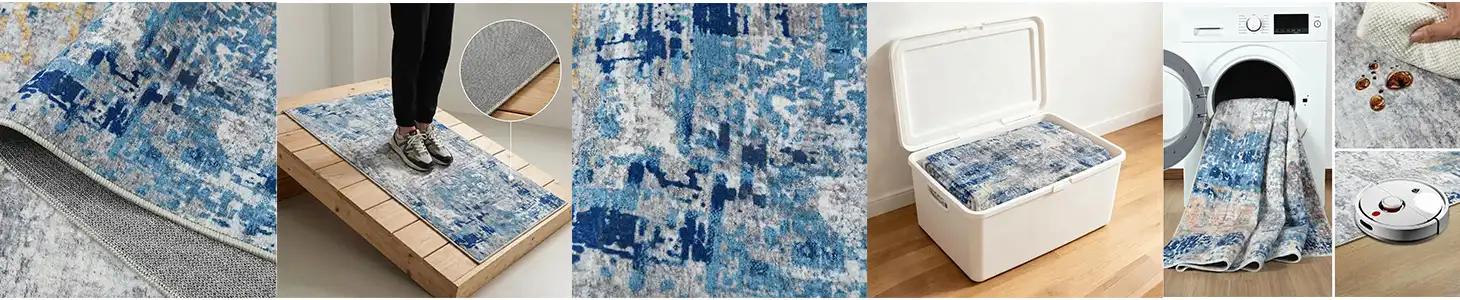
When choosing business flooring, durability has a direct effect on the total cost of ownership. Living room rugs in hotels, stores, and businesses are constantly being walked on, moved around, and exposed to environmental stresses that would quickly wear down less durable goods. The edge-locking method of building stops the fraying and unravelling that happens at the edges, which is where most machine-woven rugs fail. These rugs have locked edges that are 0.6 cm wide, so they stay flat and professional for a long time. The short-pile design at 3 mm height is much more useful in business settings than higher-pile options. Even when furniture legs and wheeled tools put a lot of weight on the lower pile, it doesn't crush or mat. The thick weave keeps individual fibres from coming loose or leaving unsightly bare spots that make the garment look bad. The structural resilience lowers the need for replacements and saves money in the long run for procurement managers who are in charge of keeping brand environments consistent across multiple locations. The washable TPR base also adds to durability by stopping moisture from penetrating backing materials and encouraging bacterial growth. Latex-backed alternatives may turn yellow, crack, or give off smells over time, but thermoplastic rubber keeps its flexibility and stickiness throughout the rug's life. This stability is especially helpful in climate-controlled business settings where changes in temperature and humidity could damage less stable backup systems otherwise.
Prioritizing Safety Through Non-Slip Performance
Workplace safety represents a non-negotiable requirement in commercial environments, with slip-and-fall incidents carrying substantial liability and insurance implications. The washable TPR base provides a strong grip on both tile and wooden floor surfaces, preventing the lateral shifting that creates tripping hazards. This stability remains consistent even with frequent cleaning, as the rubberized material doesn't degrade when exposed to water or standard cleaning agents. For facilities serving elderly visitors, families with young children, or high-volume foot traffic, non-slip performance becomes a critical selection criterion. The 5mm total thickness creates a gentle transition from surrounding flooring that doesn't create abrupt edges where toes can catch. Combined with the locked-edge construction that prevents corners from curling, these design features actively reduce accident risk compared to improperly specified floor coverings. Safety compliance extends beyond immediate slip resistance to include fire performance standards in commercial applications. Buyers sourcing for hotels, office buildings, and public spaces must verify products meet relevant flammability ratings such as EN 13501 for European markets or ASTM E84 for North American projects. Establishing supplier relationships with manufacturers who maintain comprehensive certifications, including OEKO-TEX for chemical safety and REACH compliance for environmental standards, streamlines procurement processes and reduces compliance verification burdens.
Simplifying Maintenance and Reducing Lifecycle Costs
The 3mm short-pile design significantly simplifies cleaning Living Room Indoor Carpets compared to high-pile alternatives that trap dirt, allergens, and debris deep within fibres. Surface dust and particles remain accessible to standard vacuuming, while the machine-washable construction allows periodic deep cleaning that restores a like-new appearance. This washability proves particularly valuable in commercial hospitality environments where maintaining pristine presentation directly impacts guest perceptions and review ratings. Quick-drying properties minimize operational downtime during cleaning cycles, allowing facility managers to schedule maintenance during off-peak hours without extended space closures. The foldable design with crease resistance means rugs can be rolled for transport to cleaning areas and reinstalled immediately upon drying without waiting for shape recovery. This operational flexibility reduces labour costs and service disruptions compared to permanent installations requiring professional cleaning services. Total lifecycle cost calculations must account for cleaning frequency, replacement intervals, and labour requirements across the expected service life. Rugs engineered for easy maintenance deliver quantifiable savings that offset higher initial purchase prices compared to budget alternatives requiring frequent replacement. Procurement managers should evaluate cost per year of service rather than merely comparing upfront unit costs when building business cases for quality rug specifications.
Cost Efficiency and Procurement Advantages for B2B Buyers
Balancing Budget Constraints with Quality Requirements
Commercial procurement demands a careful balance between cost control and quality standards that protect brand reputation and ensure adequate performance. The flexibility to specify exact requirements through customization prevents paying for unnecessary features while ensuring critical performance attributes meet operational needs. Buyers can select appropriate specifications for intended use intensity rather than over-specifying luxury features for back-of-house applications or under-specifying for high-visibility client areas. Volume purchasing power significantly impacts unit economics in carpet procurement. Suppliers with daily production capacity reaching 10,000 square meters can efficiently serve bulk orders while maintaining competitive pricing through production economies of scale. The low customization threshold and flexible minimum order quantities accommodate both large institutional buyers and smaller specialty retailers without penalizing smaller purchasers with prohibitive minimums. Foldable packaging reduces shipping volumes and transportation costs compared to rolled configurations that consume excessive container space. The availability of PE bag packaging or carton options allows buyers to specify packaging appropriate for distribution channel requirements, whether shipping directly to installation sites or transferring through warehouse distribution networks. These logistics considerations directly impact landed costs and should factor into total procurement expense calculations.
Accessing Customization Without Premium Price Penalties
Historically, product customization commanded substantial price premiums that limited access to large institutional buyers with specialized needs. Modern manufacturing capabilities, including heat transfer printing and laser cutting, have democratized customization, making logo integration, specific dimensional requirements, and custom colour matching accessible at reasonable price points. This enables mid-market buyers, including boutique hotels, regional retail chains, and growing e-commerce brands, to differentiate their offerings through personalized specifications. The support for size, colour, and logo customization addresses distinct pain points across different buyer categories. E-commerce sellers benefit from unique designs that reduce direct competition and support brand recognition in crowded online marketplaces. Hotel chains can integrate corporate identity elements that reinforce brand consistency across properties. Corporate office designers can specify exact dimensions that optimize furniture layouts without compromising on spatial planning. Speed to market represents another critical advantage in customization capability. Samples produced within 24-48 hours allow rapid design iteration and approval cycles that compress time from concept to installation. This responsiveness proves particularly valuable in project-based procurement with fixed completion deadlines where delays cascade through construction schedules. The combination of fast sampling and Indoor Living Room Area Rugs production capacity reaching 10,000㎡ daily positions, specialized suppliers, and reliable partners for time-sensitive commercial projects.
Building Supplier Relationships for Long-Term Success
Procurement success extends beyond individual transactions to encompass relationship development with suppliers who understand evolving needs and provide consistent service quality. Suppliers offering dedicated business liaisons for repeat customers ensure continuity in communication, streamlined ordering processes, and proactive notification about production schedules or potential delays. This relationship approach reduces administrative overhead and builds confidence in supply chain reliability. The availability of regular style and process optimization suggestions demonstrates the supplier's commitment to customer success beyond merely fulfilling orders. As market trends evolve and new material technologies emerge, proactive suppliers help buyers maintain competitive positioning through product specification updates that reflect current best practices. This consultative relationship model proves particularly valuable for buyers serving multiple geographic markets with varying aesthetic preferences and regulatory requirements. Quality assurance commitments, including free rework or replacement for manufacturing defects, coverage of logistics costs for quality issues, and comprehensive pre-shipment inspection protocols, reduce buyer risk in bulk procurement decisions. Clear after-sales policies eliminate ambiguity about remedies when problems occur, supporting confident decision-making even for buyers entering new product categories or testing new suppliers for the first time.

Conclusion
Living room floor coverings serve essential functions that extend far beyond simple decoration, addressing comfort, acoustics, aesthetics, durability, and cost efficiency in residential and commercial spaces. Procurement managers who understand these multifaceted benefits can specify solutions that deliver measurable operational improvements while supporting brand objectives and budget constraints. The combination of modern manufacturing capabilities, flexible customization options, and relationship-oriented supplier partnerships creates opportunities for buyers across distribution, e-commerce, project, and retail segments to access quality products that meet exacting requirements. As commercial interior standards continue evolving, the strategic selection of appropriate area rugs positions facilities for success in competitive markets where every environmental detail contributes to user experience and operational efficiency.
FAQ
1. What Materials Work Best for High-Traffic Living Rooms?
Synthetic fibres, including polyester and polypropylene, offer excellent durability and stain resistance in commercial applications. The imitation cashmere polyester surface at 350g/㎡ density provides luxury aesthetics with practical maintenance characteristics. Avoid delicate natural fibres like viscose in primary traffic zones, as these materials lack the structural resilience needed for intensive commercial use. The washable TPR backing adds stability and moisture resistance that latex alternatives cannot match over extended service periods.
2. How Does Proper Sizing Impact Room Function?
Rug dimensions should accommodate furniture arrangements with front legs of sofas and chairs resting on the rug surface to create unified groupings. Undersized rugs create disjointed appearances and fail to define intended zones effectively. Custom sizing capabilities eliminate compromise between standard dimensions and actual spatial requirements, optimizing both aesthetic presentation and functional space definition.
3. Can Custom Rugs Meet Tight Project Deadlines?
Advanced manufacturing processes, including heat transfer printing and laser cutting, enable rapid sample production within 24-48 hours and bulk production capacity reaching 10,000 square meters daily. This combination of speed and scale accommodates project-based procurement timelines that traditional manufacturing approaches cannot satisfy. Clear production scheduling and dedicated business liaisons for repeat customers further ensure reliable delivery performance.
Partner with Aijia for Your Indoor Rugs For Living Room Supply Needs
Tianjin Aijia Carpet Co., Ltd. brings twenty years of specialized Indoor Rugs For Living Room manufacturing experience to commercial carpet procurement, serving international distributors, e-commerce retailers, and project buyers across global markets. Our imitation cashmere rugs with washable TPR backing deliver the quality, customization flexibility, and reliable delivery performance that procurement managers require. With comprehensive certifications including OEKO-TEX, ISO 9001, REACH, and EN 1350, we meet stringent international standards for safety and environmental compliance. Our production capacity of 10,000㎡ daily ensures we can accommodate bulk orders with lead times as short as seven days for quantities under 2,000 square meters. Whether you need custom logo integration, specific dimensional requirements, or ongoing supply partnerships with dedicated account management, Aijia provides solutions tailored to your market needs. Connect with our team at sales@aijiarug.com to discuss your requirements with an experienced Indoor Rugs For Living Room manufacturer committed to your procurement success.
References
1. Textile Research Journal, "Acoustic Performance of Floor Coverings in Commercial Interiors," Volume 92, Issue 5, 2023.
2. Journal of Interior Design, "The Role of Area Rugs in Spatial Definition and User Experience," Volume 48, Number 3, 2024.
3. Building Materials and Construction, "Durability Assessment of Synthetic Fibre Floor Coverings in High-Traffic Applications," 2023 Edition.
4. Hospitality Design Magazine, "Material Selection Strategies for Commercial Hospitality Environments," Annual Review 2024.
5. Procurement Management Quarterly, "Total Cost of Ownership Models for Commercial Floor Covering Specification," Spring 2024.
6. International Fire Safety Journal, "Flammability Standards and Testing Protocols for Textile Floor Coverings," Volume 18, 2023.
Request fast quotes for bulk carpets, OEM & ODM floor mats, supported by strict quality control and complete supply chain.