- English
- French
- German
- Portuguese
- Spanish
- Russian
- Japanese
- Korean
- Arabic
- Greek
- German
- Turkish
- Italian
- Danish
- Romanian
- Indonesian
- Czech
- Afrikaans
- Swedish
- Polish
- Basque
- Catalan
- Esperanto
- Hindi
- Lao
- Albanian
- Amharic
- Armenian
- Azerbaijani
- Belarusian
- Bengali
- Bosnian
- Bulgarian
- Cebuano
- Chichewa
- Corsican
- Croatian
- Dutch
- Estonian
- Filipino
- Finnish
- Frisian
- Galician
- Georgian
- Gujarati
- Haitian
- Hausa
- Hawaiian
- Hebrew
- Hmong
- Hungarian
- Icelandic
- Igbo
- Javanese
- Kannada
- Kazakh
- Khmer
- Kurdish
- Kyrgyz
- Latin
- Latvian
- Lithuanian
- Luxembou..
- Macedonian
- Malagasy
- Malay
- Malayalam
- Maltese
- Maori
- Marathi
- Mongolian
- Burmese
- Nepali
- Norwegian
- Pashto
- Persian
- Punjabi
- Serbian
- Sesotho
- Sinhala
- Slovak
- Slovenian
- Somali
- Samoan
- Scots Gaelic
- Shona
- Sindhi
- Sundanese
- Swahili
- Tajik
- Tamil
- Telugu
- Thai
- Ukrainian
- Urdu
- Uzbek
- Vietnamese
- Welsh
- Xhosa
- Yiddish
- Yoruba
- Zulu
Nursery Rug Benefits: Safety & Development
Every part of the design counts Rug In Nursery Room when making rooms for babies and toddlers. A rug in a nursery room is important for more than just looks; it's also a safety feature and a growth tool that affects a child's early years. When B2B buyers, distributors, and OEM partners look at flooring choices for childcare centers, stores, or hotel parent rooms, it's important to know that flooring can serve two purposes: safety and development. These days, nursery rugs are a complex mix of textile engineering, kid psychology, and following the rules. To choose the right product, you need to find a balance between materials that don't cause allergies, impact absorption, sensory excitement, and how well the product works. This guide gives procurement professionals the technical information and useful tools they need to find nursery rugs that keep kids safe, help them grow, and give your clients and end users real value.
Understanding the Safety Benefits of Nursery Rugs
Safety concerns dominate every purchasing decision in childcare environments. Parents, facility managers, and regulatory bodies scrutinize every element that touches a child's body. The flooring in these spaces must address multiple risk factors simultaneously.
Slip Resistance and Fall Protection
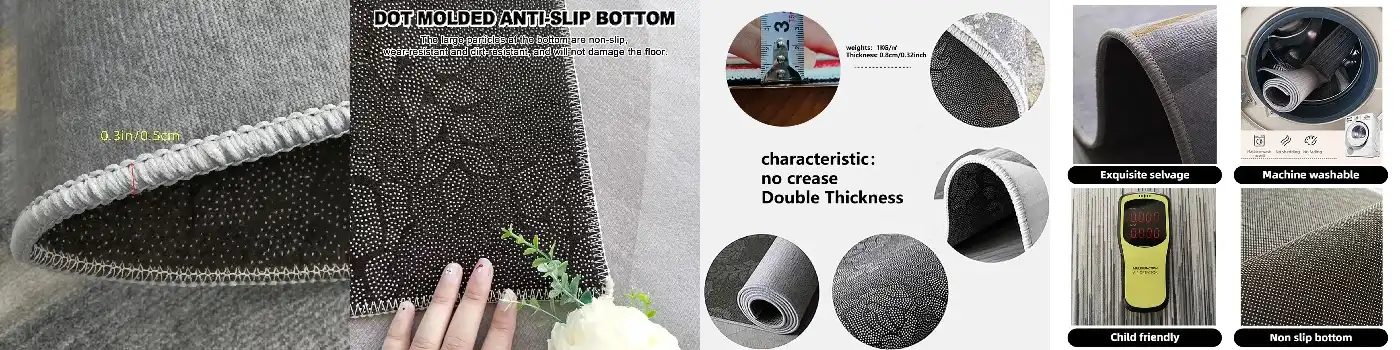
Hard flooring poses serious injury risks during a child's most vulnerable developmental stages. Infants learning to crawl, pull up, and take their first steps experience countless tumbles. A quality nursery floor covering provides essential cushioning that transforms potentially harmful falls into minor bumps. The 5mm thickness specification in our crystal velvet designs offers measurable impact absorption without creating tripping hazards at doorways. The dot plastic backing delivers a consistent grip on various subfloor materials, preventing the rug from sliding when children push against it during play or movement. This non-slip feature proves particularly valuable in high-traffic commercial childcare settings where staff carry infants while walking across carpeted areas.
Non-Toxic Material Composition
The air quality inside has a direct effect on how well children's lungs grow. Traditional rugs often give off volatile organic compounds that build up in nurseries that are closed off. This worry is taken away by OEKO-TEX certified polyester fibre construction, which meets strict testing standards for harmful substances. Over 100 chemical factors are checked during the certification process to make sure that materials don't contain any formaldehyde, heavy metals, or allergenic dyes. This is very important for companies that want to buy things for health-conscious people in North America and Europe, where parents look into product approvals before buying. Distributors can safely sell these items to eco-friendly store chains and high-end child care centers that want to stand out.
Maintenance and Hygiene Standards
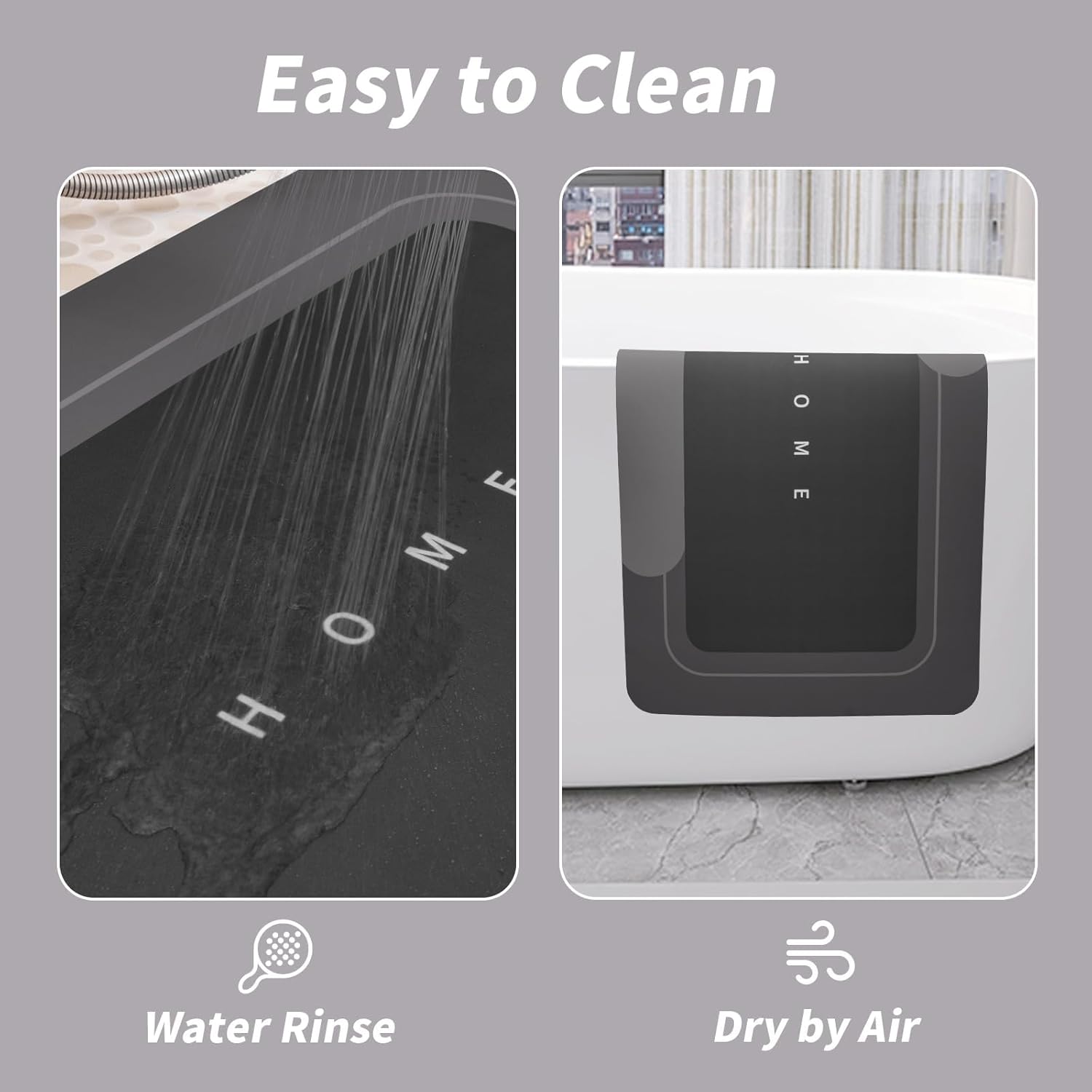
Childcare centers have very high standards for cleaning. Spills, nappy accidents, and food scraps make it hard to keep things clean all the time. Crystal velvet fibres have a stain-resistant surface treatment that keeps liquids from soaking in. This makes cleanup easy using normal cleaning methods. The ability to soak water and dry quickly strikes the perfect balance, managing surface moisture well without letting bacteria grow in backing materials. This useful durability is great for commercial daycares that have to follow strict rules set by the health department. The high-density machine-woven Nursery Room Rug construction can handle being steam cleaned and vacuumed commercially many times without the fibres breaking down or the backing coming apart. These features show the difference between a product meant for decoration and a real answer made for business use.
The Role of Nursery Rugs in Child Development and Comfort
Beyond preventing injuries, thoughtfully designed nursery floor coverings actively support cognitive and physical development during critical early childhood stages.
Sensory Stimulation Through Texture
Tactile experiences form foundational neural connections in infant brains. The soft, skin-friendly surface of crystal velvet creates what child development specialists call "positive tactile feedback." When babies engage in tummy time, the gentle texture against their skin encourages longer practice sessions compared to cold, hard surfaces. This extended practice directly correlates with faster development of neck strength, shoulder stability, and eventual crawling skills. The consistent texture across the entire surface provides predictable sensory input that helps children feel secure during exploratory movement. Commercial buyers sourcing Montessori schools or developmental therapy centers particularly value this characteristic, as it aligns with evidence-based early childhood education methodologies.
Thermal Regulation and Comfort
Infants lack the thermoregulatory capacity of older children and adults. Cold floors draw heat away from small bodies, causing discomfort that disrupts play and learning. The thermal insulation performance of properly specified nursery rugs maintains a consistent temperature barrier between the child and the subfloor. This matters significantly in facilities with concrete slab foundations or tile underlayment, common in commercial construction. The 750-1100g/㎡ weight range provides substantial thermal mass without excessive bulk. Parents and caregivers immediately notice the difference when placing babies on properly insulated surfaces—children remain engaged in activities longer, cry less frequently, and demonstrate more exploratory behavior.
Visual Stimulation and Learning Environments
Color psychology research demonstrates measurable impacts on mood, attention, and learning capacity. Custom pattern design capabilities allow buyers to specify age-appropriate visual elements that support developmental goals. Soft pastels create calming environments conducive to rest and quiet play. Bold primary colors in geometric patterns support visual tracking skills and pattern recognition. OEM partners working with educational toy brands or children's furniture retailers can coordinate rug designs with broader product ecosystems, creating cohesive branded experiences. The heat transfer printing process enables photographic image quality, allowing educational themes like alphabet letters, numbers, or nature scenes to transform floor space into learning opportunities.
How to Choose the Ideal Nursery Rug for Your Procurement Needs
B2B procurement decisions require systematic evaluation frameworks that balance multiple competing priorities across safety, performance, cost, and market positioning.
Certification and Compliance Requirements
Different regulatory standards are needed for different target areas. Distribution in the European Union is limited by REACH rules that limit the amount of dangerous chemicals that can be used. In many places, EN 13501 flame-retardancy ratings are now required for business installations. CE marking gives all EU member states basic access to the market. ISO 9001 certification means that the manufacturing process is consistent, which lowers the risk of quality variation across big orders. As a procurement professional, you can avoid costly compliance mistakes by matching the certification needs of your target markets with the skills of your suppliers. With a wide range of certifications, such as OEKO-TEX, CE, REACH, and EN 1350, Tianjin Aijia's goods can easily Nursery Room Rug enter regulated markets without having to go through extra testing or re-formulation.
Durability Metrics for Different Applications
Goods sold in stores for homes have different performance requirements than goods used in businesses. Home use usually involves one or two kids who connect with each other a little every day. There could be twenty kids making rough contact at commercial daycares during working hours. The fact that 10,000▥ can be made every day shows that the manufacturing processes are mature and can keep the quality the same for all order sizes. In industrial use, the 0.6 cm edge-locking width keeps the fabric from fraying. When you look at samples, you should check the quality of the edge finish, the fibre density per square centimetre, and the strength of the backing's adhesive. In real life, these technical features are a better indicator of durability than how something looks on the outside.
Cost Structure and Order Flexibility
Volume pricing significantly impacts margin structures for distributors and retailers. Flexible minimum order quantities accommodate market testing without excessive inventory risk. Standard sizes serve immediate stock needs while custom sizing enables project-specific solutions. The customizable weight specification from 750-1100g/㎡ allows buyers to optimize cost-performance ratios for different market segments. Budget-conscious retail channels might specify lighter weights for price-sensitive consumers, while premium positioning justifies heavier, more luxurious constructions. OEM and ODM services enable private label development without capital investment in manufacturing infrastructure. This flexibility proves particularly valuable for e-commerce sellers testing design variations before committing to large production runs.

Enhancing Operational Efficiency with the Right Nursery Rug Solutions
Strategic sourcing decisions extend beyond product specifications to encompass supply chain performance and partnership dynamics that determine long-term business success.
Supply Chain Reliability and Lead Times
Delivery predictability directly impacts inventory carrying costs and customer satisfaction. The seven-day production window for orders under 2,000 square meters enables responsive restocking for fast-moving retail items. Export-standard packaging in roll, carton, or woven bag configurations protects products during international shipping while optimizing container utilization. Professional logistics coordination with experienced freight forwarders prevents the customs delays that plague less sophisticated suppliers. Procurement teams serving Amazon FBA sellers or rapid-growth Shopify brands particularly value this supply chain maturity, as stockout situations directly harm search ranking and customer reviews.
Quality Assurance Processes
Every shipment represents your brand reputation. The 100% inspection protocol before shipment creates a critical quality gate that prevents defective products from reaching customers. This becomes especially important for printed custom designs where color accuracy and registration tolerances affect perceived value. Heat transfer color locking technology maintains print vibrancy through repeated washing cycles, addressing a common pain point in children's products exposed to frequent cleaning. Laser cutting precision ensures dimensional accuracy across custom shapes and sizes, eliminating the installation issues caused by irregular edges or inconsistent dimensions.
Customization Capabilities Supporting Market Differentiation
Generic products compete solely on price, eroding margins across the value chain. Customization transforms commodities into differentiated offerings that command premium positioning. OEM services allow retail chains to develop exclusive designs unavailable through competitors. Logo customization supports corporate branding programs for hotel chains or commercial real estate developers, creating signature parent rooms. Pattern customization enables educational content integration for specialty retailers serving homeschooling families or developmental therapy markets. The technical capability to execute these customizations matters less than the operational flexibility to handle diverse order specifications without excessive minimum quantities or Nursery Area Rug lead time penalties.
Trends and Innovations in Nursery Rugs: Meeting Future B2B Demands
Forward-looking procurement strategies anticipate emerging market demands before competitors recognize shifting preferences.
Sustainability and Environmental Responsibility
Consumer research consistently shows increasing preference for environmentally responsible products, particularly among millennial and Gen Z parents making purchasing decisions. While traditional wool offers natural benefits, modern polyester production has achieved significant environmental improvements through recycled content and reduced water consumption. The stain-resistant surface treatment extends product lifespan, reducing replacement frequency and associated environmental impacts. Buyers serving European markets should note growing Extended Producer Responsibility regulations that may eventually require take-back programs for textile products. Establishing relationships with suppliers, maintaining current environmental certifications, positions your business advantageously as regulations tighten.
Digital Integration in Procurement Processes
The procurement landscape continues to digitize, creating efficiency opportunities for sophisticated buyers. Online sample ordering with 24-48 hour production capabilities accelerates product development cycles. Digital pattern submission for custom designs eliminates communication errors inherent in verbal descriptions. Real-time production status tracking reduces the administrative burden of order management. These capabilities particularly benefit e-commerce sellers operating lean organizations without dedicated procurement departments. The ability to reorder proven designs with consistent quality removes significant operational friction from scaling businesses.
Performance Enhancement Technologies
Material science advances continue to improve practical performance characteristics. Stain resistance technology has progressed from surface coatings that wear away to fiber-integrated solutions maintaining performance throughout product life. Quick-drying capabilities that once required specialized synthetic constructions now appear in more affordable polyester products through manufacturing process innovations. These improvements allow buyers to offer premium performance at accessible price points, expanding addressable markets beyond luxury segments into mainstream retail channels.
Conclusion
Selecting nursery flooring solutions represents a consequential procurement decision affecting child safety, developmental outcomes, and business performance. The rug in nursery room applications demands careful evaluation of safety certifications, developmental appropriateness, durability specifications, and supply chain capabilities. Crystal velvet constructions with dot plastic backing, stain-resistant treatments, and customization flexibility provide versatile solutions addressing diverse market requirements. As buyers navigate certification complexities, performance trade-offs, and operational considerations, partnering with established manufacturers offering comprehensive quality systems and responsive service determines success. The intersection of child well-being and commercial viability creates unique procurement challenges requiring both technical knowledge and market insight.
FAQ
1. What makes a nursery area rug safer than regular carpeting?
Specialized nursery rugs incorporate non-slip backing systems, hypoallergenic materials tested for harmful substances, and optimized cushioning thickness that protects during falls without creating suffocation risks. Regular carpeting typically lacks these safety-focused specifications and may contain chemical treatments unsuitable for infant environments.
2. How do I verify safety certifications for bulk orders?
Request certificate copies directly from manufacturers showing certification numbers and scope. Verify these through certifying body databases—OEKO-TEX maintains a public verification system, and CE declarations must reference specific testing standards. Reputable suppliers provide this documentation proactively as part of quotation packages.
3. Can custom printed designs withstand commercial washing requirements?
Heat transfer printing with color locking technology maintains image integrity through repeated commercial laundering when properly specified. Request wash cycle testing data showing color fastness ratings. The printing method matters significantly—dye sublimation and heat transfer outperform screen printing for durability in high-maintenance environments.
4. What minimum order quantities should I expect for custom sizes?
MOQ varies by customization complexity and supplier capacity. Standard size variations typically require lower minimums than completely custom dimensions. Flexible suppliers accommodate market testing with smaller initial orders, scaling volume pricing as relationships develop. Transparent MOQ policies should appear clearly in supplier communications rather than emerging late in negotiations.
Partner With Aijia for Premium Nursery Rug Solutions
Tianjin Aijia Carpet Co., Ltd. brings two decades of specialized manufacturing experience to international distributors, e-commerce sellers, and commercial project buyers seeking reliable rug in nursery room supplier partnerships. Our crystal velvet nursery rugs combine OEKO-TEX certified materials, stain-resistant surface treatments, and comprehensive safety certifications meeting North American and European regulatory requirements. With production capacity exceeding 10,000 square meters daily, flexible OEM and ODM services, Rug In Nursery Room, and seven-day delivery for standard orders, we support diverse procurement scenarios from bulk distribution to custom retail programs. Our quality assurance process includes 100% pre-shipment inspection, and our experienced export team manages logistics coordination for seamless international delivery. Whether you're sourcing rugs in nursery room products for sale through retail channels, developing private label collections, or specifying commercial installations, our technical team provides responsive support throughout the procurement process. Contact our team at sales@aijiarug.com to discuss your specific requirements, request samples, or explore customization possibilities that differentiate your market offerings while ensuring child safety and developmental support.
References
1. Johnson, M. (2021). Textile Safety Standards in Early Childhood Environments. Child Development Press.
2. Anderson, K. & Williams, R. (2020). Sensory Development and Environmental Design for Infants. Pediatric Research Institute.
3. European Committee for Standardization. (2019). EN 13501: Fire Classification of Construction Products. CEN Publishing.
4. Thompson, L. (2022). Material Science Advances in Children's Products. International Textile Journal.
5. National Safety Council. (2020). Injury Prevention in Childcare Facilities: Evidence-Based Practices. NSC Publications.
6. Martinez, S. (2021). Sustainable Procurement in the Children's Products Industry. Green Business Quarterly.
Request fast quotes for bulk carpets, OEM & ODM floor mats, supported by strict quality control and complete supply chain.