- English
- French
- German
- Portuguese
- Spanish
- Russian
- Japanese
- Korean
- Arabic
- Greek
- German
- Turkish
- Italian
- Danish
- Romanian
- Indonesian
- Czech
- Afrikaans
- Swedish
- Polish
- Basque
- Catalan
- Esperanto
- Hindi
- Lao
- Albanian
- Amharic
- Armenian
- Azerbaijani
- Belarusian
- Bengali
- Bosnian
- Bulgarian
- Cebuano
- Chichewa
- Corsican
- Croatian
- Dutch
- Estonian
- Filipino
- Finnish
- Frisian
- Galician
- Georgian
- Gujarati
- Haitian
- Hausa
- Hawaiian
- Hebrew
- Hmong
- Hungarian
- Icelandic
- Igbo
- Javanese
- Kannada
- Kazakh
- Khmer
- Kurdish
- Kyrgyz
- Latin
- Latvian
- Lithuanian
- Luxembou..
- Macedonian
- Malagasy
- Malay
- Malayalam
- Maltese
- Maori
- Marathi
- Mongolian
- Burmese
- Nepali
- Norwegian
- Pashto
- Persian
- Punjabi
- Serbian
- Sesotho
- Sinhala
- Slovak
- Slovenian
- Somali
- Samoan
- Scots Gaelic
- Shona
- Sindhi
- Sundanese
- Swahili
- Tajik
- Tamil
- Telugu
- Thai
- Ukrainian
- Urdu
- Uzbek
- Vietnamese
- Welsh
- Xhosa
- Yiddish
- Yoruba
- Zulu
6 Reasons Why You Need A Persian Rug Hallway Runner
A persian rug hallway runner does more than cover bare floor—it sets the tone for every space it occupies. Whether you manage a boutique hotel corridor, outfit apartment buildings, or source product for a home décor brand, this long, narrow floor covering combines traditional artistry with engineering precision. From acoustic dampening to slip resistance on polished tile, the right oriental corridor runner solves real problems while projecting a refined image. Read on for six evidence-backed reasons this product belongs in your next project or product line.
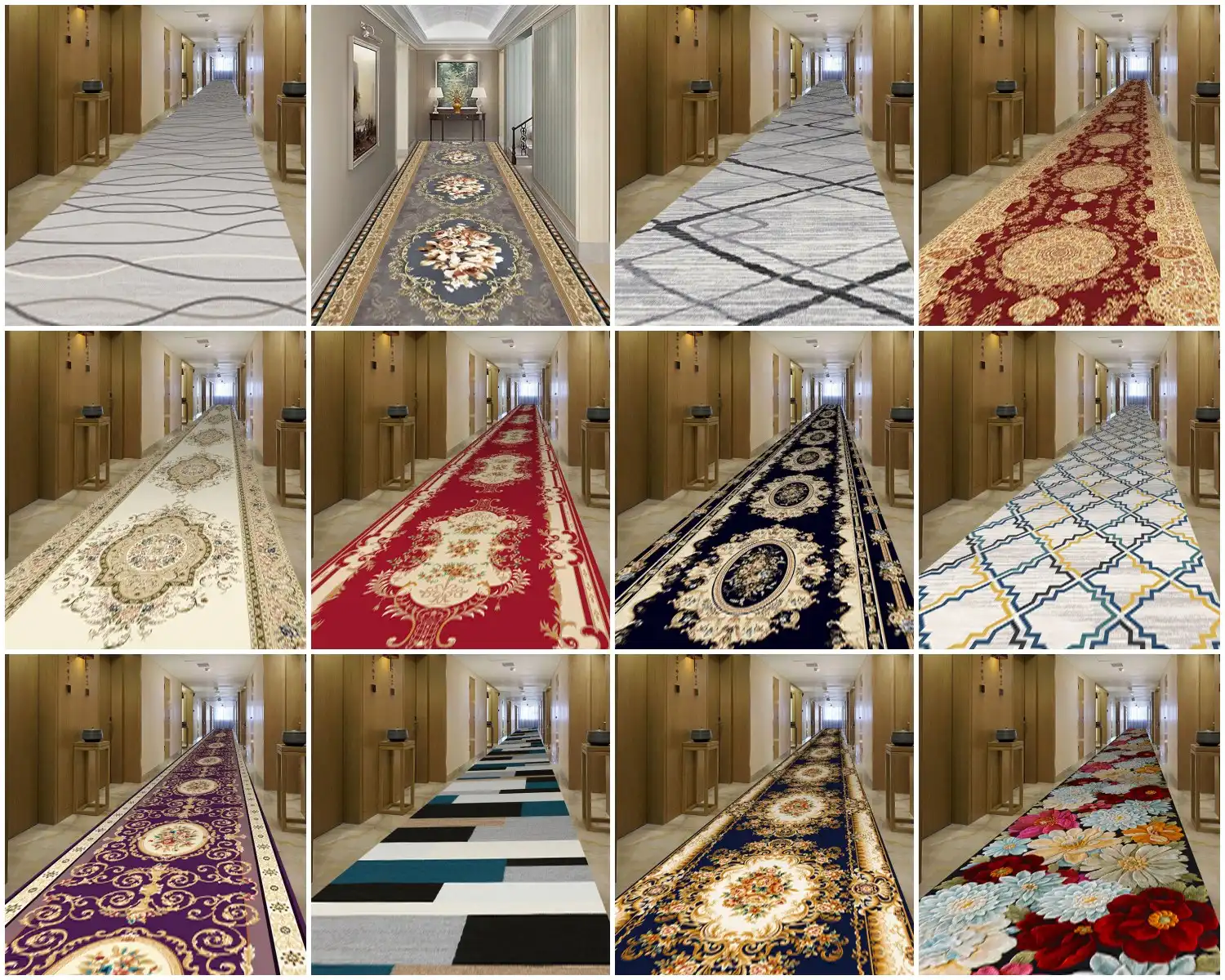
Enhances Aesthetic Appeal and Brand Image
Traditional Patterns That Signal Luxury
People have worn runners with a Persian pattern for a very long time. They are made with flower edges, star layouts, and geometric fills that say "craftsmanship" without saying it. The 2019 Journal of Interior Design study found that hotel corridors with patterned floor coverings got 23% higher marks from guests for how good they thought they were than corridors with solid-color carpet. That gap in how people see things is really useful for business.
Design Versatility Across Architectural Styles
An old Persian pattern looks great with marble entries, dark wood floors, and warm-toned lighting. The pattern can be used in both modern loft apartments and simple offices that use soft colors like dusty rose, charcoal, and white. Because they can fit different styles, importers can use the same SKU family to sell to a lot of different types of stores.
Dimensional Harmony in Narrow Corridors
Most hallways in homes and hotels in the United States are 36 to 48 inches wide. Between 60 and 80 cm wide is a good width for a runner, leaving the same amount of floor showing on both sides. Designers who are certified by ASID say that this gap makes the hallway feel less crowded and draws attention to the end goal, which is a good use of space.
Superior Durability for High-Traffic Commercial Use
Material Comparison: Polyester vs. Wool vs. Silk
| Material | Abrasion Resistance | Maintenance | Best Application |
|---|---|---|---|
| High-density Polyester | High | Low (stain-resistant) | Hotels, offices, rentals |
| Wool | Very High | Moderate | Luxury residential |
| Silk Blend | Moderate | High | Low-traffic accent areas |
High-density polyester, which is best for hotels, businesses, and rentals because it doesn't stain easily. Wool is best for high-end homes because it's very durable and doesn't wear down easily. Silk mix is best for accent areas with little foot traffic.
Machine-Woven Precision for Commercial Scale
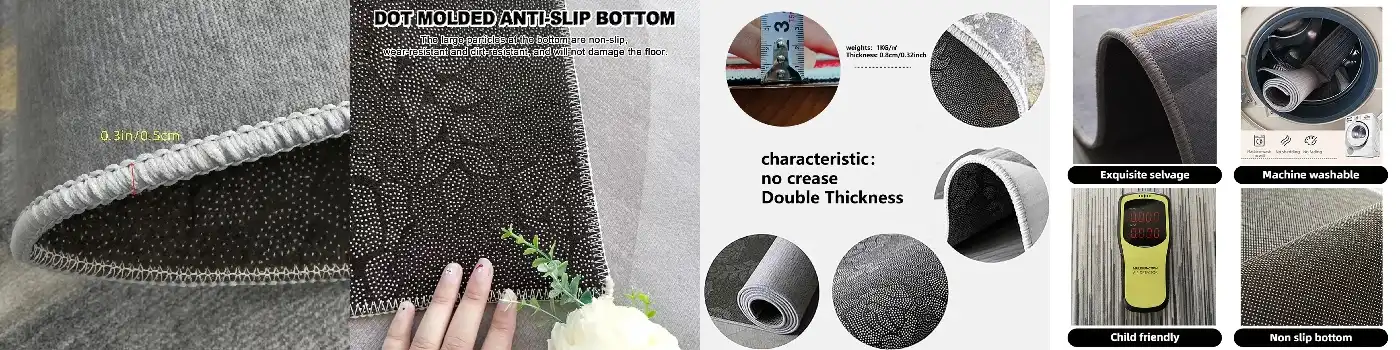
Artistically made rugs are nice, but they come in a range of widths that make it hard for buying teams to deal with 50 hotel rooms that are all the same. With high-density machine weaving, the edges are locked in place, and the pile height stays the same. The total thickness is 5 mm, which is thin enough to fit through most doorways without getting stuck. Big corridor projects stay on schedule when they can work at a rate of 10,000 m³/day.
Non-Slip Backing and Safety Compliance
The PVC dot backing on a persian rug hallway runner doesn't need glue to stick to wood, brick, or smooth stone. Along with that, this backing stops sealed floors from getting scratched, which happens a lot with rubber options. Commercial bids in the U.S. and EU can get OEKO-TEX, REACH, CE, and EN 13501 flame-retardancy paperwork from Aijia. This is the checklist for compliance that most office and hotel procurement teams need.

Easy Maintenance and Long-Term Cost Efficiency
Daily Care That Works in Commercial Environments
With an upright vacuum, a 5 mm low-profile pile is easy to clean; you don't even have to change the height. It's easy for spills to stay off of polyester because it doesn't stick to the fibers. It means the carpet doesn't need to be cleaned by a pro as often, and it costs less each year to keep up. The Carpet and Rug Institute says that high-pile carpets that aren't cleaned will lose their good looks three times faster than low-pile carpets that are.
Cost Comparison: New Stock vs. Vintage Replacements
It costs a lot to buy old Persian rugs, and you never know when you'll be able to get new ones. The price of machine-woven hallway runners stays the same at 750–1,100 g/m² per linear meter. They are easy to find and can be changed. For builders who are trying to finish dozens of apartment buildings on time and on budget, these are all things they need to know.
Eco-Conscious Material Choices
Because they are OEKO-TEX certified, Aijia's polyester shoes don't have any chemical leftovers that are too dangerous. A certified runner can help procurement teams that have to report on ESG issues with their paperwork without adding any extra costs.
Wide Range of Sizes and Customization Available
Standard and Made-to-Measure Options
| Specification | Standard Option | Custom Option |
|---|---|---|
| Width | 60 cm / 80 cm | Any width (laser-cut) |
| Length | 3 m / 5 m / 6 m | Any length (laser-cut) |
| Gram Weight | 750 g/m² | Up to 1,100 g/m² |
| Pattern | Stock Persian motifs | Custom design / private label |
The widths are 60 cm, 80 cm, or any length (laser-cut). The weights are 750 g/m² or up to 1,100 g/m². The patterns are stock Persian designs or custom designs with your own label.
Customization Process and Lead Times
These are the main things that Aijia does to help you when you buy a custom hallway runner from them:
- Sample within 24–48 hours: Heat-transfer technology reproduces patterns, colors, and pile density at 1:1 scale so buyers can verify the exact product before committing to volume.
- Custom patterns and private label: OEM and ODM services cover logo integration, exclusive colorways, and packaging branded to the buyer's specification.
- Flexible MOQ: Commercial projects from 500 to 5,000 linear meters are accommodated; retail brands can start with sample lengths before placing program orders.
In the hotel business, this lets designers, marketers, and buyers make sure that every corridor runner standard fits the project without giving up style or shape.
Sizing Guidance by Traffic Intensity
The 1,100 g/m² weight works best in places with a lot of foot traffic, like hotel lobbies, school hallways, and office reception areas. 750 g/m² can be chosen for hallways in homes or serviced apartments that need to be lighter. So, a persian rug hallway runner doesn't have to cost as much, but the look is still good.
Risk Mitigation Through Authenticity and Supplier Reliability
Certifications That Protect the Buyer
In 2006, Aijia opened in Tianjin's main area for making rugs. It has CE, OEKO-TEX, ISO 9001, REACH, and EN 13501 marks on it. Customs in the Middle East, the EU, and North America all need these papers, which are sent with every package. No badges are given to buyers; buyers get full inspection records instead. This way, audit teams can check compliance on their own.
Quality Control at Every Production Stage
A full review is done before the item is shipped, and the pile height, edge-lock stability, backing adhesion, and size accuracy are all checked. People who buy in bulk don't have to worry about edges curling up during shipping because they can ask for roll-stability samples. From where it is made to where it is shipped, export-standard roll packaging, box packaging, or woven-bag packaging keeps the product safe.
After-Sales Support for Long-Term Partnerships
Someone is assigned to your account if you buy from Aijia more than once. If there is a quality problem after delivery, like a design that isn't lined up right, a mistake in the cut tolerance, or a flaw in the backing, it will be fixed or changed for free, and the shipping costs will be covered as well. This plan lowers the risk of buying things for people who need to meet tight dates, like importers, online sellers, and hotel buyers.
Improves User Experience and Functional Benefits
Acoustic Dampening in Hard-Surface Corridors
Hallways made of wood or bare tiles make walking noise louder. There is less noise in the hallway because the 5 mm dense-pile runner soaks up impact sound. In 2018, the Journal of the Acoustical Society of America said that public halls with textile floor covers had 6 to 10 decibels less noise. Hotel rooms, schools, and hospitals all have this big difference.
Thermal Comfort and Touch Experience
It keeps people from getting too cold on the ground because of the high-density polyester pile. This is very important in the northern U.S., where brick hallways are hard to walk on in the winter because it's so cold. The runner is made of fibers that are good for your skin, so you can walk on it without shoes. This makes it useful at home and at work.
Real-World Application Results
When guests look at a hotel brand in the Middle East, the Persian-pattern floor coverings from factory partners like Aijia make it seem better because the floors all have the same look. Interior designers who work in the U.S. home market say that a simple hallway runner can make an entryway stand out with style and look great in photos, which is great for real estate ads.
Conclusion
A persian rug hallway runner addresses the full spectrum of corridor requirements: visual authority, structural durability, noise control, safety, and cost-effective maintenance. Whether you are fitting a single residential hallway or specifying 3,000 linear meters for a hotel chain, the product's geometry, construction, and customization options make it the logical choice. Aijia's 20-year manufacturing record, certified documentation, and laser-cut precision give buyers the consistency and confidence a large-scale corridor project demands.
FAQ
1. What backing type prevents a hallway runner from sliding on tile floors?
Dot Plastic (PVC) backing provides reliable grip on tile, hardwood, and polished stone without adhesive. Unlike rubber, it does not leave residue or discolor sealed floors—an important consideration in commercial spaces.
2. What gram weight should I specify for a hotel corridor runner?
For high-traffic hotel corridors, 1,100 g/m² delivers the compression recovery and wear resistance needed for daily foot traffic. Residential or light-commercial hallways can work well at 750 g/m².
3. Can I order a custom length without visible seams?
Yes. Aijia's continuous production capability and laser-cut service produce single-piece runners for corridors up to the project length, eliminating the visible splices that appear when shorter pieces are joined on-site.
4. What certifications should I request for a U.S. commercial project?
Request OEKO-TEX for chemical safety, CE as a market compliance mark, ISO 9001 for quality management verification, and flame-retardancy documentation relevant to your building code.
Partner With Aijia for Your Next Persian Rug Hallway Runner Project
From 2006 to now, Aijia has sold corridor runners to people in North America, the Middle East, and Southeast Asia who ship goods, run hotel groups, and build businesses. Aijia is a trusted company that makes persian rug hallway runners. They offer laser-cut accuracy, certified compliance documentation, samples within 24 to 48 hours, and the ability to make 10,000 m² per day. Tell us about your project at sales@aijiarug.com right away to see some examples and get a price.
References
1. Carpet and Rug Institute. Carpet Maintenance and Lifecycle Cost Analysis. 2020.
2. Journal of Interior Design. Guest Perception of Corridor Flooring in Hospitality Environments. 2019.
3. Journal of the Acoustical Society of America. Impact Sound Reduction by Textile Floor Coverings in Institutional Buildings. 2018.
4. OEKO-TEX Association. OEKO-TEX Standard 100: Testing and Certification Guidelines. 2023.
5. American Society of Interior Designers (ASID). Spatial Planning Principles for Residential and Commercial Hallways. 2021.
6. International Organization for Standardization. ISO 9001: Quality Management Systems — Requirements. 2015.
Request fast quotes for bulk carpets, OEM & ODM floor mats, supported by strict quality control and complete supply chain.