- English
- French
- German
- Portuguese
- Spanish
- Russian
- Japanese
- Korean
- Arabic
- Greek
- German
- Turkish
- Italian
- Danish
- Romanian
- Indonesian
- Czech
- Afrikaans
- Swedish
- Polish
- Basque
- Catalan
- Esperanto
- Hindi
- Lao
- Albanian
- Amharic
- Armenian
- Azerbaijani
- Belarusian
- Bengali
- Bosnian
- Bulgarian
- Cebuano
- Chichewa
- Corsican
- Croatian
- Dutch
- Estonian
- Filipino
- Finnish
- Frisian
- Galician
- Georgian
- Gujarati
- Haitian
- Hausa
- Hawaiian
- Hebrew
- Hmong
- Hungarian
- Icelandic
- Igbo
- Javanese
- Kannada
- Kazakh
- Khmer
- Kurdish
- Kyrgyz
- Latin
- Latvian
- Lithuanian
- Luxembou..
- Macedonian
- Malagasy
- Malay
- Malayalam
- Maltese
- Maori
- Marathi
- Mongolian
- Burmese
- Nepali
- Norwegian
- Pashto
- Persian
- Punjabi
- Serbian
- Sesotho
- Sinhala
- Slovak
- Slovenian
- Somali
- Samoan
- Scots Gaelic
- Shona
- Sindhi
- Sundanese
- Swahili
- Tajik
- Tamil
- Telugu
- Thai
- Ukrainian
- Urdu
- Uzbek
- Vietnamese
- Welsh
- Xhosa
- Yiddish
- Yoruba
- Zulu
Are Kitchen Comfort Runners Practical Or Just for Style?
The short answer: a kitchen comfort runner is both. These elongated floor coverings do far more than add visual warmth to a cooking space. Built with ergonomic intent, they reduce compressive load on the lower back and joints during prolonged standing—a concern backed by research showing standing on hard surfaces for over 90 minutes increases musculoskeletal fatigue by up to 50%. Whether you are outfitting a residential kitchen or sourcing for commercial distribution, understanding the functional and aesthetic value of these products helps you make smarter procurement decisions.
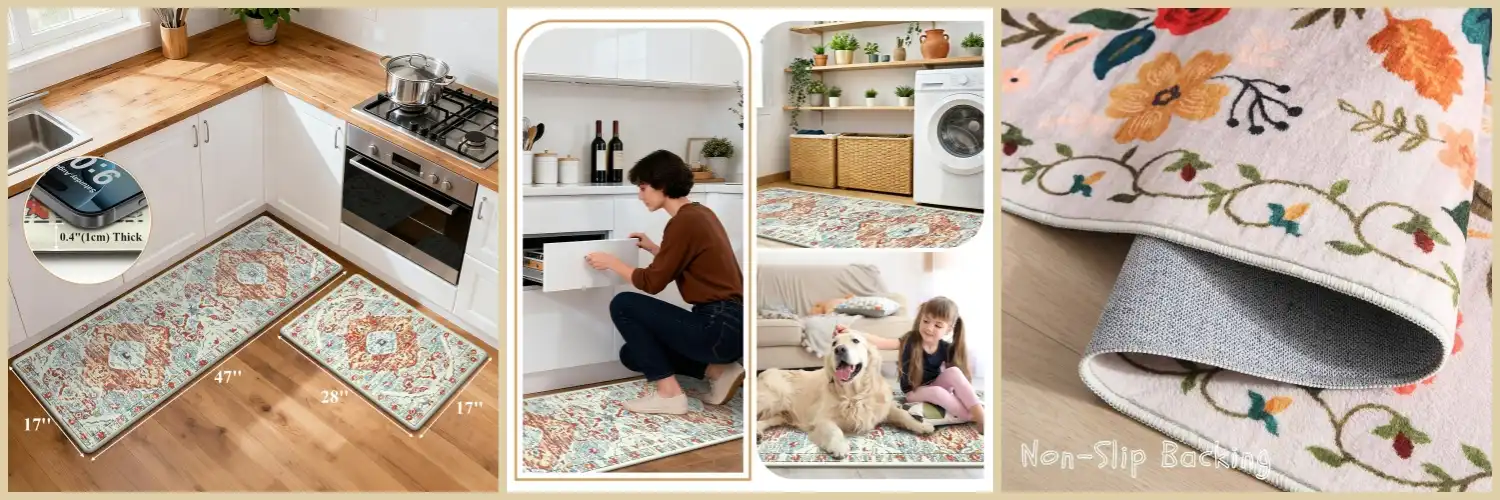
Understanding Kitchen Comfort Runners: Purpose and Practicality
A lot of people who buy these kitchen comfort runners at first think they are just for looks. When you look at the construction statistics, that belief starts to change.
What Makes a Comfort Runner Different from a Standard Rug?
A kitchen comfort runner is different from a regular area rug because it is made to fit galley-style kitchens and prep island areas. Its dimensions are usually 20 to 24 inches wide and 60 inches or more long. The long layout takes into account functional zones, such as the line from the sink to the stove, the edge of the prep island, and the cleaning stations. The non-slip base keeps the rug from moving side to side on tile or wooden floors, and the short pile height keeps people from tripping and lets cabinet doors open without getting in the way.
Ergonomic Impact: What the Data Shows?
A study published in 2017 in the journal Applied Ergonomics found that anti-fatigue flooring solutions helped workers who stood for long periods of time 32% lessen pain in their lower limbs. In both homes and businesses, kitchen comfort runners made of dense-pile or padded materials offer the same benefit. This directly means a product category with measured practical value—not just esthetic appeal—for wholesalers who work with hotel kitchens or business food settings.
How to Choose the Right Kitchen Comfort Runner for Your Business Needs?
When buying things in this area, you shouldn't just look at how they look. Several technical and business factors determine how well a kitchen comfort runner will do over time.
Before you place a large order, here are the most important things you should think about:
- Pile height and thickness: The runner is light and can go through doors because it has a 3mm pile height and a 5mm total thickness. The surface is also comfortable. Static areas should have thicker profiles, while high-traffic routes should have smaller profiles.
- Surface material: Imitation cashmere has the same soft feel to the skin as real cashmere, making this kitchen comfort runner a cost-effective option that is important for distributors who want to sell to mid-range to high-end retailers.
- Base material: The TPR base is clean and has a good grip on both floor and hardwood, not moving side to side even when the kitchen moves around a lot.
- Weight per unit area: At 1000 g/㎡, the gram weight shows density and structural integrity, which is important for buyers comparing long-term use to daily commercial use.
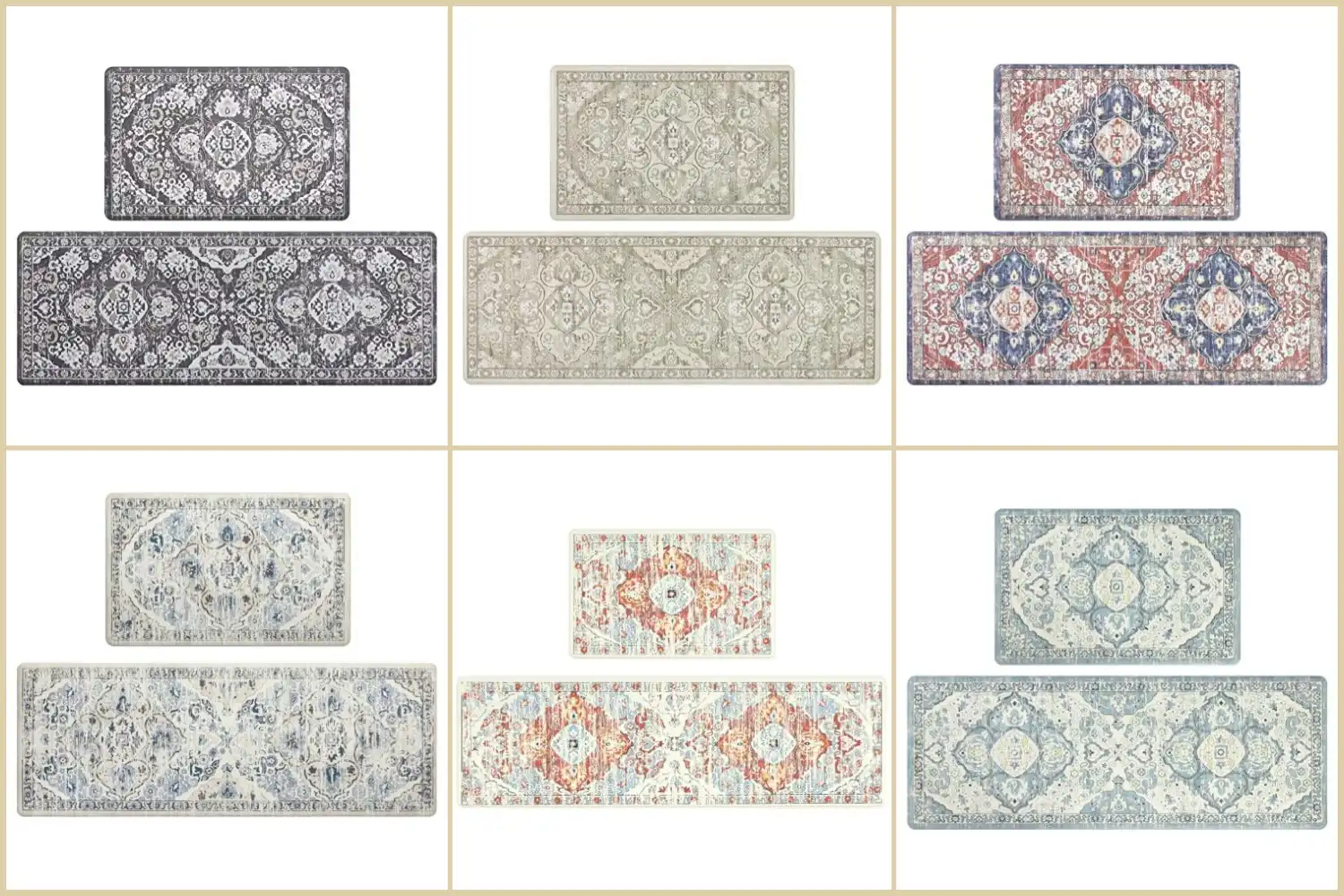
- Customization compatibility: Runners that let buyers change the size, color, and name can bring in more money in branded stores for OEM or private label buyers.
These factors determine not only how comfortable a product is but also how much it costs to use over its entire useful life. Choosing the right runner for the right type of floor protects both the product and the surface below it, which is important for hospitality procurement teams that are in charge of large floor areas.
| Criteria | Residential Use | Commercial / B2B Use |
|---|---|---|
| Pile Height | 5–10 mm is a good pile height. | 3mm is best |
| Base Type | Simple non-slip | Washable TPR |
| Customization Need | Low | High |
| Reorder Frequency | Seasonal | monthly or quarterly |

The Market Landscape: Top Kitchen Comfort Runner Brands and Products
In North America, the kitchen comfort runner category has grown up a lot. GelPro and other brands like it have built a strong reputation on their own gel-infused foam cores. Gorilla Grip, on the other hand, competes with aggressive non-slip base technology and low prices. For cost savings, Home Depot and Kmart sell popular, high-volume lines for home buyers, while for businesses, direct maker partnerships are becoming more common as a way to buy things.
For importers and wholesalers, what sets one company apart from another is not name knowledge but the consistency of production, the level of customization, and the compliance paperwork. For example, buyers looking for goods for the EU market require that they meet OEKO-TEX and REACH standards. People who work on restaurant projects need to be certified as EN 1350 flame retardant.
| Brand / Supplier Type | Key Strength | Best Fit For |
|---|---|---|
| GelPro | Gel-foam body for comfort | Residential high-end retail |
| Gorilla Grip | Aggressive TPR base that doesn't slip | Mid-range stores |
| Aijia | OEM/ODM, multi-cert compliance | B2B trade, leisure, and e-commerce |
Maintenance and Longevity: How to Care for Kitchen Comfort Runners?
One thing that is often forgotten when buying a kitchen comfort runner is the upkeep that needs to be done after the purchase. If a machine breaks down quickly under professional cleaning standards, it will cost a lot in the long run.
Cleaning Protocols That Preserve Material Integrity
It is easier to keep up with short-pile kitchen comfort runners than deep-pile options. Food and dust don't get stuck in the fibers, so you can clean the surface with a damp cloth or a normal washing machine cycle. The removable TPR base keeps its grip even after being washed many times, while chemical cleaners can make PVC bases tighten or crack. For business accounts, this is a real operational benefit.
If the base of a runner comes apart, the pile gets compressed and doesn't recover after 24 hours off the floor, or the edges start to fray, it's time to get a new one. Machine-woven runners with a locked-edge construction don't fray as quickly as hand-finished options. This is an important quality of workmanship that affects how often you have to replace the runners and how much it costs to own them all.
Kitchen Comfort Runner Trends and Future Outlook
The group of comfort floors is changing. In North America and Europe, people are buying fewer kitchen comfort runners just for looks and more runners that are made to last. Procurement strategy is changing because of three trends:
Eco-materials are becoming more popular faster. Retail brands and hotel groups that care about the environment are starting to accept polyester-based fake cashmere. It can be recycled and is made without the environmental damage that comes from using real animal fibers. In the mid-premium market, too, hybrid materials that combine soft-touch surfaces with high-density bases are becoming more popular.
More rules are being made about ergonomics in business kitchens. According to U.S. OSHA rules, anti-fatigue flooring is becoming more and more important in workplace health programs. This gives buying teams a reason to buy good runners besides just comfort.
E-commerce category growth is being driven by product forms that are foldable and small. Runners that ship flat and don't keep their folds lower return rates and customer complaints, which is a key measure for Amazon FBA sellers and Shopify brands that manage review scores.
Conclusion
A kitchen comfort runner has a place because it looks good and works well. For procurement professionals, the decision framework should be based on how well the material works, how easy it is to maintain, and how much customization is possible. The group of products is growing because of concerns about ergonomics, strict rules for business cleanliness, and the need for unique SKUs in online shopping. When buyers treat comfort runners as a strategic category instead of an afterthought, they always make more money and keep customers longer.
FAQ
1. What is the standard size for a kitchen comfort runner?
Most kitchen comfort runners are 20 to 24 inches wide and 60 to 120 inches long so that they can fit in galley kitchens and prep areas. For business or branded retail uses, OEM makers can make sizes that are just right for you.
2. Is TPR base better than PVC for kitchen runners?
TPR bases are easier to clean and bend than regular PVC bases. TPR doesn't crack when the temperature changes, and it keeps its grip strength even after being washed many times in a machine. Both of these properties are important in kitchens, where cleaning for hygiene is common.
3. Can kitchen comfort runners be machine washed?
Runners with a TPR base that can be washed and a short-pile surface can usually be washed in a machine. Before cleaning, you should always check the product's gram weight and edge construction. High-density weave runners with locked edges will keep their shape through many washings.
4. What certifications should B2B buyers look for?
Buyers in the EU should put OEKO-TEX, REACH, and EN 1350 at the top of their lists. Commercial buyers in North America gain from providers who are ISO 9001-certified. When you get a CE certificate, it means that your products are safe and legal all over the world.
Upgrade Your Product Line with Aijia Kitchen Comfort Runner Supplier Solutions
Aijia's Tianjin factory has been making export-quality carpets and runners since 2006. Every day, 10,000㎡ worth of goods are made there, and the factory is certified by ISO 9001, OEKO-TEX, CE, REACH, and EN 1350. Aijia is a reliable company that makes kitchen comfort runners. They offer OEM/ODM customization, a variable MOQ, and fast bulk shipping within 7 days for orders under 2,000㎡. You can email sales@aijiarug.com to ask for examples or a quote for a large order.
References
1. Applied Ergonomics Journal, 2017
2. OSHA Technical Manual – Ergonomics: Musculoskeletal Disorders, U.S. Department of Labor, 2022
3. Textile World – Sustainable Fibers in Floor Covering Applications, 2023
4. Floor Covering Weekly – North American Rug and Runner Market Report, 2024
5. OEKO-TEX Association – Standard 100 Certification Guidelines, 2023
6. International Journal of Industrial Ergonomics – Anti-Fatigue Flooring in Commercial Kitchens, 2021
Request fast quotes for bulk carpets, OEM & ODM floor mats, supported by strict quality control and complete supply chain.