- English
- French
- German
- Portuguese
- Spanish
- Russian
- Japanese
- Korean
- Arabic
- Greek
- German
- Turkish
- Italian
- Danish
- Romanian
- Indonesian
- Czech
- Afrikaans
- Swedish
- Polish
- Basque
- Catalan
- Esperanto
- Hindi
- Lao
- Albanian
- Amharic
- Armenian
- Azerbaijani
- Belarusian
- Bengali
- Bosnian
- Bulgarian
- Cebuano
- Chichewa
- Corsican
- Croatian
- Dutch
- Estonian
- Filipino
- Finnish
- Frisian
- Galician
- Georgian
- Gujarati
- Haitian
- Hausa
- Hawaiian
- Hebrew
- Hmong
- Hungarian
- Icelandic
- Igbo
- Javanese
- Kannada
- Kazakh
- Khmer
- Kurdish
- Kyrgyz
- Latin
- Latvian
- Lithuanian
- Luxembou..
- Macedonian
- Malagasy
- Malay
- Malayalam
- Maltese
- Maori
- Marathi
- Mongolian
- Burmese
- Nepali
- Norwegian
- Pashto
- Persian
- Punjabi
- Serbian
- Sesotho
- Sinhala
- Slovak
- Slovenian
- Somali
- Samoan
- Scots Gaelic
- Shona
- Sindhi
- Sundanese
- Swahili
- Tajik
- Tamil
- Telugu
- Thai
- Ukrainian
- Urdu
- Uzbek
- Vietnamese
- Welsh
- Xhosa
- Yiddish
- Yoruba
- Zulu
Why Non Slip Absorbent Bath Mats Are Essential for Hotels
Non slip absorbent bath mats are among the most underestimated safety assets in hotel bathrooms. Every year, wet bathroom floors contribute to thousands of slip-and-fall incidents in commercial lodging environments. A quality non-slip absorbent bath mat addresses two simultaneous hazards—standing water and surface friction loss—by combining rapid moisture wicking with a high-grip rubber backing. For hotel procurement professionals, selecting the right bath mat is not just a purchasing decision; it is a liability management strategy that directly affects guest safety, brand reputation, and long-term operating costs.
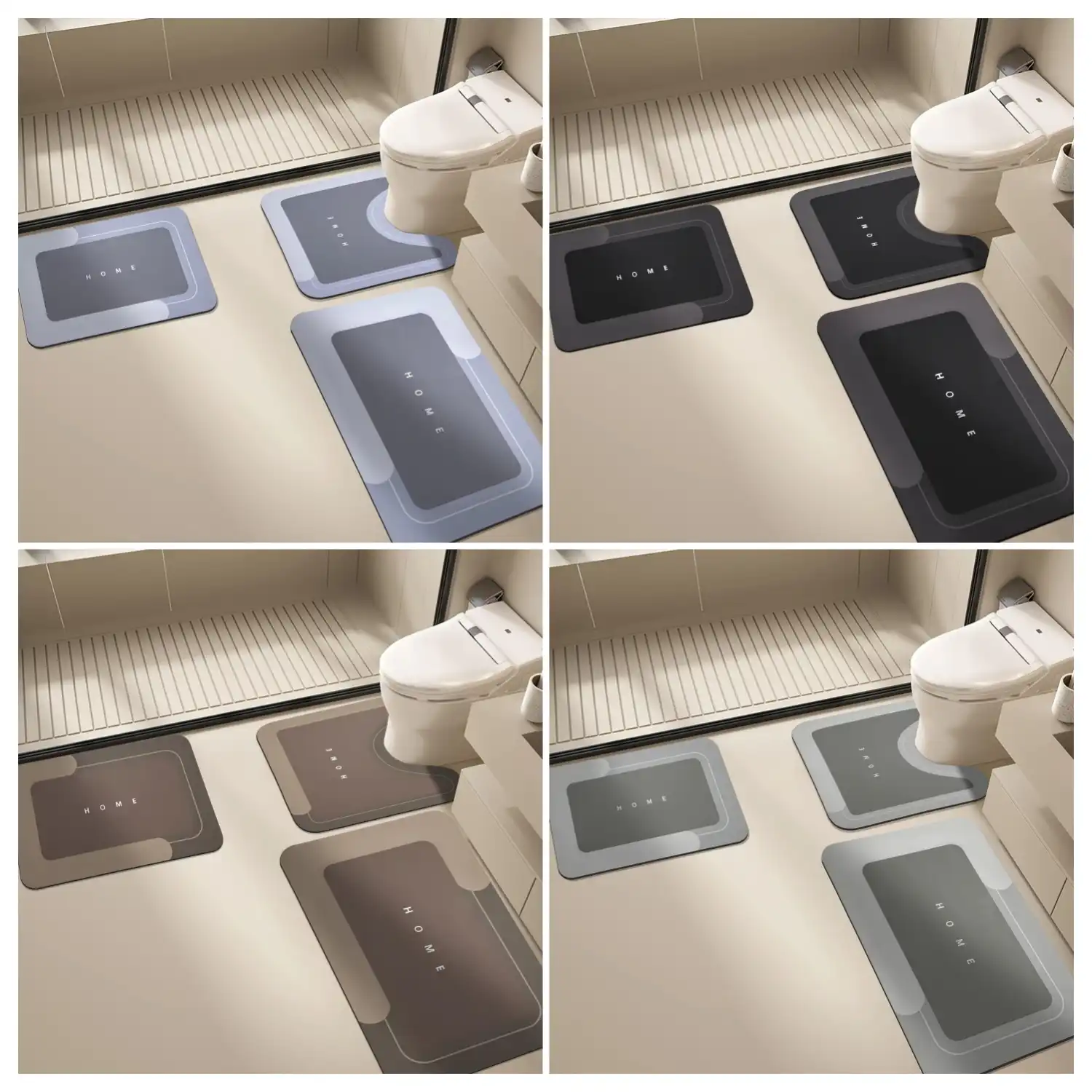
Understanding Non-Slip Absorbent Bath Mats and Their Role in Hotels
What Makes These Mats Different from Ordinary Bath Rugs?
A normal bath rug takes in water slowly and doesn't grip a wet floor very well. A non-slip absorbent bath mat that is designed for hospitality works in a different way. The top layer, which is usually high-density tech silk or microfiber, uses capillary action to move water away from the area where your foot touches the carpet. The rubber-textured back has a static coefficient of friction above 0.6, which is the level that ASTM D2047 says is commercially slip-resistant.
In hotels, this difference is important because bathroom floors are wet all day. Non-absorbent mats let water pool under them, which raises the risk of hydroplaning. This is when a film of water separates the mat from the tile completely, making it almost certain that someone will fall. That layer of water is removed by an absorbent mat before it builds up.
Material Functionality at a Glance
| Function for Layer | Material | Details |
|---|---|---|
| Surface | Tech Velvet with a high density | Very quickly absorbs water, and the feel is gentle on the face. |
| Middle | Foamed Middle Rubber | Cushioning and building structure |
| Bottom | Texture of Rubber | Grip that won't slip on stone, tile, or ceramic floors |
Due to the porous microstructure of diatomaceous earth, products with diatom mud surface options dry even faster—some can get rid of visible moisture in 15 to 30 seconds. This makes them perfect for hotel rooms that get a lot of use and don't get cleaned very often.

Why Hotels Should Prioritize Non-Slip Absorbent Bath Mats?
The Real Cost of Inadequate Bathroom Safety
There are real cash costs that come with slip-and-fall accidents in hotel bathrooms. The National Floor Safety Institute says that over 8 million people go to the emergency room every year in the United States because they fell. Wet bathroom floors are the main cause of these accidents. One guest injury claim can lead to lawsuits, higher insurance costs, and long-lasting damage to the hotel's image that is greater than the money saved over years by buying cheaper mats.
In addition to risk, how clean and safe guests think a place is directly affects the scores of online reviews. A wet, sliding mat is a sign of bad housekeeping. A dry, stable, and clean-looking non slip absorbent bath mat shows that you care. When hotels switch to commercial-grade mats with reliable non-slip and absorbent performance that are the same quality in every room, they see a return on their investment in the form of lower incident rates and higher guest happiness.
Safety and Comfort Work Together
Hotel bathrooms that get a lot of use are used by people of all ages, including older tourists and families with young children, who are more likely to trip and fall. A mat with both surface friction and a rubber-anchored backing makes it less likely that someone will fall without losing comfort. Skin-friendly tech velvet makes the floor feel soft underfoot, creating a sensory experience that goes well with high-end bathroom products instead of clashing with them.

How to Choose the Best Non-Slip Absorbent Bath Mats for Hotel Procurement?
Selection Criteria Tailored for Hospitality
When purchasing managers look at bath mat suppliers, they should use more than just price per unit to decide which ones to choose. The real factors that affect long-term value are shown in the following framework:
- Absorbency rate and quick-dry performance: 1600 g/m² mats with foamed rubber mid-layers absorb water faster and dry between cleaning processes, which lowers the risk of mildew and increases the mat's lifespan.
- Certification for slip resistance: Make sure the backing materials meet the requirements of ASTM D2047 or DIN 51130. TPR and SEBS rubber backings are better than standard latex at staying stable at high temperatures and not delaminating even after being washed many times in industrial settings.
- Stability of measurements after washing: The standard in the industry is shrinkage below 3% after washing. When mats get squished after being washed, the edges lose contact with the floor, making the edges of the mat dangerous to trip over.
- Colorfastness for branded environments: Hotels with uniform interior design plans need mats that don't lose their color when they're cleaned many times. As a general rule, hotel textiles must meet ISO 105 Grade 4 colorfastness standards.
- Custom sizes and branding options: The layout of hotel bathrooms varies. Procurement teams have more design options when they can find suppliers that offer laser-cut custom specs and OEM logo integration for their non-slip absorbent bath mats.
When these criteria are used together, the focus changes from finding the lowest unit cost to finding the lowest total cost of ownership. This is a difference that procurement directors with a lot of experience can see right away.
Product Specification Comparison
| Details given | Aijia Hotel-Grade Bath Mat | Standard Bath Mat |
|---|---|---|
| Weight in grams | 1600 g/m² | 800–1200 g/m² |
| Type of Backing | Rubber feel | Simple foam or latex |
| Thickness | 2.5–3 mm | 5–10 mm |
| Quick-dry | Fast | Slow |
| Customization | OEM/ODM, logo, color, laser cut | Limited |
| Certifications | OEKO-TEX, CE, ISO 9001, REACH, EN 1350 | Variable |
Maintenance and Longevity: Keeping Non Slip Absorbent Bath Mats Effective
Cleaning Protocols That Preserve Performance
Hotel housekeepers should wash non slip absorbent bath mats at temperatures that are right for the backing material. For example, for rubber-backed mats, the right temperatures are 40°C to 60°C. Detergents that contain bleach and aggressive spin cycles speed up the breakdown of rubber and weaken the adhesion of the backing. Both the non-slip layer and the top pile can be kept by using a gentle machine wash cycle with soap that has no pH.
How you clean is important, but how often you inspect is even more important. Procurement teams should set a replacement schedule based on things that can be seen, like backing that comes off, pile compression below the level of functional absorbency, or edge curling that makes it possible to trip. Because they sit close against the floor, mats with a 2.5 mm low-profile shape don't naturally curl at the edges.
Getting mats that are approved to OEKO-TEX Standard 100 is also in line with more and more company policies that require sustainability. These certifications show that harmful chemicals like formaldehyde and phthalates are not present. They are needed for hotel groups that want to get green building certifications like LEED or Green Key.
Procurement and Vendor Considerations for Hotel Supply Chains
When buying things for a hotel, a reliable supply is just as important as the quality of the goods. Deliveries that are late make it harder to open new properties, fix up rooms, and do regular repairs. A hotel chain's ideal non-slip absorbent bath mat provider has a steady production capacity, quality control that can be seen, and open order management.
Established makers with infrastructure that is designed for exporting offer big benefits when it comes to buying things. A daily production capacity of 10,000 m² makes sure that orders from large hotel groups are met on time. Pre-shipment 100% inspection methods get rid of differences in quality between batches, which is something that procurement managers always say is the main reason for seller friction. Export-standard packaging in the form of a roll, carton, or woven bag keeps the quality of the product safe during long-haul ocean freight, and better calculations for loading containers lower the cost of logistics per unit for bulk orders.
With OEM and ODM options, hotel brands can choose their own colors, have their logos embroidered or printed, and have items cut to non-standard sizes. These items are cut with precise laser technology that accurately copies approved models. For hotel groups that are in charge of rollouts across multiple properties, this level of uniformity between batches is a must.
Conclusion
Making sure hotel bathrooms are safe is part of the procurement process, not an afterthought. Choosing the right non slip absorbent bath mat—one that is absorbent, won't slip, lasts a long time, and is easy to clean—lowers the risk of guest injuries, lowers your liability, and sets the quality standard that leads to repeat bookings. The hospitality market wants more stability, customization, and proof of compliance from providers. The best way to meet these standards on a large scale is to work with a qualified maker who has experience exporting.
FAQ
1. Do hotel-grade bath mats really make it less likely for people to slip and fall?
Yes. Mats with rubber-textured backings that have a COF above 0.6 make it easier to walk on wet tile without slipping. With a surface that soaks up a lot of water, they get rid of both of the main reasons people trip and fall in the bathroom.
2. What kind of material will last the longest when hotel bath mats are washed a lot?
The most durable cycle is made up of high-density tech velvet tops, foamed rubber middle layers, and TPR rubber backings. They stay the same size and color even after being washed many times in an industrial setting.
3. Is it possible to add hotel logos to bath mats?
Yes. OEM/ODM production can print logos, match colors exactly, and laser-cut items to fit bathrooms that don't have standard plans. This feature is especially helpful for hotel chains that want to keep their visual identity consistent across all of their properties.
Source Your Hotel Bath Mats from Aijia—A Trusted Non-Slip Absorbent Bath Mat Manufacturer
Tianjin Aijia Carpet Co., Ltd. has been manufacturing export-grade textile flooring since 2006, with 20 years of specialized production experience and a daily output of 10,000 m². As a certified supplier of non slip absorbent bath mat products, Aijia delivers OEM/ODM customization, 100% pre-shipment inspection, and full compliance documentation, including CE, OEKO-TEX, ISO 9001, REACH, and EN 1350. Whether you are procuring for a single property or a multi-country hotel portfolio, our team can deliver samples within 48 hours and fulfill bulk orders with verified consistency. Contact us at sales@aijiarug.com to request a quote.
References
1. National Floor Safety Institute (NFSI). Slip, Trip, and Fall Prevention Guidelines. 2022.
2. ASTM International. ASTM D2047: Standard Test Method for Static Coefficient of Friction of Polish-Coated Flooring Surfaces. 2022.
3. OEKO-TEX Association. OEKO-TEX Standard 100: Testing for Harmful Substances in Textiles. 2023.
4. European Chemicals Agency (ECHA). REACH Regulation: Chemical Safety in Textile Products. 2023.
5. DIN Deutsches Institut für Normung. DIN 51130: Testing of Floor Coverings — Slip Resistance in the Workplace. 2014.
6. Cornell University School of Hotel Administration. Hospitality Facilities Management and Design. 4th ed., 2019.
Request fast quotes for bulk carpets, OEM & ODM floor mats, supported by strict quality control and complete supply chain.