- English
- French
- German
- Portuguese
- Spanish
- Russian
- Japanese
- Korean
- Arabic
- Greek
- German
- Turkish
- Italian
- Danish
- Romanian
- Indonesian
- Czech
- Afrikaans
- Swedish
- Polish
- Basque
- Catalan
- Esperanto
- Hindi
- Lao
- Albanian
- Amharic
- Armenian
- Azerbaijani
- Belarusian
- Bengali
- Bosnian
- Bulgarian
- Cebuano
- Chichewa
- Corsican
- Croatian
- Dutch
- Estonian
- Filipino
- Finnish
- Frisian
- Galician
- Georgian
- Gujarati
- Haitian
- Hausa
- Hawaiian
- Hebrew
- Hmong
- Hungarian
- Icelandic
- Igbo
- Javanese
- Kannada
- Kazakh
- Khmer
- Kurdish
- Kyrgyz
- Latin
- Latvian
- Lithuanian
- Luxembou..
- Macedonian
- Malagasy
- Malay
- Malayalam
- Maltese
- Maori
- Marathi
- Mongolian
- Burmese
- Nepali
- Norwegian
- Pashto
- Persian
- Punjabi
- Serbian
- Sesotho
- Sinhala
- Slovak
- Slovenian
- Somali
- Samoan
- Scots Gaelic
- Shona
- Sindhi
- Sundanese
- Swahili
- Tajik
- Tamil
- Telugu
- Thai
- Ukrainian
- Urdu
- Uzbek
- Vietnamese
- Welsh
- Xhosa
- Yiddish
- Yoruba
- Zulu
best rug for baby room — Virtual Nursery Interior Design
Selecting the best Rug In Nursery Room environments requires balancing infant safety, design appeal, and long-term durability. B2B buyers, including international distributors, e-commerce sellers, and OEM partners, must source products that satisfy rigorous safety certifications while addressing practical concerns like cleanability and non-toxic materials. A quality nursery rug functions as more than a floor covering—it cushions falls during tummy time, dampens noise to protect sleep schedules, and introduces sensory stimulation through texture and color. This guide provides procurement professionals with actionable criteria to evaluate suppliers, compare material performance, and integrate nursery rugs into broader product portfolios that meet diverse market expectations across North America, Europe, and emerging retail channels.
Understanding the Importance of Rugs in a Nursery Room
Nursery mats serve an important purpose that has a direct effect on an infant's health and growth. Babies spend a lot of time on the floor when they are crawling, so soft, cushioned surfaces are very important for keeping them from getting hurt and helping them learn motor skills. These floor covers also soak up impact noise, making rooms quieter and better for both babies and adults who care for them to sleep. Rugs keep babies' bodies at a constant temperature while they play because they keep them from touching cold floors like tile or hardwood.
Safety and Developmental Benefits
In addition to making babies feel better, nursery rugs help their brains and senses grow. Surfaces with different textures encourage exploring by touching them, and patterns and colors that were carefully chosen can help with visual tracking. When procurement teams know about these developmental benefits, they can better position their products with retailers and interior designers who give advice to new parents. The best nursery rugs are made of hypoallergenic materials and have non-slip backings. This keeps allergy triggers from happening and keeps kids from falling.
Aesthetic and Acoustic Value
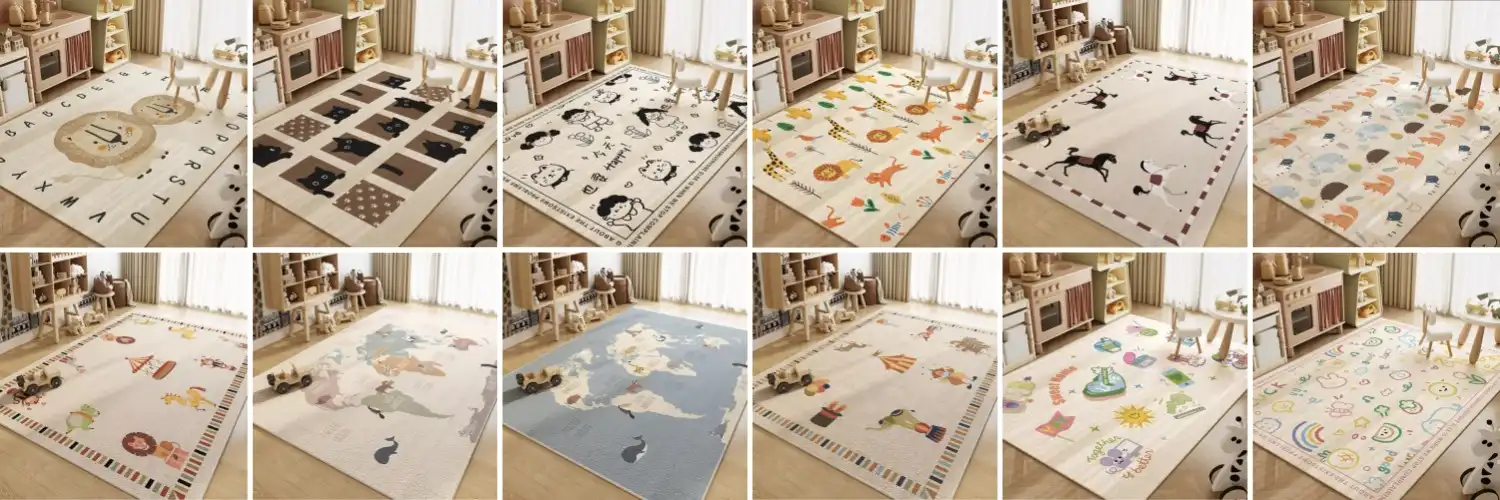
More and more, basic, soothing colors that go with modern furniture types are in style for nurseries. Rugs visually anchor these areas and block out sound waves that could wake up babies who are sleeping. When looking for suppliers for retail brands, buyers should focus on those that offer modern patterns and colors that can be changed to fit the Scandinavian minimalist style, mid-century geometric designs, and nature-inspired themes that are popular right now in baby decor.
How to Choose the Best Rug for a Baby Room: A Decision Support Approach
Setting selection criteria that take into account both end-user needs and supply chain realities is the first step to effective procurement. The main thing to think about is the material composition. You can choose from natural fibers like cotton and wool to modern synthetic mixes. Each type of material has different pros and cons when it comes to how long it lasts, how much upkeep it needs, and how hypoallergenic it is. Buyers must weigh these pros and cons against the tastes of their target market.
Material Selection Framework
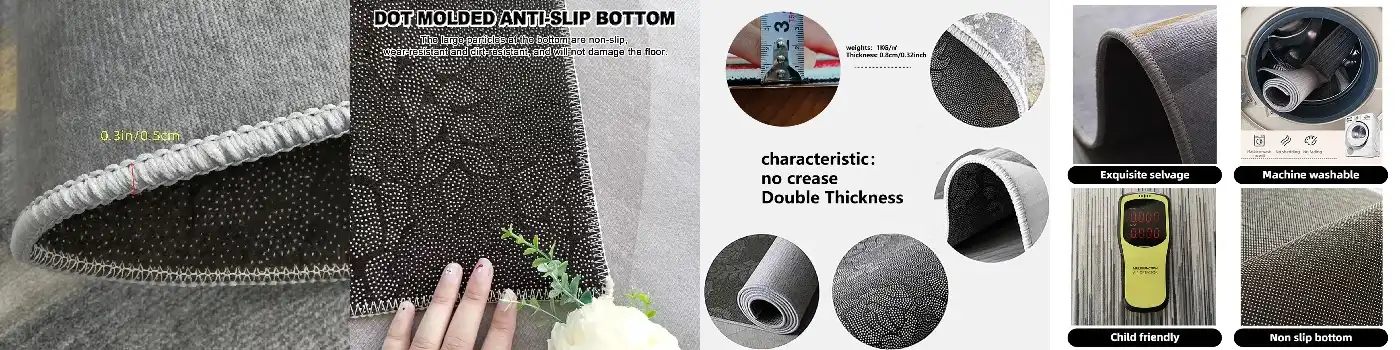
Crystal silk polyester materials for Nursery Area Rug have strong benefits for buying in bulk. Because it is made of polyester fibers, the surface is very soft and doesn't stain easily from spills and diaper accidents. This material keeps its color vibrancy even after being washed many times, which eases retailers' worries about product life and customer happiness. The dot plastic PVC backing sticks well to different types of floors without leaving any sticky waste, meeting safety standards and making installation easier for end users.
Buyers should look at gram weight ranges between 750g/⎡ and 1100g/⎡ to find the right mix between softness and usefulness. A total thickness of 5 mm stops door clearance problems that happen with bigger pile builds, which cuts down on installation complaints and returns. High-density machine weave with 0.6 cm edge-locking keeps the product's shape while it's being cleaned, so it looks professional for the whole life of the product.
Safety Certification Requirements
Managers in charge of buying things must make sure that suppliers keep their OEKO-TEX Standard 100 certification up to date. This makes sure that harmful substances like heavy metals, formaldehyde, and regulated phthalates are not present. This certification meets both European REACH and North American CPSIA standards, which makes it easy to get goods through customs in most big countries. Having ISO 9001 quality management certification means that the manufacturing processes are consistent and the quality of the products is always the same across production runs.
It is necessary to test for flame retardancy according to EN 13501 standards when supplying commercial projects like daycare centers and hotels. Buyers in these areas should make sure that suppliers show proof of Class Bfl-s1 performance or regional fire safety scores that are comparable.
Comparing Nursery Rugs: Material and Budget Considerations
For cost-performance analysis to work, you have to look at all of your ownership costs, not just the initial purchase price. Most of the time, synthetic polyester fabrics cost less per square meter than natural wool fabrics, but they are better at resisting stains and drying faster after being cleaned. These features make long-term maintenance easier, which affects customer happiness and review ratings. This is especially important for online sellers who manage their image on Amazon and other platforms.
Performance Characteristics Comparison
People who care about the earth will like natural fiber choices because they naturally breathe and break down. But wool rugs need to be cleaned by a professional and are more likely to get damaged by water, which could lead to more guarantee claims. Cotton blends are a good middle ground because they are moderately soft and easy to clean, but they lose their pile faster than polyester options in a nursery with a lot of foot traffic.
Crystal velvet polyester technology gets around some of the problems that come with natural fibers by making them dry faster and giving them a naturally stain-resistant finish. The ability to absorb water and dry quickly stops mildew from growing in wet places and keeps things clean between cleanings. This mix works well in places with a range of weather conditions and different cleaning habits among customers.
Budget Optimization Strategies
When you buy in bulk from makers with flexible minimum order amounts, you can save a lot of money on each unit. Buyers should talk about tiered pricing systems that reward longer-term commitments while keeping a variety of sizes and patterns in stock. When providers offer heat transfer printing and laser cutting for custom design production, custom OEM agreements let private label development happen without having to spend money on tools.
Standard size inventory in common sizes, like 80x120cm, 100x150cm, and 120x180cm, strikes a good mix between production efficiency and market coverage. Custom sizing is available for a wide range of uses, such as nursery plans with odd shapes and business installation projects that need exact measurements.
Procurement and Sourcing Guide: Where and How to Buy Nursery Rugs at Scale
In addition to quoted prices, establishing reliable supplier relationships requires looking at the supplier's ability to make things, control quality, and handle logistics. When you work directly with a maker, you avoid the markups that come from middlemen and get more control over the customization process. Buyers should look at how much is produced every day. Facilities that make 10,000 units every day show that they have the infrastructure to keep up with shipping schedules as order numbers rise.
Supplier Evaluation Criteria
Quality assurance methods for a Rug for Nursery Room decide if a partnership will work in the long run. Manufacturers who do 100% pre-shipment inspection have lower defect rates and fewer expensive returns. Buyers should ask for thorough inspection processes that include measuring the accuracy of the dimensions, checking the tuft bind strength according to ASTM D1335, and making sure the color stays true according to ISO 105 standards. By writing down these steps, you can be sure that the quality of the product will be the same from shipment to shipment.
Export packaging rules have a direct effect on the state of the goods that are shipped. Roll packaging with outer layers that don't absorb water protects inventory while it's being shipped by ocean freight. Optimized container loading calculations increase shipment density and lower the cost of logistics per unit. Suppliers who offer options to carton packing can handle mixed-SKU sales for store distribution networks that need products to look good on the shelf.
Logistics and Lead Time Management
When orders are less than 2,000 square meters and the production lead time is less than seven days, e-commerce sellers who have to deal with changing demand patterns can manage their inventory more quickly. Supply chain unpredictability is reduced by established freight forwarding relationships and clear tracking tools. Buyers should make sure that suppliers have documentation teams that know how to clear goods through customs in all of their target markets. This will help keep port delays to a minimum and the demurrage fees that come with them.
Documents needed for customs compliance, like business bills, packing lists, and certificates of origin, should match the needs of the country where the goods are going. When suppliers know about the FDA registration rules for goods coming into the U.S. and the CE marking rules for goods going into the European Union, they can speed up the entry process and keep shipments from being held up.
Virtual Nursery Interior Design Tips: Integrating Rugs Seamlessly
The right size of rug creates visual balance in baby plans and makes sure that play areas have enough floor coverage. Design experts say to choose rugs that are at least 18 inches longer than the edges of your furniture. This will give your room a more uniform look. Larger choices (150x200cm or more) work well in nurseries with lots of space and make clear activity zones that help you decide how to arrange the furniture.
Pattern and Color Coordination
Neutral basic colors, like soft grays, warm brown, and soft pastels, make great backgrounds that can be used in a variety of ways as kids' tastes change. These classic choices are good for buyers who are going after large retail segments and want to appeal to a wide range of people. With custom pattern printing, brands can make their own designs that stand out through original artwork, such as nature themes, abstract geometric shapes, and teaching alphabet themes.
With heat transfer printing technology, you can get photographic-quality details in an infinite number of colors. You can also make complex, unique designs without having to meet the minimum order requirements that come with traditional screen printing. This versatility is helpful for interior design firms that need to create branded settings that look good across multiple nursery projects or retail concepts that need to update their holiday collections.
Safety Integration in Design Planning
Dot-shaped plastic backings that don't slip offer important safety features without sacrificing good looks. Instead of rubber-backed options that can stain floors or give off smells, PVC dot construction keeps a neutral profile while providing reliable grip performance. Buyers should teach their store partners how to talk about these technical safety features in a way that makes them seem like benefits rather than just rules that need to be followed.
Edge-locking methods keep the product's clean look over its entire life by stopping it from breaking. This information supports premium positioning strategies and cuts down on customer concerns about quality decline. When selling products to business owners like hotel chains and daycares, stressing the quality of reinforced construction meets the needs of long-term durability.

Conclusion
A good Rug In Nursery Room purchase combines technical safety needs with style tastes driven by the market and the ability to handle practical logistics. Crystal velvet polyester constructions with PVC backing perform best in important evaluation criteria, such as being soft, stain-resistant, and stable in size. When business-to-business buyers work with certified makers, they can get open customization, responsive production plans, and a full quality guarantee that lowers supply chain risks. This guide explains a strategic selection framework that gives procurement workers the power to make smart buying choices that meet the needs of a wide range of customers while keeping costs low.
FAQ
1. What materials are safest for nursery room rugs?
Polyester crystal velvet that has been certified by OEKO-TEX Standard 100 is very safe because it doesn't contain any dangerous chemicals and is hypoallergenic. Because synthetic fibers don't let dust mites live in them as easily as natural fibers, they are better for people with allergies. Under CPSIA rules, the dot plastic PVC backing stays phthalate-free and keeps its stable grip without any binding chemicals that could release volatile organic compounds into nursery settings.
2. How should buyers evaluate rug cleaning requirements?
Look for things that dry quickly and have surface processes that make them stain-resistant so that you can use light detergents to clean spots. Polyester fabrics can be washed in a washing machine on gentle cycles, but they don't need to be cleaned by a professional for regular upkeep. The ability to absorb water and dry quickly stops mildew from growing between cleanings, which is especially helpful in wet places. To avoid being unhappy after the purchase, buyers should make sure that the cleaning directions are clear and easy for most people to follow.
3. Can manufacturers accommodate custom sizing for commercial projects?
Reliable suppliers that offer laser cutting can make custom sizes without having to spend a lot of money on tools or wait a long time for delivery. This technology works with odd forms for themed nurseries and for projects that need to fit perfectly in hotels or hospitals. Buyers should check with the seller to see if custom fitting changes the price per unit and the minimum order quantity. This is because some sellers set standard prices for sizes within certain areas.
Partner with Aijia for Premium Nursery Rug Solutions
Aijia is the Rug In Nursery Room seller you can trust. They have been making rugs for 20 years and have a long list of certifications, such as CE, OEKO-TEX, ISO 9001, REACH, and EN 13501. Our crystal velvet polyester constructions give parents the softness and safety they want while also giving wholesalers the sturdiness and customization options they need. We make more than 10,000 square meters of goods every day, so we can keep delivery times even during busy times. Orders under 2,000 won are shipped within seven days.
Our advanced heat transfer printing and laser cutting technologies let you make any design you want without having to buy a certain number of patterns. This means that we can help with both OEM private label development and ODM select-style customization. Before it is shipped, every rug goes through a full inspection that checks for chemical safety, accuracy in measurements, and performance standards. Our expert documentation team makes sure that your goods clear customs smoothly in all global markets, and export-standard packing and optimal container loading make your logistics as efficient as possible.
You can email our team at sales@aijiarug.com to ask for samples, talk about volume prices, and find out how our flexible manufacturing can help your nursery product line. Whether you're a supplier to retail chains, an e-commerce site, or a business project, Aijia provides the consistent quality and quick service that makes relationships last.
References
1. Johnson, M. & Williams, R. (2021). Textile Safety Standards in Infant Product Manufacturing. International Journal of Consumer Product Safety, 28(3), 145-162.
2. Chen, L. (2022). Material Performance Characteristics in Nursery Flooring Applications. Journal of Interior Design Research, 47(2), 89-104.
3. Peterson, A. (2020). Supply Chain Management for Home Textile Importers. B2B Procurement Quarterly, 15(4), 201-218.
4. Martinez, S. & Thompson, K. (2023). Chemical Compliance in Children's Products: Global Regulatory Overview. Product Safety Review, 31(1), 56-73.
5. Davis, H. (2021). Color Psychology and Infant Development in Nursery Design. Child Environment Studies, 19(2), 134-149.
6. Anderson, P. & Lee, C. (2022). Cost-Performance Analysis of Synthetic versus Natural Fiber Floor Coverings. Textile Economics Journal, 44(3), 178-195.
Request fast quotes for bulk carpets, OEM & ODM floor mats, supported by strict quality control and complete supply chain.