- English
- French
- German
- Portuguese
- Spanish
- Russian
- Japanese
- Korean
- Arabic
- Greek
- German
- Turkish
- Italian
- Danish
- Romanian
- Indonesian
- Czech
- Afrikaans
- Swedish
- Polish
- Basque
- Catalan
- Esperanto
- Hindi
- Lao
- Albanian
- Amharic
- Armenian
- Azerbaijani
- Belarusian
- Bengali
- Bosnian
- Bulgarian
- Cebuano
- Chichewa
- Corsican
- Croatian
- Dutch
- Estonian
- Filipino
- Finnish
- Frisian
- Galician
- Georgian
- Gujarati
- Haitian
- Hausa
- Hawaiian
- Hebrew
- Hmong
- Hungarian
- Icelandic
- Igbo
- Javanese
- Kannada
- Kazakh
- Khmer
- Kurdish
- Kyrgyz
- Latin
- Latvian
- Lithuanian
- Luxembou..
- Macedonian
- Malagasy
- Malay
- Malayalam
- Maltese
- Maori
- Marathi
- Mongolian
- Burmese
- Nepali
- Norwegian
- Pashto
- Persian
- Punjabi
- Serbian
- Sesotho
- Sinhala
- Slovak
- Slovenian
- Somali
- Samoan
- Scots Gaelic
- Shona
- Sindhi
- Sundanese
- Swahili
- Tajik
- Tamil
- Telugu
- Thai
- Ukrainian
- Urdu
- Uzbek
- Vietnamese
- Welsh
- Xhosa
- Yiddish
- Yoruba
- Zulu
How to Choose the Perfect Kids' Rugs and Carpets?
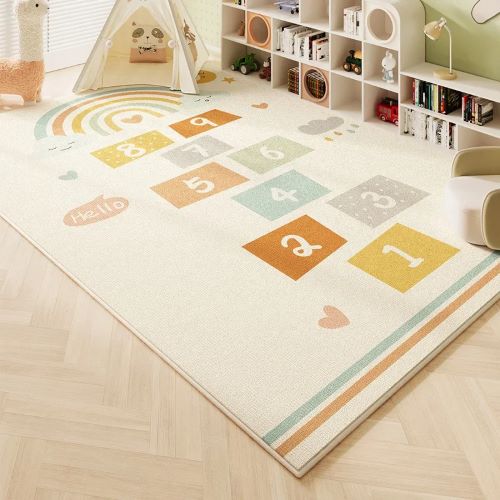
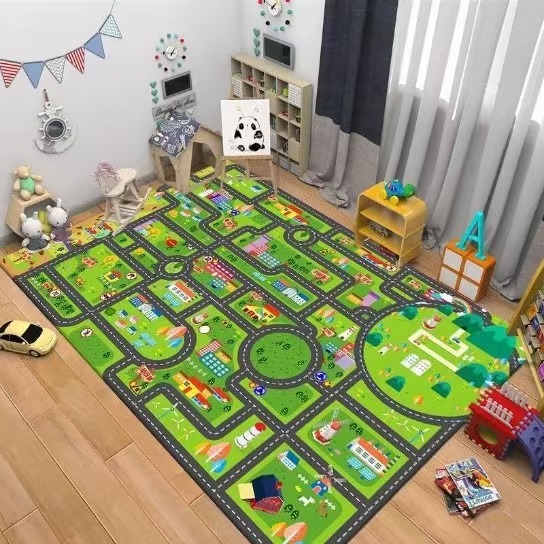
When looking for the best Area Rugs For Childrens Room, you need to pay close attention to safety, material make-up, and performance specs. This is especially important when buying things that will cover thousands of square meters in several places. Working with foreign dealers and online stores for 20 years, I've seen how the right flooring choice can keep kids safe and help businesses reach their goals. This guide talks about important buying factors like non-toxic approval, durability under heavy use, design adaptability, and the ability to order in larger quantities. Figuring out these basics is important whether you're setting up a school, a store, or an online product line. They will help you make sure that your investment lasts and meets the rules in each market.
Understanding the Key Challenges in Choosing Kids' Rugs
When choosing floor covers for kid-friendly areas, there are some issues that regular business carpeting doesn't have to deal with. Safety is still the most important thing—materials must not release harmful chemicals and must have nonslip surfaces that absorb falls that happen during busy play.
Safety and Health Compliance
The main condition that can't be changed is that the makeup must not be toxic. Buyers must make sure that the goods they want to buy have the OEKO-TEX Standard 100 approval, which means they don't contain any harmful chemicals, heavy metals, or azo dyes. Hypoallergenic traits keep your lungs from getting irritated, which is especially important in small areas where air flow may be limited. The backing material needs to be looked at just as carefully. The dot plastic backing with PVC compounds should follow REACH rules to make sure that no phthalates leach out of the product over time.
Durability Under Intensive Use
Traffic trends in children's areas are different from those in other businesses. Material strength is tested by constant movement, pulled toys, spilt liquids, and repeated cleaning processes. The problem for procurement professionals is to find items that meet these needs while still looking good and being structurally sound. Resistance to stains and colourfastness that lasts through frequent cleaning are no longer options. The gram weight standard is directly related to how long the rug will last. Rugs that weigh less than 750 g per square metre usually wear out faster in areas with a lot of foot traffic.
Design and Functional Balance
The way something looks must help people grow and progress in more ways than one. Colour psychology affects how we feel and how easily we can learn, and pattern choices can help with teaching themes or making rooms more organised. But the desire for beauty clashes with practical concerns, such as the need for sizes that work with different room plans, limited budgets per square metre, and the difficulty of keeping track of multiple design choices. Because of these clashing goals, it's not enough to just make decisions without thinking about them.
Core Selection Criteria for Kids' Rugs and Carpets
Making a choice grid helps business-to-business buyers compare options fairly across six important factors. Depending on your application and the needs of your client, each factor has a different amount of weight.
Material Composition and Safety Standards
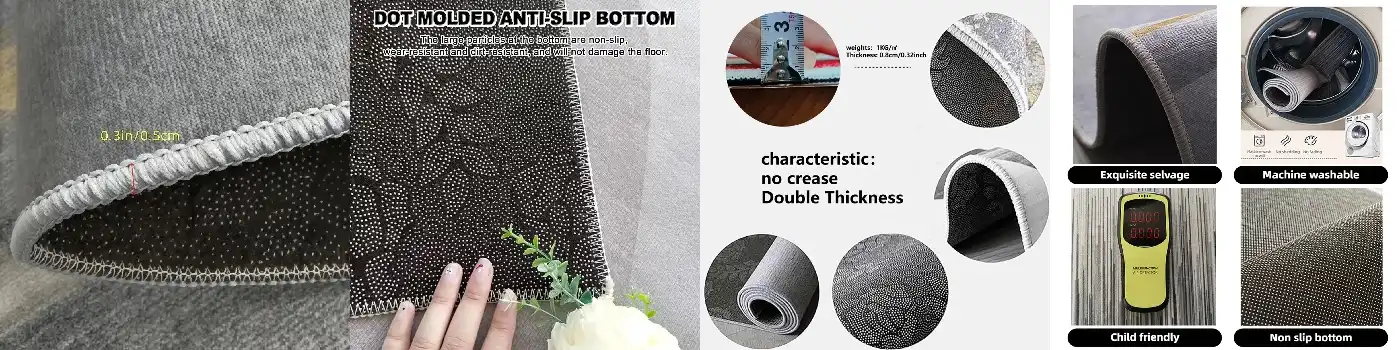
Crystal velvet polyester is the best material for kids' rooms because it feels soft like natural fibers but doesn't hold on to wetness like natural fibers do, which can lead to bacteria and mold growth. It is possible to clean this synthetic material very well, and it will still feel soft. When looking at the specs of a material, make sure that the surface treatment has antibacterial properties and that the total thickness is at least 5mm so that it can provide enough padding. The type of backing has a big effect on safety. For example, dot plastic backing sticks securely to a variety of floor surfaces without using sticky chemicals that could give off volatile organic compounds.
Durability and Maintenance Requirements
In real life, the link between gram weight and longevity is almost straight. Products that weigh between 750g and 1100g per square metre offer a range of performance levels that are good for a variety of high-intensity settings. Lighter options work well in homes or stores with little foot traffic, while bigger ones are better for formal use in places like schools and daycares. Surface solutions that are stain-resistant keep things from getting permanently stained by things like juice, paint, and mud. Easy maintenance saves money because materials that absorb water and dry quickly allow for same-day use after cleaning, which keeps things running smoothly in business settings.
Dimensional Specifications and Customisation
Standard sizes don't usually work with the different ways that kids' rooms are set up. Area rugs for childrens rooms: being able to order unique sizes gets rid of waste from buying too much and gaps that are too big, and could cause people to trip. A 0.6-cm edge-locking width stops fraying even when the paper is cut into non-standard forms. This keeps the professional look that shows quality in store settings. Consistency in thickness at 5 mm makes sure that rugs lie flat under doors without making steps that make it hard for wheelchair users to get through or get caught when the door is being opened or closed.
Design Versatility and Visual Impact
Today's buyers want more than just plain colours; they also want the ability to create their own patterns. With heat transfer printing technology, you can print photo-realistic pictures, teaching images, and brand logos on materials without putting their safety at risk. This customisation feature lets online stores set their products apart from others, and it helps school buyers make themed learning spaces. Colour stability is very important. Bad dyes fade in UV light or after being washed many times, which makes it hard to match the looks of different parts of bigger works.
Comparing Popular Rug Types and Materials for Children's Rooms
The choice of materials has a big impact on how well a product works in a number of different operating areas. Knowing about these trade-offs helps you make smart choices about specifications.
Synthetic Versus Natural Fibre Considerations
Polyester fibre methods are used in most market children's rugs for good reasons. Synthetic materials don't absorb water like wool or cotton does, which can cause mildew problems in warm places or after spills. Common allergens, like dust mites, are naturally repelled by the material, which makes it safe for kids with breathing problems. Synthetic rugs are much more cost-effective than natural fibre rugs of the same quality, which usually cost 40–60% more per square metre and need special cleaning methods that add to their ongoing costs. As recycled polyester technologies have improved, buyers who care about the environment can now find environmentally friendly choices that don't skimp on function.
Texture Profiles and Age Appropriateness
For babies and toddlers, the plush pile structure is the softest option for places where they will be playing and growing,, where they will be touching the floor a lot. The padding effect makes injuries less serious when someone falls and keeps the floor warm on cold subfloors. But this same depth makes it hard to clean because dirt gets stuck in the threads. Low pile heights keep wheels from getting stuck on flatter weave constructions, which are good for bigger kids' rooms where mobility toys like scooters and wagons move across surfaces. Crystal velvet is in the middle—it's soft enough to be comfortable but thick enough that crumbs and other small things stay on the top so they're easy to clean up.
Specialized Functional Features
Specialized solutions for floors make them more useful for more than just basic tasks. In bathrooms and kitchens, where wetness is common, materials that dry quickly are very important. When installing on the ground floor over concrete slabs, where cold can move through and make you uncomfortable, the performance of the thermal insulation is important. For some uses, sound damping is needed to stop noise from travelling between floors in buildings with more than one. If these performance characteristics are listed in specification sheets, you should check the testing standards instead of believing what the marketing says—measurable metrics give you a way to compare rival goods in an objective way.
Procurement Strategies for B2B Buyers: Where and How to Source Kids' Rugs?
Strategic choices about where to get your carpet will determine whether your investment pays off or causes ongoing problems. Before agreeing to work with a seller, there are a number of things that should be carefully considered.
Supplier Evaluation Framework
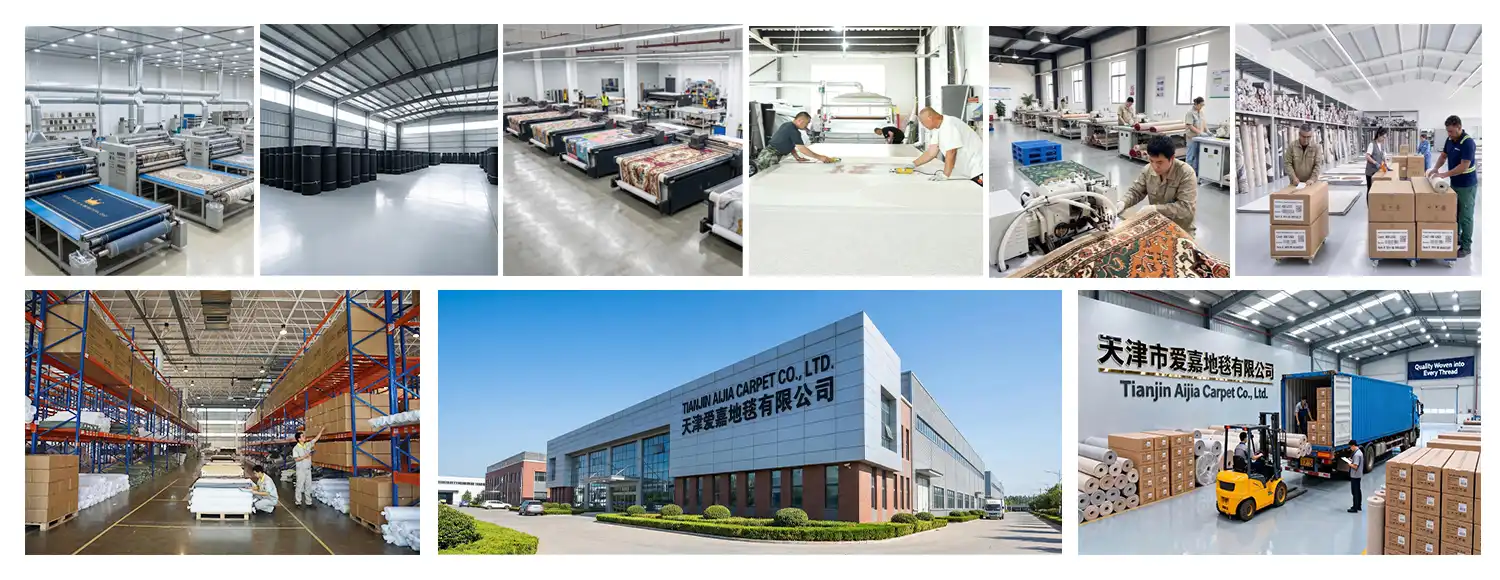
Production capacity has a direct effect on how reliably orders are filled. Companies that produce 10,000 square metres of carpet every day, like those that are already established in Tianjin's carpet production hub, show that they have the scale to consistently finish large orders, including for childrens bedroom rugs. Geographical concentration in specialized industrial zones has benefits for the supply chain. Easy access to parts, pools of skilled workers, and good logistics facilities all help cut down on wait times and ensure consistent quality. Compliance commitment is shown by certification files, which include CE marking for European distribution, ISO 9001 for quality management systems, and EN 1350 flame retardant ratings for business installations. These badges aren't just pieces of paper; they show that processes have been checked and are safe for you to buy from.
Sample Evaluation and Testing Protocols
It is still important to ask for pre-production models, even though it takes longer to get them. Specification sheets can't show how something feels, but physical samples can. This lets people judge things like how soft something is, how thick something seems, and how accurate the colours look. Standardized methods should be used to test for abrasion resistance, colourfastness should be checked through washing processes, and physical stability should be checked after the fabric has been exposed to changes in temperature. Writing down the results of these tests makes concrete records that help financial partners understand why purchases were made and give options if production batches don't meet sample standards.
Pricing Structure and Volume Negotiations
Professional makers can tell the difference between opportunistic traders and transparent price models. Instead of getting one big number, ask for multiple quotes that break down the prices of the base materials, any customizations, packing, and shipping. This level of detail lets you compare sources accurately and see where you have the most negotiating power. Flexible MOQ policies are especially helpful for online sellers who are trying out new designs. Being able to buy small amounts that are still profitable lowers the risk of running out of stock and keeps the relationship going for future orders. The terms of payment show how financially stable the supplier is. For example, well-known manufacturers usually give normal trade credit, while companies that expect full payment up front may have cash flow problems that could delay order completion.
Case Studies and Best Practices in Kids' Rug Procurement
Real-life examples of application show how theoretical selection criteria can be used to get results for a range of buyer types.
Educational Institution Implementation
A regional daycare company with 23 locations had to pay an average of $12,000 per site every 18 months to replace the carpet. Their current provider gave them cheap choices that broke quickly when they were used a lot. When they switched to crystal silk polyester rugs with a density of 950 grams per square meter and better backing, the time between replacements went up to 36 months, and safety test scores went up. The head of procurement said that the starting cost went up by 28%, but that the total lifetime costs went down by 41% when installation labour and business interruptions were taken into account. This case shows that the quality of the specifications has a direct effect on the total cost of ownership, not just the price of the original buy.
E-commerce Seller Product Differentiation
A seller on Amazon FBA who specializes in home goods for kids had a hard time competing with similar products that were only sold for the lowest price. They made their own design line with teaching alphabet and world map patterns by working with a company that does custom heat transfer printing. Because they could offer custom sizes, they were able to make "growth stages" sets that their regular rivals couldn't match. Within six months, their average selling price went up by 34% while their conversion rates stayed the same. In customer reviews, they praised the uniqueness of the design. Because the MOQ was flexible, they were able to try five design ideas with orders for 500 units before expanding on the ones that worked to container numbers.
Procurement Best Practices Checklist
Several operational practices are needed for bulk buying systems to work well, including for wholesale kids room rugs. Keep thorough specification sheets for each SKU that list the gram weight, thickness, backing type, and treatment information for each item. Set up quality checking procedures that include sampling new shipments before they are sent out. Finding problems when they are received keeps failures from happening at the customer level. Create seller scorecards that keep track of the percentage of on-time deliveries, the rate of defects, and how quickly replies to communications. To lower the risk of concentration, build ties with backup providers in different parts of the world. Write down all of your customization instructions along with photos and real samples to make sure that the production is the same for each restart.
Conclusion
When choosing area rugs for children's rooms, you have to think about how safe they are, how long they will last, how they look, and how much they will cost. Crystal velvet polyester structure with the right backing systems meets the specific needs of pediatric areas by being stain-resistant, cushioning, and easy to clean. When looking at vendors, business-to-business buyers get the best results when they look at more than just price. They should also look at production capacity, licensing portfolios, and customization options. The examples of successful implementations show that specification quality is directly linked to lifecycle value. Investing in the right gram weights and surface treatments at the start can lower the number of replacements needed while also increasing user satisfaction in home, business, and public settings.
FAQ
1. What certifications should I verify when sourcing children's carpets?
Check that the textiles meet OEKO-TEX Standard 100 for safety, CE marks for the European market, ISO 9001 for quality management systems, REACH compliance for chemicals that aren't allowed, and EN 1350 flame retardant rates for business installations. These certificates make sure that the product meets safety standards around the world and keep your company from being sued.
2. How does gram weight affect carpet performance and pricing?
Gram weight is directly related to how long something will last and how much it costs to make. 750g per square metre products are good for light domestic use, while 950g to 1100g products are good for high-traffic business settings. Higher density gives better cushioning, better look retention, and longer refill intervals. When considering similar building types, expect prices to go up by about 15 to 20 percent for every 150 grams of extra weight.
3. Can custom designs maintain the same safety standards as standard products?
When used properly, custom printed designs made with heat transfer technology keep all of the material's safety qualities. The printing method shouldn't use any chemicals that aren't allowed or make it harder for the backing to stick. Ask for proof that custom production batches go through the same certification testing as standard inventory items, and get proof that they meet the standards that are important to your target markets.
Partner with a Trusted Area Rugs for Children's Room Manufacturer
Tianjin Aijia Carpet Co., Ltd. can help you with your buying needs because it has been making specialized carpets for 20 years and has a daily production capacity of 10,000 square meters. Our crystal velvet polyester mats are certified to meet international safety standards, such as CE, OEKO-TEX, ISO 9001, REACH, and EN 1350. This makes sure that they are legal in all places around the world. We can fully customize OEM and ODM orders, using heat transfer printing to print any design, laser cutting to make odd shapes, and a range of sizes, from standard sizes to those needed for special projects. Our goods are designed to meet the needs of children's rooms by offering gram weights ranging from 750g to 1100g per square meter, a thickness of 5mm for easy door opening, and a dot plastic backing for better grip. As part of our quality control, we check every item, including Area Rugs For Childrens Room, before it is shipped, and our export-grade packing and established freight partnerships make sure it gets delivered safely. Email our sales team at sales@aijiarug.com to get samples, talk about volume prices for your application, or look into the options of custom design that will make your product line stand out.
References
1. Anderson, K. L. (2019). Safety Standards in Commercial Textile Applications for Pediatric Environments. Institute of Child Development Press.
2. Chen, M. & Roberts, P. (2021). Synthetic Fibre Performance in High-Traffic Commercial Settings: A Comparative Analysis. Journal of Interior Design Research, 47(3), 112-128.
3. European Chemical Agency. (2020). REACH Compliance Guidelines for Textile Manufacturers and Importers. Publications Office of the European Union.
4. Martinez, S. (2022). Lifecycle Cost Analysis in Institutional Flooring Procurement. Facilities Management Quarterly, 18(2), 45-61.
5. OEKO-TEX Association. (2023). Standard 100 Certification Requirements for Children's Products. OEKO-TEX International.
6. Williams, D. R. (2018). Material Science Fundamentals for Commercial Carpet Selection. Textile Technology Publishers.
Request fast quotes for bulk carpets, OEM & ODM floor mats, supported by strict quality control and complete supply chain.