- English
- French
- German
- Portuguese
- Spanish
- Russian
- Japanese
- Korean
- Arabic
- Greek
- German
- Turkish
- Italian
- Danish
- Romanian
- Indonesian
- Czech
- Afrikaans
- Swedish
- Polish
- Basque
- Catalan
- Esperanto
- Hindi
- Lao
- Albanian
- Amharic
- Armenian
- Azerbaijani
- Belarusian
- Bengali
- Bosnian
- Bulgarian
- Cebuano
- Chichewa
- Corsican
- Croatian
- Dutch
- Estonian
- Filipino
- Finnish
- Frisian
- Galician
- Georgian
- Gujarati
- Haitian
- Hausa
- Hawaiian
- Hebrew
- Hmong
- Hungarian
- Icelandic
- Igbo
- Javanese
- Kannada
- Kazakh
- Khmer
- Kurdish
- Kyrgyz
- Latin
- Latvian
- Lithuanian
- Luxembou..
- Macedonian
- Malagasy
- Malay
- Malayalam
- Maltese
- Maori
- Marathi
- Mongolian
- Burmese
- Nepali
- Norwegian
- Pashto
- Persian
- Punjabi
- Serbian
- Sesotho
- Sinhala
- Slovak
- Slovenian
- Somali
- Samoan
- Scots Gaelic
- Shona
- Sindhi
- Sundanese
- Swahili
- Tajik
- Tamil
- Telugu
- Thai
- Ukrainian
- Urdu
- Uzbek
- Vietnamese
- Welsh
- Xhosa
- Yiddish
- Yoruba
- Zulu
How to Maintain a Vintage Rug Bath Mat in the Bathroom
Maintaining a vintage rug bath mat in the bathroom requires a consistent routine built around gentle cleaning, proper drying, and humidity management. Unlike standard synthetic mats, a vintage rug bath mat features layered construction—typically a high-density tech velvet surface, a foamed rubber core, and a rubber-textured backing—that demands careful handling. Spot clean stains promptly with mild detergent, avoid prolonged soaking, and always air-dry flat away from direct heat. For commercial buyers sourcing at scale, selecting a mat engineered for durability significantly reduces long-term maintenance burdens and return rates.
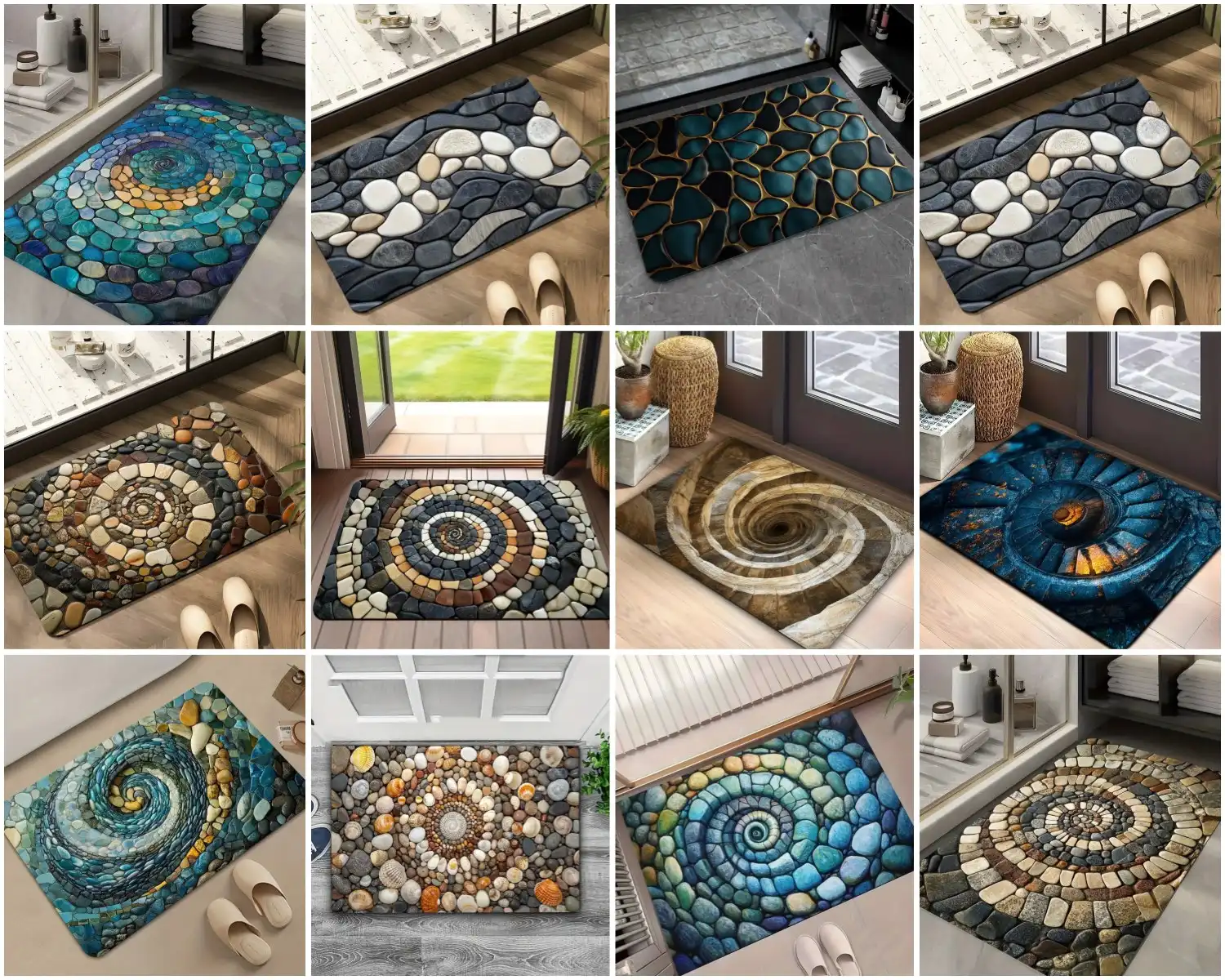
Understanding the Unique Maintenance Needs of Vintage Rug Bath Mats
Bath mats don't all get old the same way. A vintage-style bathroom rug has more visual complexity than a plain cotton one because it has layered tonal palettes and worn-out Persian or Oriental patterns. What kind of surface material, structural density, and backing the product has all affect how it handles water, foot traffic, and regular cleaning.
Why Material Composition Matters?
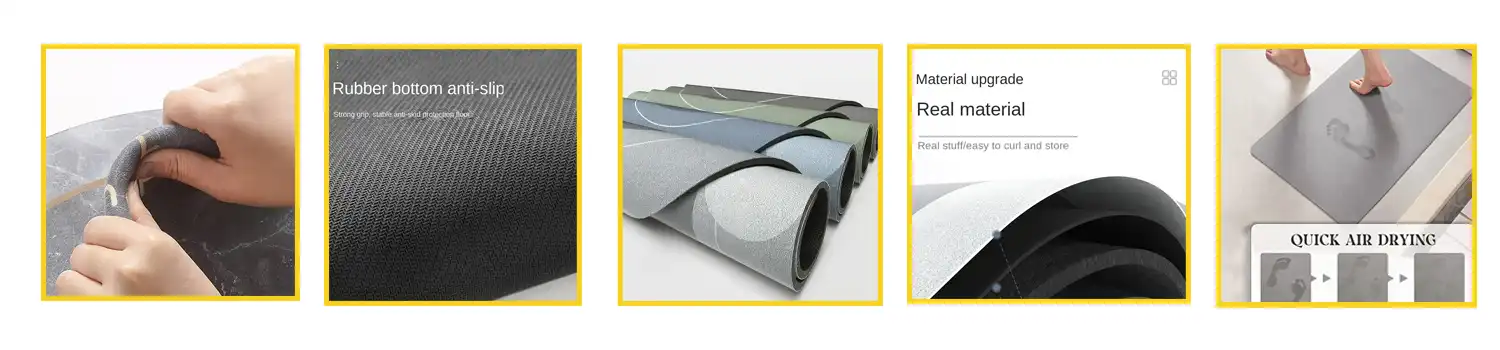
The vintage rug bath mats from Aijia have a high-density tech velvet top layer, a foamed rubber middle layer, and a rubber backing. This three-layer structure has a weight of 1600 g/m² and a total thickness of 2.5 mm. It was designed to be soft while still being strong. The velvet surface quickly absorbs water through capillaries, and the rubber backing keeps the mat from moving on wet tile, which is an important safety feature in public bathrooms.
The Humidity Challenge in Bathroom Environments
Bathroom floors are especially hard on textiles because of the moisture and moisture damage. Over time, persistent humidity speeds up the breakdown of fibers, encourages the growth of microbes, and weakens adhesive or laminated backing layers. When purchasing mats for hotels, serviced flats, or retail stores, procurement managers must choose products that are naturally resistant to moisture. Failure to do so will negatively impact both the product's lifespan and the safety of guests.
Step-by-Step Guide: How to Clean and Maintain Vintage Rug Bath Mats?
Following a structured cleaning protocol will make any vintage rug bath mat last longer and keep the look of vintage-pattern designs. Here is a useful practice that can be used in both home and business settings.
Begin with inspection. Check the mat's surface for stains, fiber pull, fraying edges, or backing split before each cleaning run. If you notice small damage early, it won't get worse during cleaning.
Here are the key steps for care that will keep it running well and looking good:
- Spot-treat stains on a vintage rug bath mat right away with a soft cloth and a diluted pH-neutral detergent. Always blot, never scrub, because vigorously rubbing changes the orientation of fibers and fades printed designs.
- Wash it by hand or quickly in the washing machine on the cold setting with light soap. The tech velvet surface on Aijia is made to be washable, but high-temperature processes can cause it to shrink and the backing to come off.
- Lay flat on a rack with airflow and keep out of direct sunlight to dry. Digitally printed vintage patterns lose their colors faster when they are exposed to UV light. When dried upright, the tension isn't even, and the flat shape of the mat gets distorted.
- Brush the surface lightly with a soft-bristled brush after drying to restore pile directionality and maintain the velvety soft feel that comes from high-density construction.
If you follow these steps every time, they will keep the fibers from breaking down and the non-slip properties of the rubber backing even after many wash cycles.
| Maintenance Task | Recommended Frequency | Method |
|---|---|---|
| Surface spot cleaning | Each time a spot is seen | Blot with cold water and mild soap |
| Full wash | Every one to two weeks | Dry on cold and gentle, or by hand |
| Brushing the pile | After every wash | Soft hair brush, follow the grain |
| Backing check | Monthly | Look to see if there is a difference |
| Deep deodorizing | Every three months | Soak baking soda ahead of time and let it dry in the air |
Key Factors Affecting Maintenance: Materials, Durability, and Environmental Conditions
How easy it is to handle long-term care at the distribution or end-user level depends on the materials that are chosen during the purchase stage. When buyers know how fiber type, backing composition, and environmental stress are connected to the vintage rug bath mat lifecycle, they can make choices that lower the number of warranty claims and customer complaints.
Comparing Surface Materials for Commercial Durability
In places with a lot of moisture, tech velvet works better than regular cotton pile. Cotton absorbs water quickly but keeps it for a longer time, which makes conditions good for mold growth. Microfiber does a good job of absorbing liquids quickly, but it breaks down faster when washed at business rates. When you buy in bulk, tech velvet is the best value because it keeps its surface clarity, color definition, and structural density after more washes.
| Material Type | Absorption Speed | Wash Durability | Mold Resistance | Suitable for Commercial Use |
|---|---|---|---|---|
| Tech Velvet | High | High | Good | Yes |
| Cotton Pile | Moderate | Moderate | Fair | Limited |
| Microfiber | High | Moderate | Good | Condition |
| Natural Wool | Low | Low | Poor | No |
The information above comes from textile durability testing standards like AATCC 135 and ISO 105-C06 and is used as general industry performance benchmarks.
Procurement Considerations: Choosing and Sourcing High-Quality Vintage Rug Bath Mats
When international distributors and OEM clients buy a vintage rug bath mat, they look at more than just the price per unit. How well a supplier relationship can grow depends on how well the product specifications match up, how reliable the lead times are, and how much customization is possible.
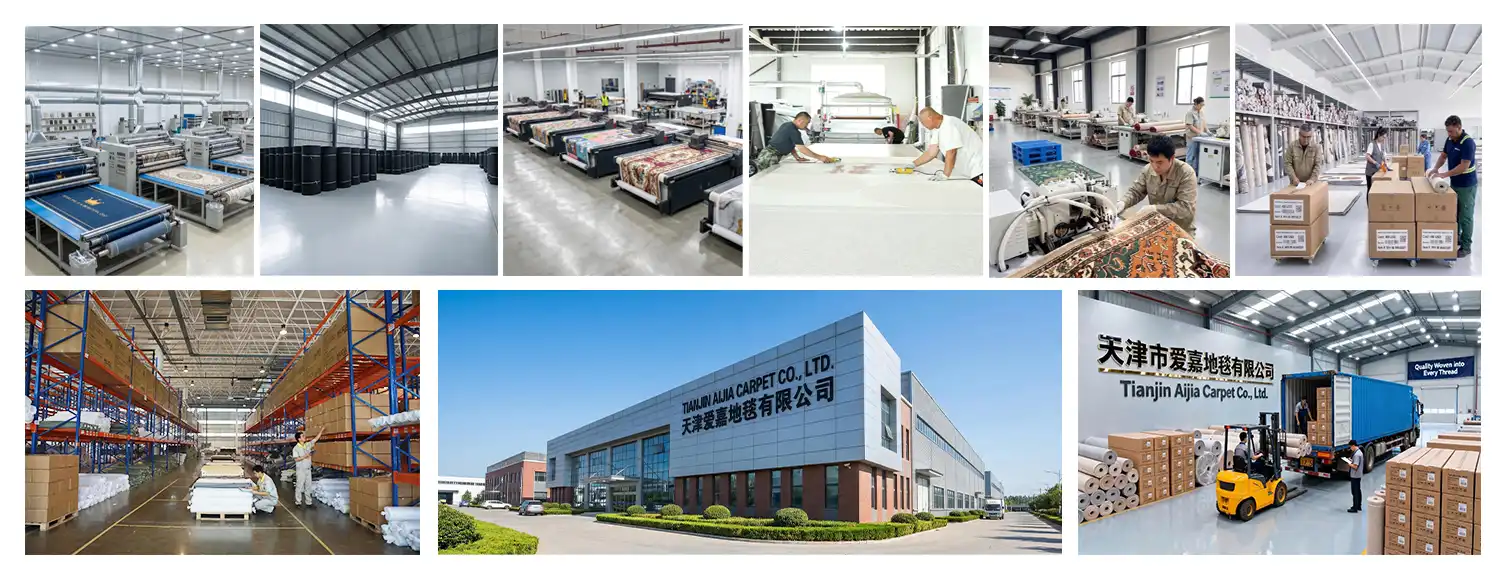
Aijia is based in Tianjin's Wuqing District, which is China's main carpet-making area. They have been making carpets for sale for more than 20 years. The plant can make 10,000 m² of goods every day, can do samples 24–48 hours a day using heat transfer and laser cutting technology, and can send standard orders under 2,000 m² in 7 days.
Important things to think about when buying a lot of decorative bath mat rugs:
- Thickness and gram weight: Aijia's mats are 2.5 mm thick and 1600 g/m², so they have a commercial-grade bottom density without being too heavy to ship, which is an important factor for managing costs across borders.
- Customization range: OEM and ODM services include adding logos, choosing custom colors, making patterns fit different regional markets, and not using standard sizes.
- Certification compliance: Products have CE, OEKO-TEX, ISO 9001, REACH, and EN 1350 certifications, which make it easy to clear customs in the EU, North America, and the Middle East.
- Flexible packaging: Export-standard roll packaging, carton, or woven bag options meet a range of logistics needs and make the best use of container space.
All units are inspected thoroughly before they are sent out, and if there is a problem with the quality that is found, Aijia's after-sales team will fix it or replace it for free, and they will also pay for the shipping costs.
Best Practices for Long-Term Care and Maintenance in Commercial Settings
Maintenance schedules that are operationally consistent protect both the value of the product and the reputation of the distributor. Hotels, office buildings, and stores that don't change their mats regularly will have to pay more per unit over time and could be held safer and more responsible if the anti-slip backing wears down.
Structured upkeep across a network of vendors or distributors should cover three areas: cleaning plans, how to handle storage, and installation tools. When used on rough tile surfaces, anti-slip base pads make the backing last longer. In storage warehouses, humidity control systems stop the backing from coming apart and the fibers from smelling bad before the product gets to the customer. Rotation schedules in commercial bathrooms that get a lot of use spread out wear and tear and make each unit last longer.
Conclusion
If you take good care of your vintage rug bath mat, it will look good for a long time and work well. Aijia is made with a tech velvet surface, a foamed rubber core, and a rubber-textured backing. This makes maintenance easy as long as the right steps are taken. When procurement teams buy from a qualified manufacturer with experience exporting, it lowers the risk of compliance, upkeep, and returns. Putting money into quality when buying pays off throughout the whole lifecycle of the product, from the warehouse to the customer.
FAQ
1. Can vintage rug bath mats be machine washed?
Yes, but be careful. The tech velvet vintage rug bath mats from Aijia can handle cold and gentle machine washing cycles. Temperatures above 30°C should be avoided so that printed vintage patterns don't lose their backing and their colors don't change. Cycles with a lot of movement can cause the pile to warp.
2. How often should commercial-use bath mats be replaced?
In hotel or office bathrooms with a lot of foot traffic, replacements are usually done every 6 to 12 months, depending on how often they are used and how many people walk past them. Mats that have backing that is coming apart, a smell that won't go away, or visible pile thinning should be thrown away, no matter how old they are.
3. Are these mats suitable for heated bathroom floors?
Yes. When standard radiant floor heating systems are used, the rubber-textured backing doesn't change temperature. Unlike PVC-based options, it won't bend or leave dust on floor finishes.
4. What eco-friendly options are available?
Aijia backs OEKO-TEX-approved production, which makes sure that the colors are safe and that the chemicals are used correctly. Along with the standard export compliance package, buyers who want to see documentation on sustainable sourcing can ask for full material safety data sheets.
Source Your Next Vintage Rug Bath Mat Order with Aijia
For more than 20 years, Aijia has sold high-quality decorative vintage rug bath mats for sale to dealers and OEM customers in North America, Europe, and the Middle East. As a reliable company that makes vintage rug bath mats, we make sure that every order goes through certified production, quick sampling, full customization, and a 100% pre-shipment inspection. You can email our team at sales@aijiarug.com to get samples, look at our full catalog of products, and talk about bulk pricing that fits your market.
References
1. American Association of Textile Chemists and Colorists (AATCC). AATCC 135: Dimensional Changes of Fabrics after Home Laundering. AATCC, 2021.
2. International Organization for Standardization. ISO 105-C06: Textiles—Tests for Color Fastness—Color Fastness to Domestic and Commercial Laundering. ISO, 2010.
3. OEKO-TEX Association. OEKO-TEX Standard 100: Testing for Harmful Substances in Textiles. OEKO-TEX, 2023.
4. European Committee for Standardization. EN 13501-1: Fire Classification of Construction Products and Building Elements. CEN, 2018.
5. Houck, Max M. Identification of Textile Fibers. Woodhead Publishing, 2009.
6. Textile World. "Performance Flooring Textiles: Durability and Maintenance in Commercial Applications." Textile World, 2022.
Request fast quotes for bulk carpets, OEM & ODM floor mats, supported by strict quality control and complete supply chain.