- English
- French
- German
- Portuguese
- Spanish
- Russian
- Japanese
- Korean
- Arabic
- Greek
- German
- Turkish
- Italian
- Danish
- Romanian
- Indonesian
- Czech
- Afrikaans
- Swedish
- Polish
- Basque
- Catalan
- Esperanto
- Hindi
- Lao
- Albanian
- Amharic
- Armenian
- Azerbaijani
- Belarusian
- Bengali
- Bosnian
- Bulgarian
- Cebuano
- Chichewa
- Corsican
- Croatian
- Dutch
- Estonian
- Filipino
- Finnish
- Frisian
- Galician
- Georgian
- Gujarati
- Haitian
- Hausa
- Hawaiian
- Hebrew
- Hmong
- Hungarian
- Icelandic
- Igbo
- Javanese
- Kannada
- Kazakh
- Khmer
- Kurdish
- Kyrgyz
- Latin
- Latvian
- Lithuanian
- Luxembou..
- Macedonian
- Malagasy
- Malay
- Malayalam
- Maltese
- Maori
- Marathi
- Mongolian
- Burmese
- Nepali
- Norwegian
- Pashto
- Persian
- Punjabi
- Serbian
- Sesotho
- Sinhala
- Slovak
- Slovenian
- Somali
- Samoan
- Scots Gaelic
- Shona
- Sindhi
- Sundanese
- Swahili
- Tajik
- Tamil
- Telugu
- Thai
- Ukrainian
- Urdu
- Uzbek
- Vietnamese
- Welsh
- Xhosa
- Yiddish
- Yoruba
- Zulu
Persian Rug Hallway Runner: Hallway and Entryway Guide
A persian rug hallway runner transforms any corridor or entryway from a purely functional passageway into a refined statement of design intent. Whether you manage a boutique hotel, a luxury residential development, or an e-commerce catalog, selecting the right hallway runner involves balancing aesthetic tradition with measurable performance standards. This guide walks through history, material science, procurement strategy, and installation best practices—giving B2B buyers the grounded, practical knowledge needed to make confident sourcing decisions in today's competitive flooring market.
Understanding Persian Rug Hallway Runners: History, Styles, and Materials
From Ancient Looms to Modern Production Lines
Persian carpet making goes back more than 2,500 years. The Pazyryk carpet, which was made around 500 BCE, is thought to be one of the oldest pile rugs still in existence. Traditional corridor runners used regional patterns like Herati, Medallion, and Boteh, which were all influenced by places in Iran like Isfahan, Tabriz, and Kashan. Over hundreds of years, these long forms have been used as building tools to direct foot traffic and keep stone floors warm.
These visual languages have been kept alive in modern manufacturing, which has also added high-density machine weaving that makes piles that are regular on a large scale. Polyester fiber constructions, in particular, can copy the deep jewel tones and complex geometry of hand-knotted originals for a lot less money. This makes them a great option for distributors who sell to stores in North America and Europe.
Materials That Define Performance
The kind of materials used to make a Persian rug hallway runner directly affects how well it sells. Here is a short list of the most common choices that procurement managers look at:
| Material | Durability | Maintenance | Cost Index | Best Application |
|---|---|---|---|---|
| Natural wool | High | Moderate | $$$ | Hallways of high-end hotels |
| Silk mix | Moderate | High-care | $$ | Boutique store display |
| Polyester fiber | Very High | Low | High-traffic commercial areas | |
| Polypropylene | High | Very Low | $ | Budget-tier distribution |
Polyester fiber, which is used in Aijia's production lines, is woven with a 0.6 cm edge-locking finish to make a thick pile structure. This process creates a gram weight between 750 and 1,100 g/㎡, which can be changed depending on the order volume. This weight directly affects both the feel of the runner and how well it blocks noise in corridors.
How to Choose the Best Persian Rug Hallway Runner for Your Business Needs?
Sizing, Traffic Load, and Brand Alignment
It's not up to chance to choose the right runner width for a hallway. Interior design standards say that on each side of a runner, there should be 3–6 inches of bare floor showing. This frames the space properly. Standard runner widths are between 2' and 3', and standard lengths are between 6' and 14'. However, for commercial projects with non-standard corridor measurements, custom dimensions are needed.
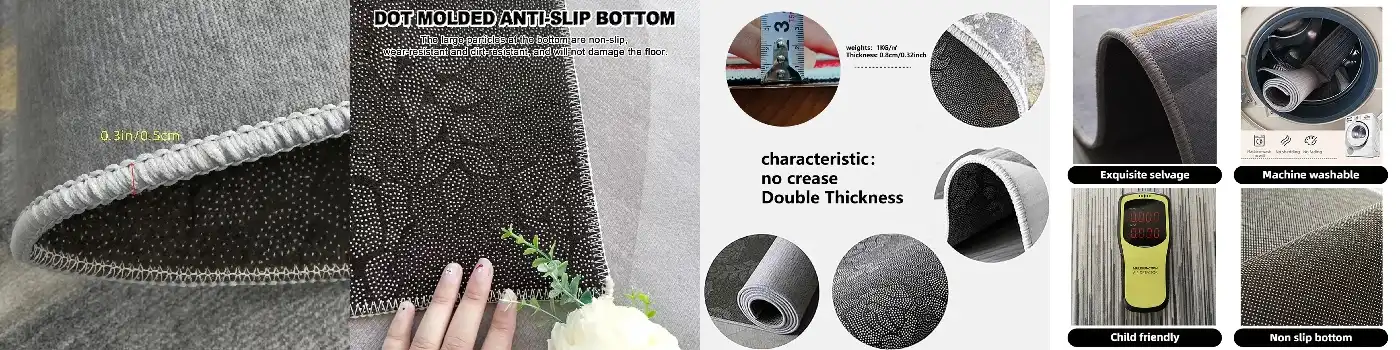
Aside from measurements, buying managers also have to think about traffic classification and pile density. A runner meant for a hotel hallway with 500+ daily footfalls needs to be built in a very different way than one meant for a front door in a house. A useful option is a persian rug hallway runner, especially machine-woven runners with a 5 mm total thickness and dot plastic backing. They stay flat on the floor, don't curl at the edges, and are light enough not to get in the way of doors.
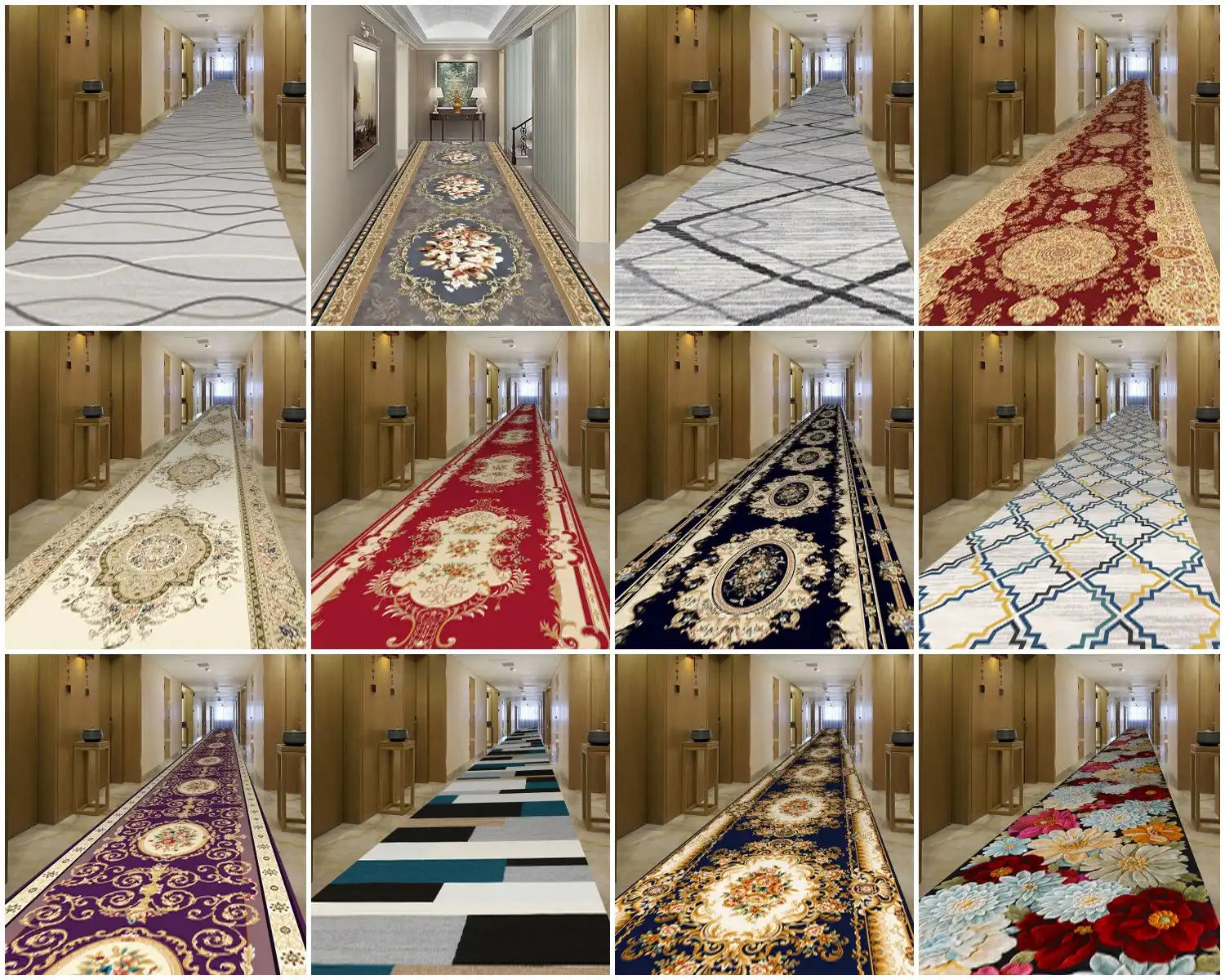
The stylistic aspect is just as important from a strategic point of view. Retail stores and home furnishings brands need to make sure that the runner's colors and geometric design match their seasonal collections. Aijia's OEM/ODM service supports custom pattern design, which includes printed designs that look like Persian medallions and flowers. This lets brands release unique SKUs without having to spend money on their own tools.
Handmade vs. Machine-Made: A B2B Perspective
| Criteria | Handmade Persian Runner | Machine-Made Runner |
|---|---|---|
| Lead Time | 3 to 12 months | 7 to 30 days |
| MOQ | 1 to 10 items | Flexible orders in bulk |
| Price Consistency | Changeable | Stable |
| Pattern Repeatability | Low | High |
| Certifications | Rare | CE, OEKO-TEX, ISO 9001 available |
For large-scale B2B purchases, machine-made runners always do better than homemade ones in terms of delivery reliability, quality consistency, and certification compliance—three factors that are very important when buying for exports.

Maintenance, Cleaning, and Longevity Tips for Persian Rug Hallway Runners
Protocols That Protect Investment Value
In areas with little foot traffic, area rugs pick up dirt and dust much more slowly than high-traffic hallway runners. According to research from the Carpet and Rug Institute, cleaning your rug regularly removes up to 80% of dry dust before it gets embedded in the fibers of the pile. This directly extends the life of the product. Weekly suction-only cleaning is the standard way to take care of machine-woven polyester rugs with a stain-resistant surface treatment.
Spot cleaning with a neutral pH solution works well for cleaning up liquid spills on surfaces that dry quickly and soak up water. It is best to stay away from alkaline detergents on a polyester pile because they can fade colors over time. The dot plastic backing stops water from getting through, saving subfloors in places like entryways where people often walk in with wet shoes.
Several care mistakes consistently shorten the life of runners in business settings:
- Rotational neglect: Runners in directional corridors wear out unevenly. Every 3–6 months, turn the runner 180° to spread wear across the whole pile surface, making the service life much longer.
- Improper storage during seasonal rotation: Runners should always be rolled, never folded, and stored in breathable packaging to keep piles from getting compressed and fibers from wearing out in stock that isn't being used.
- Incompatible cleaning agents: Steam cleaning at temperatures above 60°C can warp polyester pile that is sensitive to heat. Before choosing a cleaning method, you should always check the fiber makeup.
These rules are especially useful for facility management teams that are in charge of several business properties, as replacement costs for large stocks of products such as a persian rug hallway runner are a big ongoing budget line.
Where and How to Procure Authentic Persian Rug Hallway Runners: A B2B Purchasing Guide?
Evaluating Suppliers Against Commercial Standards
To find commercially viable corridor runners, you need a structured review system. You can tell if a supplier can support consistent monthly or quarterly replenishment cycles by looking at their production capacity, certification portfolio, and customization infrastructure.
Aijia was founded in 2006 in Tianjin's Cuihuangkou carpet-making area. It can make 10,000 ㎡ of goods every day. The business has certifications for CE, OEKO-TEX, ISO 9001, REACH, and EN 1350, which are all necessary for doing business in the US, EU, and Middle Eastern markets. This certification stack gets rid of the risk of customs clearance for export-focused distributors and makes it easier for buyers to verify compliance.
Key procurement parameters to confirm with any supplier:
- Sample turnaround: Aijia uses heat transfer and laser cutting technology to make 1:1 production-accurate samples in 24 to 48 hours.
- MOQ flexibility: Minimum order quantities that are flexible can be used for both test orders and large-scale restocking cycles.
- Export packaging: Roll packaging, cartons, or woven bags that are standard for export help containers load as efficiently as possible.
Installation and Optimization of Persian Rug Hallway Runners in Commercial Spaces
Placement Precision and Anti-Slip Engineering
Accurate installation starts with accurate measuring. Find the finishing length of the runner by subtracting 12 to 18 inches from the length of the corridor from wall to wall. This leaves equal amounts of empty room at both ends. As for width, the runner should take up 60–75% of the corridor's total width while still looking proportional.
The dot plastic backing on Aijia's runners naturally grips hard floors, so you don't need to use extra sticky pads. At a total thickness of 5 mm, the runner stays below the level where door-base interference happens. This is an important detail in commercial spaces where door clearances are standard. In areas with a lot of foot traffic, double-sided carpet tape placed at entry and exit points keeps the runner in place without damaging the ground.
Conclusion
A well-designed persian rug hallway runner does more than just protect the floor; it also shows what the brand stands for, lowers the risk of injury, and can take daily wear and tear without showing any signs of wear. By combining traditional Persian design language with the accuracy of modern machine weaving, a new type of product has been made that meets both artistic and practical needs. For business-to-business buyers in charge of import logistics, private label collections, or large-scale commercial projects, the choice of which supplier to use comes down to how reliable they are, how trustworthy their certifications are, and how much they can produce. In all of these areas, a manufacturer with almost 20 years of export experience has a clear advantage.
FAQ
1. What standard sizes are available for hallway runners?
Standard hallway runner sizes are between 2'6" and 3'14". For commercial jobs with corridor sizes that aren't normal, custom sizes are available. Before making an order, you should always measure the width of your hallway and take away any obvious floor margins.
2. What backing type prevents slipping on hardwood floors?
The dots of plastic on the back stick well to smooth, hard floors without glue, so it can be used in both home entryways and business hallways.
3. How do I verify a supplier's quality certifications?
You can directly ask for copies of the CE, OEKO-TEX, ISO 9001, and REACH certificates. Manufacturers with a good reputation, like Aijia, include full inspection reports and export paperwork with every shipment.
4. What is the minimum order quantity for bulk procurement?
Aijia has flexible MOQ structures that can handle both sample orders and high-volume replenishment cycles.
Source Your Persian Rug Hallway Runner with Aijia
Aijia sells production-ready hallway runners that meet the quality, quantity, and compliance needs of serious B2B buyers. As a trusted persian rug hallway runner manufacturer with 20 years of export production experience, Aijia supports custom OEM programs, flexible MOQ structures, and 24–48 hour sample turnaround. Every package goes through a full review before it leaves, and it is sent in export-grade packaging that is designed to work best with containers. Contact the Aijia team at sales@aijiarug.com to request samples or a volume quotation.
References
1. Textile History Journal — "Origins and Chronology of Persian Pile Weaving Traditions," Textile History, 2018.
2. Carpet and Rug Institute — Carpet Maintenance and Cleaning Standards for Commercial Environments, CRI, 2020.
3. Intertek Testing Services — OEKO-TEX Standard 100: Criteria and Test Methods for Textile Certification, Intertek, 2022.
4. International Organization for Standardization—ISO 9001:2015 Quality Management Systems—Requirements, ISO, 2015.
5. European Committee for Standardization — EN 13501-1: Fire Classification of Construction Products and Building Elements, CEN, 2019.
6. Floor Covering Weekly—"Machine-Made vs. Hand-Knotted: Commercial Procurement Trends in the U.S. Rug Market," Floor Covering Weekly, 2023.
Request fast quotes for bulk carpets, OEM & ODM floor mats, supported by strict quality control and complete supply chain.