- English
- French
- German
- Portuguese
- Spanish
- Russian
- Japanese
- Korean
- Arabic
- Greek
- German
- Turkish
- Italian
- Danish
- Romanian
- Indonesian
- Czech
- Afrikaans
- Swedish
- Polish
- Basque
- Catalan
- Esperanto
- Hindi
- Lao
- Albanian
- Amharic
- Armenian
- Azerbaijani
- Belarusian
- Bengali
- Bosnian
- Bulgarian
- Cebuano
- Chichewa
- Corsican
- Croatian
- Dutch
- Estonian
- Filipino
- Finnish
- Frisian
- Galician
- Georgian
- Gujarati
- Haitian
- Hausa
- Hawaiian
- Hebrew
- Hmong
- Hungarian
- Icelandic
- Igbo
- Javanese
- Kannada
- Kazakh
- Khmer
- Kurdish
- Kyrgyz
- Latin
- Latvian
- Lithuanian
- Luxembou..
- Macedonian
- Malagasy
- Malay
- Malayalam
- Maltese
- Maori
- Marathi
- Mongolian
- Burmese
- Nepali
- Norwegian
- Pashto
- Persian
- Punjabi
- Serbian
- Sesotho
- Sinhala
- Slovak
- Slovenian
- Somali
- Samoan
- Scots Gaelic
- Shona
- Sindhi
- Sundanese
- Swahili
- Tajik
- Tamil
- Telugu
- Thai
- Ukrainian
- Urdu
- Uzbek
- Vietnamese
- Welsh
- Xhosa
- Yiddish
- Yoruba
- Zulu
How to Select the Best Kitchen Anti Skid Mat?
To choose the best kitchen anti skid mat, you need to know about the materials, safety standards, and working needs. This is especially true for business settings where slip risks have a big effect on safety and liability. Procurement managers, carpet dealers, and online sellers all need goods that are both long-lasting and legal and that also keep costs low for large orders. This guide talks about important decision factors like the type of material used, how well it prevents slips, how it can be customised, and how reliable the provider is. We look at how high-tech manufacturing methods, such as laser cutting and high-density backing systems, make mats work better. If you're buying for hotel kitchens, restaurant chains, or store sales, knowing these things will help you make sure the kitchen is safe, cut down on replacement costs, and speed up the buying process.
Understanding Kitchen Anti-Skid Mats: Purpose and Benefits
What Makes These Mats Essential for Safety?
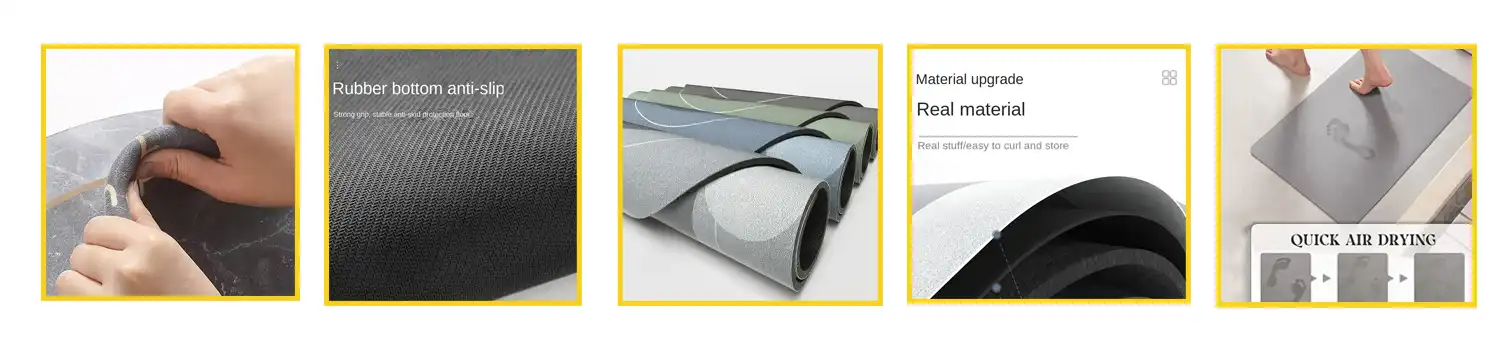
Kitchen anti-skid mats act as barriers to prevent slip-and-fall accidents, which are still one of the most common types of injuries in the food service industry. The surface of these mats is treated with special materials, like rough tech silk or rubber grips, that keep the mats' grip even when they get wet, greasy, or dirty. The backing materials, which are usually plastics or rubber, stick to the floors below, whether they are tile, hardwood, or concrete, without leaving behind any waste or damage.
Ergonomic and Economic Advantages
In addition to keeping people safe, good mats keep kitchen workers' legs from getting tired after long shifts of standing. The main layer of foamed rubber in luxury designs acts as a cushion, relieving pressure on muscles and joints. This makes people more productive and less likely to miss work. These mats also keep expensive flooring safe from damage like scratches, dents, and water, which increases the substrate's life and lowers the cost of upkeep. For B2B buyers who are in charge of multiple sites, these cost savings add up over time, making buying good mats up front a smart financial move.
Regulatory Compliance Considerations
In business kitchens across North America and Europe, safety rules at work require floors that don't slip. Products with the OEKO-TEX label guarantee non-toxic materials that are safe for places where food is prepared, and products with the EN 1350 flame retardant grade meet fire safety standards for hotels and other public buildings. By understanding these compliance models, procurement teams can keep their companies out of trouble with the law and their insurance companies, and they can also make sure that worker safety meets workplace health standards.
Key Factors in Selecting the Best Kitchen Anti-Skid Mat
Material Composition and Performance Characteristics
How mats handle stress depends on how the materials are structured. The high-density technical velvet fabric structures and rubber backing make it better at absorbing water and drying quickly, which is important for industrial dishwashing areas. Diatom mud treatments on the surface make it more resistant to stains and stop germs from growing in places where organic matter is present. The middle layers of foamed rubber absorb shock and keep the structure strong even when a lot of people walk on it. When looking at different suppliers, make sure you get thorough information about their products, such as the gram weight (1600 g/m² means commercial-grade density), thickness measures (3 mm is the best mix between cushioning and stability), and the backing's makeup to make sure they meet quality standards.
Size, Design, and Layout Adaptation
Standard kitchen anti-skid mat sizes don't always work well in business settings because of the way space is used. Custom sizes are important for galley kitchens, work tables with odd shapes, or hallways with a lot of foot traffic that need longer runner lengths. Modern companies that use laser cutting can make mats that fit exact floor plans, without any gaps where liquids can collect or points that could cause someone to trip. Customising patterns with heat transfer printing lets hotel groups add their names or use colour-coded systems to keep things running smoothly in big institutional kitchens.
Safety Certifications and Testing Standards
Coefficient of friction (COF) numbers above 0.60, as required by ASTM D2047 standards, give objective performance guidelines for anti-slip ratings. But B2B buyers should also check for certifications like CE marking to get into the EU market, REACH compliance to make sure chemicals are safe, and ISO 9001 quality management proof. These qualifications show that the production process is consistent, which is very important for deployments in multiple locations where performance consistency affects risk management and the brand's image. Ask for test results that show how slippery the surface is when it's dry and when it's wet, as well as flame spread rates if your local building codes require them.
Maintenance Requirements and Operational Lifespan
In commercial kitchens, mats need to be able to handle being cleaned often with industrial cleansers and high-pressure water, including a kitchen anti skid mat. Designs that can be washed in a machine and dry quickly cut down on downtime, and surface treatments that are resistant to stains keep clothes from getting dirty, which can ruin the professional look. Mats stay the right size over time because they don’t shrink much after being washed many times. In the purchase specs, there should be information about how long the item is expected to last under certain conditions of use, as well as guarantee terms that cover problems with the way it was made and care instructions that get the best return on investment.
Comparing Kitchen Anti-Skid Mats: Making an Informed Choice
Performance Differences Between Material Types
Rubber-backed mats work great in heavy-duty situations where chemical resistance is important. They can handle business degreasers and strong sanitisers that are often used in the back of a restaurant. The bottom layer with the rubber pattern grips surfaces strongly on smooth ones, but it might leave marks on soft floors. Silicone alternatives have a softer feel and can be used in home installations or store show kitchens that care about keeping the floors clean. The tech silk top layers are soft and comfortable to walk on barefoot, making them suitable for kitchens and hotel rooms. They also keep their professional slip resistance through special weaving methods. Knowing about these trade-offs makes it easier to match product requirements with practical needs.
Cost-Benefit Analysis for Bulk Procurement
At first glance, there seems to be a big difference in price between normal home mats and commercial-grade options, but looking at the total cost over a lifetime shows a different picture. If a restaurant company buys premium kitchen anti-skid mats with a 1600 g/m² density and reinforced backing, they may pay 40% more up front than normal goods, but they will last three times as long and cut down on slip-and-fall insurance claims by a significant amount. Manufacturers like Aijia Carpet offer volume discount structures that help wholesalers and exporters save money by buying in bulk. These structures are used for monthly or quarterly shipments. Ask for detailed ROI estimates that take into account how often the product will need to be replaced, how many safety incidents will be avoided, and the length of the guarantee.
Specialised Solutions for Targeted Challenges
In some places, extra features are needed on top of basic anti-slip safety. High-contrast colour choices are good for senior living centres because they make things easier to see for older residents who have trouble judging depth. Food processing lines in factories need drainage systems with holes in them so that liquids can flow through them instead of pooling on the surfaces. Rapid deployment systems with interlocking modular forms are needed in exhibition and event places so that temporary kitchens can be set up quickly. Finding these specific needs early on in the procurement process ensures that the skills of the vendors match the facts of the business.
Procurement Guide: Where and How to Source Kitchen Anti-Skid Mats?
Strategic Supplier Evaluation Criteria
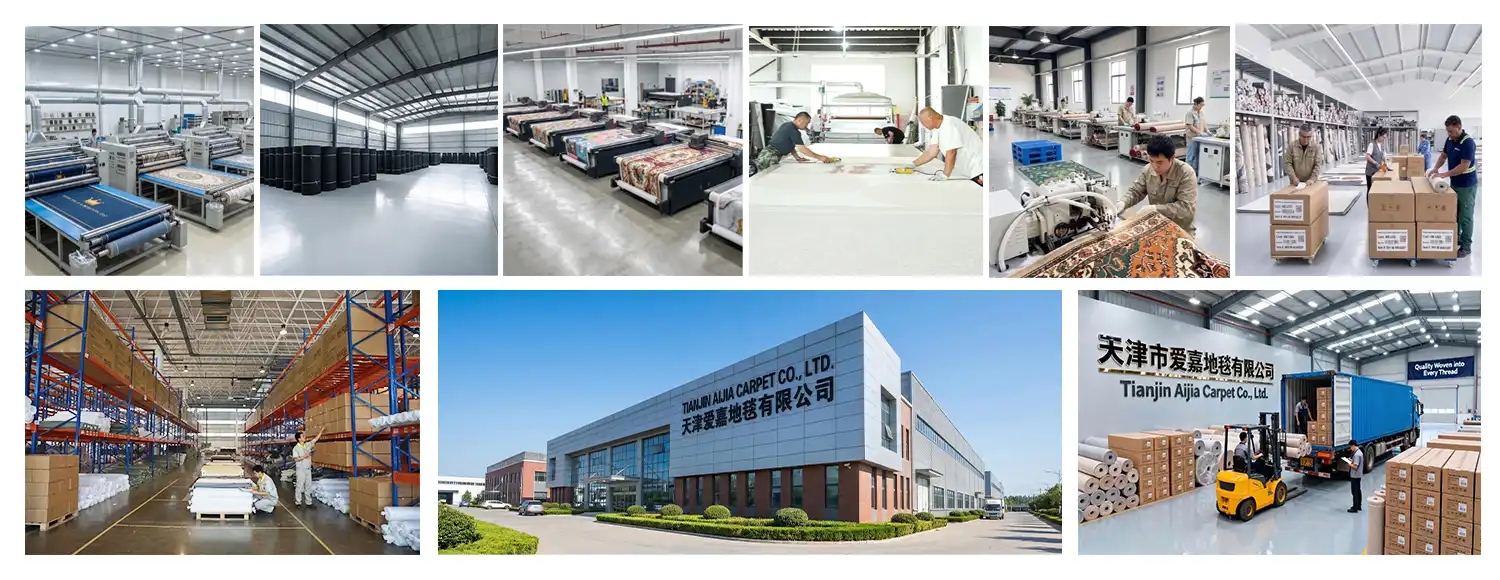
Reliable makers show that they can make things that can be exported by having foreign approvals and established logistics partnerships. With twenty years of experience making carpets, Tianjin Aijia Carpet is a great example of a seller that can give a wide range of services, such as OEM/ODM customisation, flexible minimum order quantities, and strict pre-shipment inspection processes. Look at production capacity measures like daily output (10,000m²/day means you can handle urgent big orders) and sample production turnaround times (24–48 hours lets you test prototypes quickly). International wholesalers can buy kitchen anti-skid mats with less risk when suppliers are open about the quality control processes they use, such as batch consistency testing and compliance paperwork.
Customisation Capabilities and Brand Integration
Private label options let carpet importers and store chains set their goods apart by using their own brands and manufacturers' knowledge. Any pattern can be printed with heat transfer technology, which lets you make seasonal styles or looks that are specific to a market and fit with local tastes. Laser cutting can handle irregular forms that match the unique architecture of boutique hotels or custom store setups. For OEM relationships to work, providers need to be able to offer design advice, colour matching, and customised packaging that meets the standards of the target market. Ask for examples from your resume that show the range and quality of your work that you've done on unique projects in the past.
Logistics and Supply Chain Optimisation
Export-standard packing, like pressure-resistant roll configurations or reinforced box systems, keeps goods safe during foreign shipping and makes the best use of container space, such as for a Kitchen Non-slip Mat. Manufacturers with a lot of experience make exact packing plans that maximise volume efficiency and lower shipping costs per unit, which is very important for online sellers who need to keep their profit margins high. Cross-border moves go faster when you have professional customs paperwork help and established relationships with freight forwarders. This is especially helpful for Amazon FBA sellers who have to keep up with short inventory replenishment cycles.
Pricing Models and Volume Economics
Accurate budget planning is possible with clear price systems that take into account the costs of raw materials, the difficulty of customisation, and the number of orders. Manufacturers that sell to businesses usually offer savings based on volume. For example, when sourcing teams order 2,000 m² or more, they can often get 15–25% off the price compared to buying on the spot. Figuring out how prices change when things like the make-up of the material changes or when more safety certifications are added can help you get better terms. To properly compare suppliers' competitiveness, you should look at all of their landed costs, such as freight, taxes, and storage, in addition to their unit costs. Payment terms that spread the risk between buyers and sellers, like deposits with progress goals, make it easier for everyone to handle their cash flow.
Safety and Usage Best Practices for Kitchen Anti-Skid Mats
Installation Techniques for Maximum Effectiveness
To put down Kitchen Anti Skid Mats correctly, you need to look at how people move around, find high-risk areas near sinks and cooking stations, and make sure that all possible spill areas are covered. To get the best traction from the backing, clean and dry the floor before installing. If you have a big business space, you might want to hire professional installation services that promise flat placement with no wrinkles or upturned edges that could cause people to trip. Bevelled edge designs make it easier to switch between types of floors and can fit mobility aids in assisted living homes. Record installation plans for deployments in more than one place, making sure that positions are always the same to make staff training and replacement easier.
Maintenance Protocols Preserving Performance
Commercial cooking mats need to be cleaned at times that are in line with how often they are used. Daily spot cleaning takes care of spills right away and stops stains from going deeper, while weekly machine washing or professional laundering gets rid of deep-down dirt and restores the smoothness of the surface. Do not use harsh chemicals that damage the rubber backing or fade printing designs. Instead, use pH-neutral cleansers. Heat damage that weakens materials can be avoided by air drying or low-temperature spin processes. Check mats once a month for signs of wear, like cloth that is fraying, backing that comes apart, or less grip. If you see any of these, it's time to replace the mats before their safety value drops. Keep cleaning logs that show you're following the rules for health department inspections.
Troubleshooting Common Issues
If the ends of a mat curl, it means that the backing isn't holding on well enough. This problem is usually fixed by cleaning the floor to get rid of dust buildup or switching to backing materials with a higher density. For an Anti-slip Kitchen Floor Mat, if the mat keeps moving on very smooth tiles, you may need to use double-sided carpet tape in certain places. However, this should be a sign that you need a different mat design that works better with the surface. Developing an odour means that the item wasn't dried properly between uses, which means that it needs better air or rotation systems that let all the wetness evaporate. Early signs of wear show areas with a lot of traffic where extra mats or stronger goods would help spread out the stress of heavy use.
Conclusion
To choose the best kitchen anti-skid mat, you need to carefully look at the engineering of the materials, safety standards, and the supplier's skills that are relevant to your business. Commercial-grade options with high-density tech silk surfaces, foamed rubber padding, and long-lasting rubber backing are proven to be non-slip, offer natural support, and last for a long time in retail, food service, and hospitality settings. Give more weight to manufacturers who can show they know how to sell, have strict quality control, and offer flexible customisation services that can make goods fit the needs of a wide range of markets. When you do strategic procurement, you weigh the initial investment against the long-term costs, legal compliance, and the dependability of the supply chain. This will give your business a long-term competitive edge and protect your workers and customers by making the kitchen safer.
FAQ
1. How often should commercial kitchens replace anti-skid mats?
How often something is replaced depends on how often it is used and how hard it is to maintain. In restaurants with a lot of foot traffic, replacements need to be made every 6 to 12 months. In hotel breakfast service areas that don't get as much use, replacements may last 18 to 24 months. Watch out for signs of obvious wear, like a thinned surface, a failing backing, or less water absorption, which all mean the kitchen anti-skid mat isn't working as well.
2. Are eco-friendly options available that meet food safety standards?
Modern companies make mats from OEKO-TEX-certified materials that show they don't contain any dangerous chemicals. These mats are good for areas where food is being prepared. Some providers offer choices with recycled rubber backing that are better for the environment while still meeting performance standards. When looking for sustainable goods, make sure that the certificates meet the food safety rules in your area.
3. Can mats be customised for irregular kitchen layouts?
Modern laser cutting technology can handle any size or shape, including L-shaped galleys, curved counters, and island layouts. Give manufacturers specific floor plans with measurements so they can make solutions that fit perfectly and close up any gaps where risks could happen. Custom sizing usually doesn't add much to the cost of large sales while making the safety covering much better.
Partner with Aijia for Premium Kitchen Anti Skid Mat Solutions
Aijia Carpet has been making specialised carpets for 20 years and can help B2B clients who need reliable food safety solutions. Our commercial-grade Kitchen Anti Skid Mats have high-density tech silk surfaces, advanced foamed rubber construction, and long-lasting backing systems that are approved to meet international standards like ISO 9001, CE, and OEKO-TEX. We help carpet wholesalers, importers, and online sellers by offering flexible OEM/ODM services, fast sampling that can deliver samples within 48 hours, and production that can be scaled up or down to meet orders from 500m² to container loads. Our export-friendly packing and established transportation partnerships make sure that our goods get to markets in North America and Europe on time. As a reliable provider of kitchen anti-slip mats, we offer full after-sales support, such as quality guarantees and specialised account management to build long-term relationships. Email our team at sales@aijiarug.com to talk about your unique needs, get technical specs, or set up a free sample review that shows how committed we are to quality.
References
1. National Floor Safety Institute. (2021). Slip and Fall Prevention in Commercial Kitchens: Material Performance Standards. NFSI Technical Publications.
2. American Society for Testing and Materials. (2020). ASTM D2047-20: Standard Test Method for Static Coefficient of Friction of Polish-Coated Flooring Surfaces. ASTM International Standards.
3. European Committee for Standardization. (2019). EN 1350:2019 Textile Floor Coverings - Assessment of Likelihood of Slip. CEN Brussels.
4. OEKO-TEX Association. (2022). STANDARD 100 Certification Criteria for Textile Products in Food Contact Applications. OEKO-TEX Service GmbH.
5. Hospitality Safety Management Journal. (2020). Lifecycle Cost Analysis of Commercial Kitchen Flooring Solutions. Vol 14, Issue 3, pp 127-145.
6. International Trade Centre. (2021). Export Quality Standards for Textile Floor Coverings: A Guide for Manufacturers and Importers. ITC Geneva Publications.
Request fast quotes for bulk carpets, OEM & ODM floor mats, supported by strict quality control and complete supply chain.