- English
- French
- German
- Portuguese
- Spanish
- Russian
- Japanese
- Korean
- Arabic
- Greek
- German
- Turkish
- Italian
- Danish
- Romanian
- Indonesian
- Czech
- Afrikaans
- Swedish
- Polish
- Basque
- Catalan
- Esperanto
- Hindi
- Lao
- Albanian
- Amharic
- Armenian
- Azerbaijani
- Belarusian
- Bengali
- Bosnian
- Bulgarian
- Cebuano
- Chichewa
- Corsican
- Croatian
- Dutch
- Estonian
- Filipino
- Finnish
- Frisian
- Galician
- Georgian
- Gujarati
- Haitian
- Hausa
- Hawaiian
- Hebrew
- Hmong
- Hungarian
- Icelandic
- Igbo
- Javanese
- Kannada
- Kazakh
- Khmer
- Kurdish
- Kyrgyz
- Latin
- Latvian
- Lithuanian
- Luxembou..
- Macedonian
- Malagasy
- Malay
- Malayalam
- Maltese
- Maori
- Marathi
- Mongolian
- Burmese
- Nepali
- Norwegian
- Pashto
- Persian
- Punjabi
- Serbian
- Sesotho
- Sinhala
- Slovak
- Slovenian
- Somali
- Samoan
- Scots Gaelic
- Shona
- Sindhi
- Sundanese
- Swahili
- Tajik
- Tamil
- Telugu
- Thai
- Ukrainian
- Urdu
- Uzbek
- Vietnamese
- Welsh
- Xhosa
- Yiddish
- Yoruba
- Zulu
Kitchen Rugs Guide 2026 | Styles, Materials & Trends
If you manage sourcing for a home textile brand, run an Amazon storefront, or procure flooring for commercial projects, you already know that kitchen floor coverings have moved far beyond plain rubber utility mats. In 2026, stylish kitchen mats sit at the intersection of ergonomic science and interior design, serving residential buyers and large-scale B2B procurement channels alike. This guide breaks down the materials, decision criteria, emerging trends, sourcing best practices, and maintenance knowledge you need to make confident purchasing decisions this year.
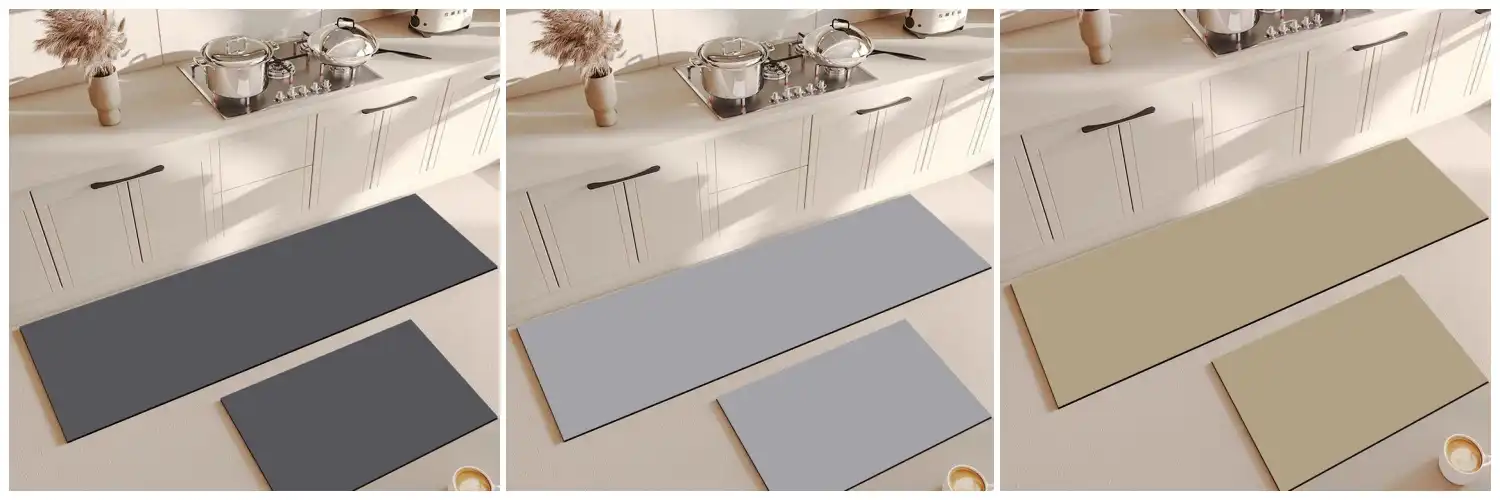
Understanding Kitchen Mat Materials, Types & Benefits
What Makes a Modern Kitchen Mat Worth Buying?
The kitchen floor has to deal with water, grease, dropped dishes, and hours of foot traffic every day. A well-made kitchen mat can take that abuse and keep the person using it comfortable while also protecting the floor. The U.S. Bureau of Labor Statistics says that slips and falls cause about 17% of all nonfatal injuries on the job. This number shows why slip resistance is so important in all kitchens, whether they are home or business kitchens.
A lot of the efficiency results depend on the choice of materials. Compare the most common choices that will be offered in 2026:
| Material | Key Strength | Ideal Application |
|---|---|---|
| Tech Velvet | Ultra-absorbent, dries quickly, and is good for your skin | Home kitchen, hotel, and small store |
| Foamed rubber or nitrile | Chemical resistance and cushioning | Food service in a commercial kitchen |
| PVC Vinyl | Cheap, waterproof | Low-cost stores and temporary sites |
| Memory Foam | Maximum comfort to fight tiredness | Long-term residential use |
| Natural Fiber | Eco-friendly looks | Editorial fashion and a lifestyle store |
One of these, tech silk made from diatom mud, has really taken off in the high-end market. Its mineral-porous structure removes wetness faster than cloth while still being soft on the feet, which is something that old rubber mats can't do.
In small galley kitchens where thickness is important, flat mats work best. On the other hand, cushioned anti-fatigue constructions work best in open-plan kitchens and commercial prep areas where people stand for long periods of time. Which one to choose depends on the type of floor, the size of the kitchen, and the user's concern for ergonomics.
Choosing the Right Kitchen Mat: A B2B Decision Framework
Core Procurement Criteria Every Buyer Should Audit
When sourcing in large quantities, procurement pros can't just depend on how something looks. At least four things must be included in the evaluation matrix: the ability to prevent slips, the stability of the material, compliance certification, and the ability to make changes as needed. Certifications like OEKO-TEX and CE compliance are required to buy something in controlled markets like the EU and North America. They are not extras that can be added at a later date.
Here are the main things that set a trustworthy bulk provider apart from a product vendor:
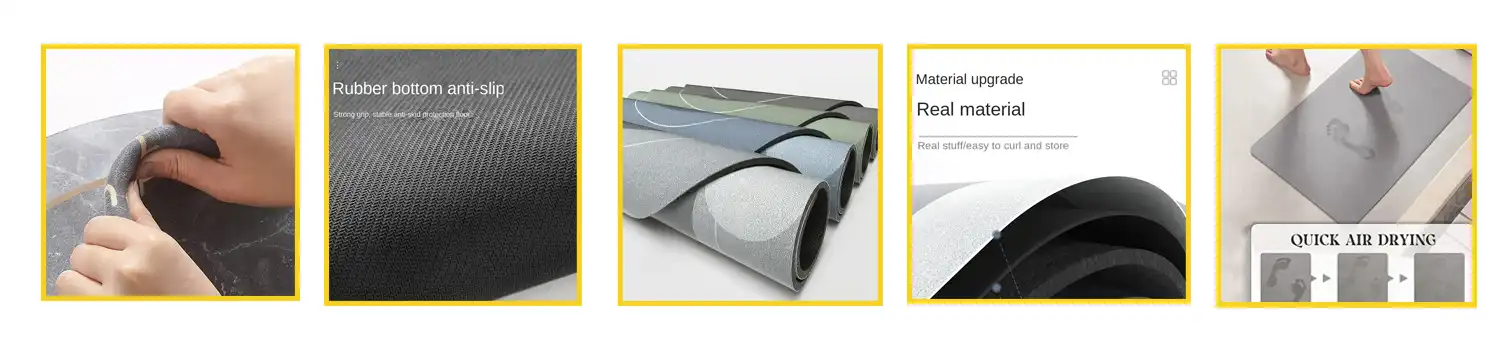
- Slip resistance rating: For stylish kitchen mats, look for a rubber-textured backing that has been tested to meet ASTM or EN standards for slip resistance. A foamed rubber middle layer and a rubbery base work together to provide dual-layer grip. This is the structure used in Aijia's current tech silk mats, which have been shown to work well in wet areas like hotels and offices.
- Weight and density: A mat that weighs 1,600 g/m² is a sign of a strong material investment. Mats that are less than 900 g/m² tend to shift and wear out faster when they are used in a business setting.
- Eco-friendly and waterproof compatibility: Diatom mud fiber is eco-friendly and waterproof. It quickly soaks up spills and releases moisture, which lowers the growth of bacteria—a growing hygiene standard in healthcare and hospitality procurement.
- OEM/ODM flexibility: For retail brands and private label distributors, being able to change the logo, colorway, pattern, and size with just one supplier cuts the sourcing cycle by a huge amount.
All of these factors work together to lower the risk of product returns, non-compliance, and inventory write-offs, which are three problems that hurt both wholesale buyers' and e-commerce sellers' profits.
Latest Trends and Innovations in Kitchen Rugs for 2026
Design and Technology Shifts Reshaping the Category
In 2026, the kitchen rug category is shaped by two forces that are coming together: the need for personalized style among consumers and the need for long-lasting performance among businesses. Grand View Research predicts that the global market for floor coverings will reach $408 billion by 2028. The residential mat segment will grow steadily as more people continue to remodel their homes after the pandemic.
Interior design magazines like Architectural Digest and Elle Decor report that the most popular design trends right now are earth-toned solid colors, abstract botanical prints, and laser-cut geometric edge details. With heat transfer technology, custom-printed surfaces can keep patterns true at a level that was too expensive for mass production just five years ago.
Layered building is where technology has made the most progress. A three-layer structure with a tech silk top, a foamed rubber middle layer, and a rubber-textured base makes impact absorption and wetness management much better than with a single-layer mat. Laser cutting lets you get precise edge finishing and non-rectangular forms, which are becoming more popular for kitchen islands that are open to the living room.
The issue of sustainability is no longer a niche one. Material safety documentation is being actively requested by buyers in both North America and Europe, particularly for products such as stylish kitchen mats intended for residential and commercial use. Certifications such as REACH compliance and EN 1350 flame retardancy are becoming standard line items in commercial RFQs.

Procurement Guide: Sourcing Kitchen Mats at Scale
Evaluating Suppliers, Pricing, and Logistics
To get kitchen mats in bulk, you need a structured way to evaluate vendors. The following table shows the most important criteria that foreign wholesalers and e-commerce brands use to evaluate suppliers:
| Assessment Area | What to Verify | Why It Matters |
|---|---|---|
| Production capacity | Volume of output per day, like 10,000 m³/day | Make sure that the system can handle big or repeated orders |
| Lead time | Sample: 24–48 hours; bulk: about 7 days | Cuts down on inventory gaps for buyers who need to restock quickly |
| Certifications held | Holds CE, OEKO-TEX, ISO 9001, REACH, and EN 1350 certifications. | Ensures target markets are in line with regulations |
| Packaging options | Roll, box, and woven bag | Meets the needs of transportation and moving containers |
| After-sales policy | 100% inspection before shipping, and a guarantee for rework | Reduces the chance of poor quality on big orders |
Tianjin Aijia Carpet Co., Ltd. was established in 2006 and is based in Wuqing District, which is the center of China's carpet manufacturing cluster. It has a verified daily production capacity of 10,000 m². Their infrastructure is built around exporting. It includes professional documentation teams, stable partnerships with freight forwarders, and better formulas for loading containers that lower the unit logistics costs for wholesalers abroad.
Aijia's adjustable MOQ structure and 24–48-hour sample turnaround help Amazon FBA sellers and Shopify brands test their products quickly without having to pay a lot of money up front.
Ensuring Long-Term Satisfaction: Maintenance, Cleaning & Floor Protection
Practical Care That Preserves Value
How long a kitchen mat lasts depends on how well it is taken care of. Tech velvet surfaces that have been treated to resist stains effectively remove grease and food residue, but they still need to be cleaned regularly to keep the fibers intact and the anti-slip backing working well.
If you wash diatom mud-blend mats in a machine at low temperatures, they come out clean. Because they dry quickly, they can be used again in hours instead of days, which is helpful in commercial kitchens where downtime directly affects operational risk. Bleach-based cleaners should not be used on printed surfaces because they can make heat-transfer images less colorfast.
The rubber backing keeps hard floors from getting scratched or discolored. This layer acts as a protective cushion that makes the floor last longer in places like hotels and stores where replacing floors would cost a lot of money. A business hospitality client put anti-fatigue mats down in a kitchen hallway that leads to 50 rooms. The floors didn't need to be refinished as often, every other year instead of once every year. This was a clear ROI gain that could be linked directly to the quality of the mats used.
When procurement workers talk to clients about lifecycle value, they should talk about how easy it is to clean and how long the backing will last as cost-per-use metrics, not as extra benefits.
Conclusion
In 2026, buying kitchen mats requires a perfect mix between how they look, how they are made, how they meet regulations, and how reliable the supply chain is. The right anti-fatigue kitchen rug can also serve as stylish kitchen mats that enhance the overall appearance of a kitchen while paying for itself in safety, looks, and floor life, whether you sell to North American retail chains, stock an Amazon catalog, or fill business hotel kitchens. At every stage of the buying process, the risk is lower when you buy from a certified manufacturer with export experience, real OEM capabilities, and open quality control.
FAQ
1. Are these kitchen mats safe for use on hardwood floors?
The rubber-textured backing is made to stick to surfaces without sticking them down. This keeps tile and hardwood floors from getting scratched or discolored. There are no toxic glues used.
2. What is the minimum order quantity for custom designs?
For large orders, Aijia has adjustable MOQs, and OEM and ODM customization for brand, color, size, and pattern are possible. Get in touch with the team to talk about your unique volume needs.
3. How quickly can samples be produced?
With heat transfer and laser cutting equipment, samples are usually finished in 24 to 48 hours, and patterns are copied exactly from the final production specifications.
4. Are the mats compliant with EU safety standards?
Aijia has certifications from CE, OEKO-TEX, ISO 9001, REACH, and EN 1350. These cover quality management, chemical safety, and flame retardancy standards for EU and international markets.
Partner with Aijia for Premium Stylish Kitchen Mats—Bulk & Custom Orders Welcome
Export-grade flooring options from Aijia have been sent to brands and wholesalers in North America, Europe, and the Middle East for almost 20 years. We are a reliable company that makes stylish kitchen mats. We offer OEM/ODM customization, 100% pre-shipment inspection, and adjustable bulk production starting at 10,000 m²/day. Send your requirements or ask for a sample to sales@aijiarug.com right now to see the whole range of products.
References
1. Grand View Research. Floor Covering Market Size, Share & Trends Analysis Report. 2023.
2. U.S. Bureau of Labor Statistics. Nonfatal Occupational Injuries and Illnesses Requiring Days Away from Work. 2022.
3. OEKO-TEX Association. OEKO-TEX Standard 100: Testing for Harmful Substances. 2023.
4. Architectural Digest. Kitchen Design Trends to Watch. 2025.
5. International Organization for Standardization. ISO 9001: Quality Management Systems — Requirements. 2015.
6. European Chemicals Agency. REACH Regulation: Understanding the Basics. 2023.
Request fast quotes for bulk carpets, OEM & ODM floor mats, supported by strict quality control and complete supply chain.