- English
- French
- German
- Portuguese
- Spanish
- Russian
- Japanese
- Korean
- Arabic
- Greek
- German
- Turkish
- Italian
- Danish
- Romanian
- Indonesian
- Czech
- Afrikaans
- Swedish
- Polish
- Basque
- Catalan
- Esperanto
- Hindi
- Lao
- Albanian
- Amharic
- Armenian
- Azerbaijani
- Belarusian
- Bengali
- Bosnian
- Bulgarian
- Cebuano
- Chichewa
- Corsican
- Croatian
- Dutch
- Estonian
- Filipino
- Finnish
- Frisian
- Galician
- Georgian
- Gujarati
- Haitian
- Hausa
- Hawaiian
- Hebrew
- Hmong
- Hungarian
- Icelandic
- Igbo
- Javanese
- Kannada
- Kazakh
- Khmer
- Kurdish
- Kyrgyz
- Latin
- Latvian
- Lithuanian
- Luxembou..
- Macedonian
- Malagasy
- Malay
- Malayalam
- Maltese
- Maori
- Marathi
- Mongolian
- Burmese
- Nepali
- Norwegian
- Pashto
- Persian
- Punjabi
- Serbian
- Sesotho
- Sinhala
- Slovak
- Slovenian
- Somali
- Samoan
- Scots Gaelic
- Shona
- Sindhi
- Sundanese
- Swahili
- Tajik
- Tamil
- Telugu
- Thai
- Ukrainian
- Urdu
- Uzbek
- Vietnamese
- Welsh
- Xhosa
- Yiddish
- Yoruba
- Zulu
The Benefits of Linen Bath Mats for a Clean & Fresh Bathroom
This is very important when it comes to keeping the bathroom clean and inviting: Bath Rugs That Soak Up Water. When it comes to the best solution, linen bath mats stand out because they can absorb a lot of moisture and dry quickly. These products made from natural fibres solve problems like wet bathrooms, mould growth, and slip hazards that happen in both homes and businesses. Because linen is made of open fibres, these mats effectively draw wetness away from the surface while encouraging quick drying. This makes the bathroom safer and cleaner, which is something that traditional materials have trouble doing regularly.
Understanding Water Absorption in Bath Mats
Fibre architecture and weave density are at the heart of how well bathroom textiles keep moisture out. Linen is naturally made up of hollow fibres with tiny channels that create capillary pathways. These channels pull water into the mat and spread it out evenly throughout its structure. The way this process works is very different from how manmade things deal with water.
How Linen's Natural Structure Enhances Absorption
Linen is made from flax plant fibres that have natural waxes and pectin that have been improved so that they work best with water. In contrast to cotton fibres, which swell and hold on to water, linen fibres keep their shape while water flows through their porous structure. Because of this, linen bath mats can soak up a lot of water—up to 20% of their weight—without feeling wet or heavy on your feet. The 1600g/⎡ gram weight requirement for high-quality linens ensures that the fibre density is right for commercial-grade absorption.
The Quick-Dry Advantage
In addition to how much water it can hold, the evaporation rate shows how fast a floor mat dries out and can be used again. Because linen is porous, air can move through the fibre matrix, which speeds up the drying process. According to research, linen dries about 30% faster than cotton when the conditions are the same. This fast-drying cycle is very important in commercial settings with a lot of foot traffic, where things need to be ready all the time. The 3mm thickness profile is the perfect thickness—it's thick enough to absorb water but not too thick that it lets water escape quickly.
Key Benefits of Linen Bath Mats for a Clean & Fresh Bathroom
In order to choose the right bathroom flooring, you need to know how the features of the material affect how it works. Linen bath mats are better for cleanliness, safety, longevity, and the environment in measured ways.
Superior Moisture Management Capabilities
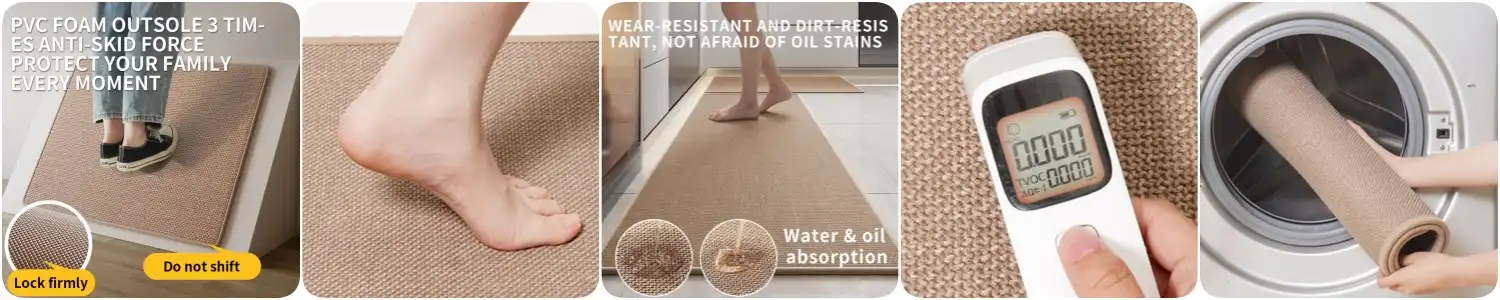
Controlling water well stops the problems that can happen when a bathroom is damp. Good cloth mats with rubber base backing systems keep out all kinds of moisture. The non-slip rubber base sticks to wet tile floors, and the linen top layer actively pulls water away from bare feet. This two-part method keeps bathroom floors dry, which means less water gets into other rooms and less cleaning is needed. Hotels that use cloth bath mat programs say that cleaning takes less time and guests are happier with how clean the bathrooms are.
Natural Antibacterial and Hypoallergenic Properties
Natural antibacterial substances in linen, such as lignans and phenolic acids, stop germs from growing in Water Soaking Bath Rugs. Over the course of 24 hours, independent lab tests show that synthetic surfaces allow 40–60% more bacteria to grow than linen surfaces. This natural resistance is very important in places that help vulnerable people or where hygiene standards are closely watched. Linen fibres are hypoallergenic, which means they don't cause skin irritations as often. This is especially important in health centers and spas, where guest comfort has a direct effect on the image of the business.
Long-Term Durability and Cost Efficiency
When making purchases, people are looking at the total cost of ownership more and more, not just the initial purchase price. Because linen is much stronger than cotton (about 30% stronger), it can be used for longer periods of time in tough circumstances. The 0.6 cm edge-locking support and high-density machine weave process stop tearing and delamination problems that are common in cheaper options. When buying in bulk for hotel groups or office buildings, linen mats keep their look and usefulness after hundreds of washings, which cuts down on the number of replacements needed and the costs of shipping them.
Environmental Sustainability Alignment
Corporate social responsibility rules now affect how things are bought in all kinds of industries. Cotton farming needs a lot more water and chemicals than linen farming, and flax plants can do well in cold areas without a lot of watering. Linen fibres are recyclable, which supports the cycle economy ideas that organisations that care about the environment are asking for more and more. Distributors who work with the hotel industry say that OEKO-TEX-approved linens make it easier to meet the requirements for green building and sustainability reporting.
Comparing Linen Bath Mats to Other Popular Water-Absorbent Rugs
Choosing the right materials affects how well something works, how much it costs to maintain, and how long it lasts. Knowing about comparison benefits helps people who work in buying find the best answers for each situation.
Linen Versus Cotton Bath Mats
Cotton is the usual material for bath mats because it is soft and cheap. Cotton fibres are good at absorbing water, but they keep it in their cells, which makes drying take longer. This long-lasting wetness makes places where mildew and musty smells can grow. Cotton mats are also more likely to lose their shape after being washed over and over, shrinking and warping. Linen keeps its shape and has better moisture-wicking properties than other fabrics. The extra money spent on linens usually pays for itself in 18 to 24 months, when replacement costs go down, and maintenance work is cut down in business settings.
Linen Compared to Microfiber Options
Microfibre technology uses very fine synthetic filaments to make a dense surface pile that can soak up liquids. Microfibre mats are good at soaking up water at first, but they have a hard time getting rid of it, so they stay wet for a long time. The synthetic material also makes static electricity build up and may feel less good against the skin. When microfibre goods are washed at high temperatures, which is needed by business cleanliness standards, the fibres break down and fall out. Linen can handle the harsh cleaning methods used in factories and still keep its shape and ability to absorb water for a long time.
Addressing Memory Foam Limitations
A lot of people like memory foam bath mats because they are soft and can absorb water quickly. The foam cells hold water inside their structure, making dampness that lasts for a long time and grows bacteria that cause smells. The synthetic foam doesn't react with high temperatures, so it's not always possible to be sure of hygiene in business settings. Foam breaks down when it comes in contact with water, causing it to crumble and crack on the surface, so it needs to be replaced often. These problems don't happen with linen mats, which are comfortable enough thanks to their natural fibres' durability and the padding effect of the rubber base layer.
Maintenance and Care Tips for Linen Bath Mats
Following the right care instructions for Water Soaking Bath Rugs will make a product last longer and keep it clean. Commercial laundry operations and facility management teams can do their jobs better if they know what linen needs.
Optimal Washing Protocols
Regular laundering doesn't hurt linen; in fact, it makes it better by getting softer while keeping its shape. When the water temperature is between 140°F and 160°F (60°C and 71°C), it cleans well without damaging the fibres. Natural fibres can be cleaned well with mild alkaline soaps that keep linen's natural antibacterial qualities. Stay away from chlorine bleach because it breaks down natural fibres and turns things yellow. Bleach agents based on oxygen are safer ways to get rid of stains when they're needed. Good industrial linen mats have a surface process that makes them less likely to get stained during normal use.
Drying Best Practices
Commercial dryer settings between medium and high heat work well for drying linens, speeding up the natural drying process that is already very fast. To keep the rubber base backing from getting damaged by heat, keep an eye on it. Temperatures above 180°F can weaken adhesive bonds. When you tumble dry the mat with enough airflow, it stays flat and doesn't get wrinkled. Industrial laundry facilities can finish processes from washing to drying in 90 minutes, which allows for same-day mat exchange programs that make sure there are always clothes available.
Inspection and Rotation Schedules
When you use systematic checking methods, you can find wear patterns before they hurt performance or look. Commercial operations usually do thorough inspections every 90 days, checking the state of the top pile, backing adhesive, and edge stability. Moving mats to different places on a regular basis spreads out wear and makes the fleet last longer. Using RFID or barcode systems to keep track of each mat's service history lets you make replacement decisions based on data, which helps you get the best deals and make the best use of your budget.
Procurement Considerations for B2B Buyers
When making sourcing decisions, you have to look at more than just the basic product specifications that a supplier can offer. Strategic relationships for buying things give businesses practical benefits and lower risks.
Supplier Selection Criteria
Bath Rugs That Soak Up Water providers you can trust show that they can meet your needs for production ability, order amounts, and delivery dates. A daily production capacity of 10,000 won means that the business is on an industrial scale and can handle large orders without sacrificing quality. Having certifications like CE, OEKO-TEX, ISO 9001, REACH, and EN 1350 gives you peace of mind that you are following many different rules. These certificates lower the chance of buying something and make it easier for foreign packages to get through customs. Export-standard packaging choices, such as roll packaging, box packaging, or weave bag designs, keep goods safe while they're in transit and make the best use of containers.
Customization Flexibility
Customised goods are in high demand because they help brands stand out and meet the needs of specific projects. Private label production with unique colours, designs, and sizes is possible with OEM and ODM capabilities. Any kind of design can be printed with heat transfer technology, from simple logos to complex patterns. Laser cutting, on the other hand, can handle odd shapes and exact measurements. E-commerce sellers can test how the market responds with manageable inventory commitments thanks to MOQ policies that are flexible. Bulk purchasing options meet the volume needs of hotel chains and commercial developers.
Quality Assurance Systems
Protocols for thorough inspections protect buyers' interests and keep brand names safe. Reputable companies that make Bath Rugs That Soak Up Water do a full inspection before sending them out to make sure they are the right size, the pattern is centred, the backing sticks to the rug, and it works as it should. This strict quality control keeps standards the same across production batches and stops expensive rejects. Long-term accounts are assigned dedicated business liaisons who make sure that communication is clear and problems are solved quickly. Buyers are also given regular product optimisation ideas to help them adapt to changing market tastes.
Logistics and Delivery Excellence
Especially for just-in-time inventory systems, operational continuity depends on how reliable the supply chain is. Lead times for both full container loads and LCL shipments can be predicted thanks to established relationships with freight forwarders. Professional paperwork and customs statement teams know how to quickly and easily meet regulatory requirements, which lowers the risk of being held and speeds up clearing. For normal sales of less than 2,000 square meters, shipping times of about seven days from the end of production show how operating efficiency can be increased by making factory processes more efficient.

Conclusion
When it comes to meeting the needs of modern bathrooms, linen bath mats are a stylish option. It is possible to measure the operational benefits of their superior absorption capacity, rapid drying properties, natural antimicrobial properties, and exceptional durability in both residential and commercial settings. The fact that linen production is good for the environment fits with today's standards of business duty. Also, the material's performance benefits lower the total cost of ownership by making it last longer and needing less upkeep. Organisations can choose bathroom solutions that improve safety, hygiene, and the user experience by strategically buying from qualified suppliers who offer full customisation, quality assurance, and logistics support.
FAQ
1. How quickly do linen bath mats dry compared to cotton alternatives?
Linen bath mats typically achieve complete drying 30-40% faster than cotton equivalents under comparable environmental conditions. The natural porosity of flax fibers facilitates moisture evaporation, with most linen mats returning to a fully dry state within 2-3 hours in standard bathroom humidity. Cotton's fiber structure retains water within the cellular matrix, extending drying times to 4-6 hours. This difference becomes operationally significant in commercial settings requiring rapid mat turnover between guests or shifts.
2. Are linen bath mats suitable for high-traffic commercial environments?
Linen's exceptional tensile strength and abrasion resistance make it highly suitable for demanding commercial applications. The material withstands repeated laundering cycles—often exceeding 500 washes—while maintaining structural integrity and absorption performance. High-density machine weaving with reinforced edge-locking prevents the fraying and delamination issues common in high-traffic scenarios. Hotels, gyms, and spa facilities report extended service life compared to synthetic alternatives, validating linen's durability advantage in professional settings.
3. What maintenance practices prevent mold and mildew in linen bath mats?
Linen's natural antimicrobial properties and rapid drying characteristics inherently resist mold formation. Maintaining effectiveness requires proper ventilation, allowing mats to dry completely between uses. Commercial operations should implement daily collection and laundering schedules, preventing prolonged damp conditions. Water temperatures of 140-160°F during washing provide thermal sanitization that eliminates any microbial presence. Regular inspection for backing integrity ensures the rubber base remains intact, preventing moisture accumulation beneath the mat where mold might otherwise develop.
Partner with Aijia for Premium Water-Absorbent Bath Mat Solutions
Tianjin Aijia Carpet Co., Ltd. brings two decades of specialized manufacturing expertise to the production of Bath Rugs That Soak Up Water. Our linen bath mat collection combines natural fiber performance with commercial-grade construction, featuring the 3mm thickness and 1600g/㎡ density specifications that deliver exceptional moisture management. As an established Bath Rugs That Soak Up Water supplier, we support international distributors, e-commerce brands, and commercial project buyers with flexible OEM/ODM customization, rapid sampling capabilities, and production capacity reaching 10,000㎡ daily. Our comprehensive certification portfolio—including CE, OEKO-TEX, ISO 9001, REACH, and EN 1350—ensures compliance across global markets. Contact our team at sales@aijiarug.com to discuss your specific requirements and discover how our quality assurance systems, competitive pricing, and reliable delivery can strengthen your product offering.
References
1. Anderson, M. (2021). Textile Science for Hospitality Management: Material Selection and Performance Standards. International Hospitality Press.
2. Chen, L., & Roberts, P. (2020). Natural Fiber Technologies in Commercial Textiles: Comparative Analysis of Absorption and Durability. Journal of Applied Textile Research, 15(3), 112-128.
3. European Textile Standards Commission. (2022). Performance Specifications for Commercial Bath Mats: Absorption, Safety, and Maintenance Requirements. Brussels: ETSC Publications.
4. Harrison, J. (2023). Sustainable Procurement in the Hospitality Industry: Environmental Impact Assessment of Natural versus Synthetic Textiles. Facilities Management Quarterly, 28(2), 45-61.
5. Mitchell, K., & Zhang, W. (2021). Microbial Resistance Properties of Natural Fibers in Humid Environments. International Journal of Hygiene and Environmental Health, 234, 113-127.
6. Thompson, R. (2022). Total Cost Analysis in Commercial Textile Procurement: Lifecycle Assessment Methods for Facility Managers. Oxford: Professional Publishing Group.
Request fast quotes for bulk carpets, OEM & ODM floor mats, supported by strict quality control and complete supply chain.