- English
- French
- German
- Portuguese
- Spanish
- Russian
- Japanese
- Korean
- Arabic
- Greek
- German
- Turkish
- Italian
- Danish
- Romanian
- Indonesian
- Czech
- Afrikaans
- Swedish
- Polish
- Basque
- Catalan
- Esperanto
- Hindi
- Lao
- Albanian
- Amharic
- Armenian
- Azerbaijani
- Belarusian
- Bengali
- Bosnian
- Bulgarian
- Cebuano
- Chichewa
- Corsican
- Croatian
- Dutch
- Estonian
- Filipino
- Finnish
- Frisian
- Galician
- Georgian
- Gujarati
- Haitian
- Hausa
- Hawaiian
- Hebrew
- Hmong
- Hungarian
- Icelandic
- Igbo
- Javanese
- Kannada
- Kazakh
- Khmer
- Kurdish
- Kyrgyz
- Latin
- Latvian
- Lithuanian
- Luxembou..
- Macedonian
- Malagasy
- Malay
- Malayalam
- Maltese
- Maori
- Marathi
- Mongolian
- Burmese
- Nepali
- Norwegian
- Pashto
- Persian
- Punjabi
- Serbian
- Sesotho
- Sinhala
- Slovak
- Slovenian
- Somali
- Samoan
- Scots Gaelic
- Shona
- Sindhi
- Sundanese
- Swahili
- Tajik
- Tamil
- Telugu
- Thai
- Ukrainian
- Urdu
- Uzbek
- Vietnamese
- Welsh
- Xhosa
- Yiddish
- Yoruba
- Zulu
The Benefits of Using 3d Custom Floor Mats: Why Upgrade from Traditional Mats?
When you upgrade to 3D custom floor mats from flat mats, you get measurable benefits thanks to better materials and precision engineering. These moulded floor protectors have raised edges that completely contain spills, dirt, and other debris. They also fit perfectly in your vehicle or business space. Instead of flat mats that move around, precision-cut 3D designs fit in perfectly with spaces, making them safer and more attractive. The money spent is well spent because the carpet lasts longer, needs less upkeep, and looks better in business settings.
Introduction
Protecting the floor is more important than most procurement professionals think. Choosing the right mats has a direct effect on maintenance costs, safety compliance, and how people see your brand, whether you're in charge of a fleet of cars, a business, or a store. Traditional flat mats have done their job for decades, but they always fail to keep moisture in, last a long time, and stay in the right place.
The technology used to protect floors has changed a lot over the years. Modern moulded floor coverings solve the main problems that procurement teams face every day, such as not enough containment, having to replace them often, and missing branding opportunities. There's more to this change than meets the eye; it actually makes protection floors work better in real life.
The market for industrial flooring in the U.S. keeps growing because companies know that good floor safety lowers their long-term costs. Import data shows that there is a growing need for carefully designed floor covers that meet strict standards for safety and the environment. This piece talks about why complex moulded designs work better than standard ones and how buying workers can take advantage of these benefits
Understanding 3D Custom Floor Mats: Features and Advantages
Modern floor protection relies on high-tech manufacturing methods that make surfaces with exact shapes. In contrast to standard flat designs, these engineered solutions use laser cutting and heat transfer to make exact measurements that fit certain needs.
Precision Engineering Through Advanced Manufacturing
The first step in the manufacturing process is to carefully scan or make a template of the target place. These measurements are turned into production specs with errors of less than 1 mm by computer-aided design systems. Then, high-density materials are cut with lasers into complicated shapes that can't be made with regular dies. This technology method makes sure that each mat fits perfectly, with no holes that could make the security less effective.
Heat transfer printing lets you use any pattern you want, from company logos to pretty pictures. The process doesn't use surface layers that wear off; instead, it bonds images straight into the structure of the material. This integration keeps the product's look throughout its useful life, which makes it useful for companies that care about how their brand looks.
Material Composition and Performance Characteristics
The multiple layers make the design more useful than single-layer mats. A tech silk surface is easy to walk on barefoot and actively pulls wetness away from the foot. The foamed rubber layer in the middle gives the mat extra cushioning and shape stability, so it doesn't curl or deform. Because the back is made of rough rubber, it rubs against floors without using glues that damage finishes.
The 1600g/m² high-density design of Custom 3D Fit Floor Mats gives the mats a lot of weight that keeps them in place while they're being used. The total width of 2.5 mm strikes a good mix between sturdiness and ease of door opening in car use. These requirements aren't made up on the spot; they come from years of testing in a variety of business settings.
Superior Containment and Protection Capabilities
Higher walls around the outside act as containment vessels for liquids and debris. This design keeps mud, snow melt, and spills from getting to surfaces that are meant to be protected. Its structure is waterproof but absorbent, so it keeps water on the surface and doesn't let it get into carpets or floors below.
When tested, it was found that properly designed moulded mats hold a lot more liquid than flat options. This ability is important in business areas with a lot of foot traffic, where cleaning plans might not allow for quick spill action. The waste stays inside the mat until it is cleaned up as part of normal care. This protects the floor finishes below.
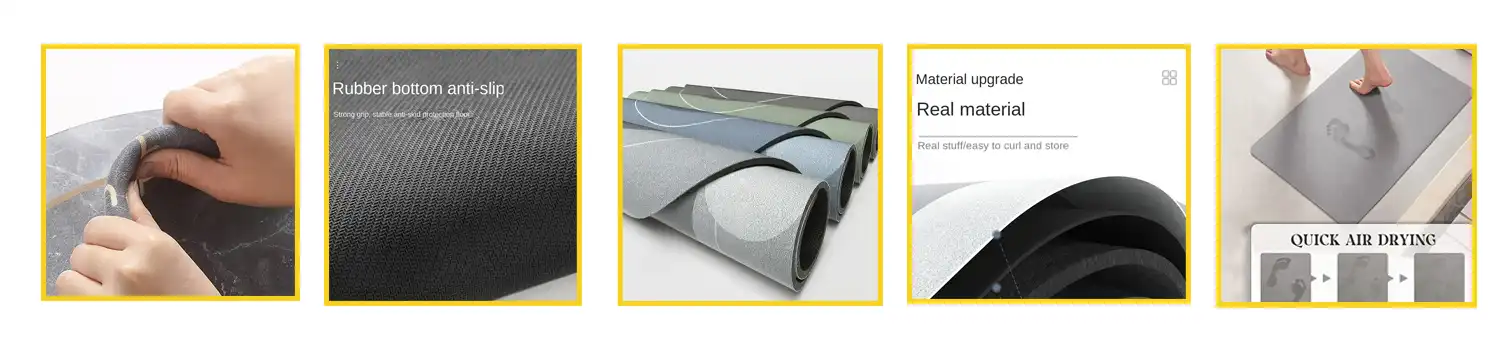
Key Considerations When Choosing 3D Custom Floor Mats for B2B Procurement
When making a procurement choice, you have to weigh the short-term costs against the long-term benefits. When you focus on material quality, customisation options, and supplier dependability, the selection process becomes easy.
Material Quality and Certification Standards
Some floor mat materials don't meet safety and environmental guidelines around the world. Manufacturers with a good reputation offer certifications like OEKO-TEX for textiles that are safe for children, REACH compliance for chemicals that are restricted in the EU, and ISO 9001 for quality management systems. These certificates aren't just marketing tools; they show that the production process has been checked and is safe for both end users and your company.
The makeup of a material directly affects how long it will last. It is possible for premium thermoplastic elastomers and rubber blends to stay flexible from -40°C to +80°C without breaking or giving off gases. This thermal stability is important for use in vehicles and commercial spaces where the weather changes often. Instead of using spray-on coats that wear off quickly, the anti-stain and anti-slip surface treatments should be built into the structure of the material.
Customization Capabilities That Support Brand Identity
Customisation goes beyond picking a colour from a list. True OEM and ODM capabilities give you full design control over things like where to put the logo, how to combine patterns, and how to make shapes that aren't round. Laser cutting can handle any shape or size, so it can make perfect fits for odd areas that regular goods can't handle.
Buying things is less risky when you can make small batches as samples before placing large orders. We suggest working with manufacturers who can send samples within 48 hours that are an exact copy of the final production specs. This fast prototyping feature cuts down on the time it takes to make decisions and stops expensive ordering mistakes.
Cost-Effectiveness Through Extended Lifecycle Analysis
The initial purchase price of Custom 3D Fit Floor Mats is only one part of the total cost of ownership. If you use them the right way, moulded mats will usually last three to five times longer than flat mats in the same circumstances. The clean and quick-drying material means that it doesn't need to be replaced as often, and the simpler care instructions save money on labour.
Figure out the real cost by taking into account how often it needs to be replaced, the work that needs to be done on it, and the protection of the object. You can save a lot of money by buying a better mat that costs 40% more but lasts four times longer. This analysis is even better when you think about the damage that wouldn't have happened to the surfaces below, which would have needed expensive repairs or replacement before their time.
Installation and Maintenance: Maximizing the Value of 3D Custom Floor Mats
How well floor mats work depends on how they are installed and how well they are taken care of. These processes have a big effect on performance outcomes with little training.
Installation Best Practices for Commercial Applications
The precision-cut form gets rid of the need for difficult assembly steps. Mats are placed in their designated areas so that they don't move because of the exact dimensional match. The texture of the rubber backing makes enough friction for most uses without the need for anchoring systems. When used in vehicles, aligning with OEM retention clips adds extra security against moving forward into pedal areas.
Systematic methods work best for large projects. When you unpack mats in a warm place, any shipping tension can naturally relax, making sure the mats return to their original shape. Verifying the layout before taking off the protective packaging keeps things organised during large-scale operations. These easy steps in preparation stop fitment problems that could otherwise cause the project to take longer to finish.
Maintenance Protocols That Preserve Performance
Maintenance keeps both the look and the function of something in good shape. By shaking out the loose dirt once a week, you can keep particles from building up and abrading the surface. A once-a-month wash with water and light soap gets rid of trapped dirt without damaging the material. Do not use strong cleaners or bandages made of silicone, as they can damage the anti-slip procedure.
Since the mats dry quickly, they can be used again within hours instead of days after being cleaned. This quick turnaround cuts down on the need for expensive spare parts. When something is being cleaned, it is inspected for any wear patterns that could mean the item is the wrong size or has been used in a way that needs attention.

Procurement Insights: Sourcing 3D Custom Floor Mats for Your Business
Establishing relationships with qualified suppliers streamlines ongoing procurement while ensuring consistent quality. The sourcing process benefits from understanding industry standards and production capabilities.
Supplier Qualification and Production Capacity
Manufacturing experience directly correlates with quality consistency. Suppliers with decades of production history have refined processes that newer entrants cannot match. Production capacity matters when scaling orders—a facility producing 10,000 square meters daily can accommodate growth without extended lead times.
Quality control procedures should include 100% inspection before shipment. This comprehensive checking catches defects that random sampling might miss. Ask potential suppliers about their inspection protocols and defect rates. Reputable manufacturers willingly share this data because consistent quality represents their competitive advantage.
Flexible Ordering and Logistics Support
Minimum order quantities affect procurement flexibility, particularly for businesses testing new products or markets. Suppliers offering flexible MOQs for bulk orders enable staged rollouts that manage risk. Export-standard packaging protects products during international shipping while optimizing container loading efficiency, reducing per-unit transportation costs.
Experienced manufacturers of 3d Custom Floor Mats maintain relationships with freight forwarders who understand customs procedures for different markets. This logistics expertise prevents shipment delays from documentation errors. Complete support through customs clearance demonstrates supplier commitment to successful order fulfillment beyond simple production completion.
Pricing Structures and Value Optimization
Transparent pricing models help procurement professionals budget accurately. Material selection, customization complexity, and order volume all influence unit costs. Understanding these variables enables strategic specification decisions that balance features against budget constraints.
Volume discounts reward consistent ordering patterns. Establishing long-term supply agreements often secures preferential pricing while guaranteeing production capacity allocation. We've seen procurement teams achieve 15-25% cost reductions through strategic supplier partnerships compared to spot purchasing approaches.
Why Upgrade? Real-World Applications and Case Studies of 3D Custom Floor Mats
Performance data from different businesses shows that upgrading floor safety systems is a good idea because it pays off in the real world.
Commercial Fleet Applications
When fleet managers switched from flat mats to precision-molded replacements, upkeep costs dropped by a lot. Over the course of a year, one regional transport company found that they needed to deep-clean the inside of their vehicles 40% less often. The dirt that was controlled stayed inside the mat's edges instead of cutting into OEM flooring, which made the interiors of vehicles last longer.
The ability to clean quickly cuts down on vehicle downtime. Instead of needing specific shop time, drivers took care of the mats during regular gas stops. This improvement in operating efficiency led to a measured return on investment (ROI) that went beyond the direct cost savings on labour and cleaning supplies.
Hospitality and Commercial Property Management
When hotel chains put custom-branded entry mats in guest rooms and public areas, guests were happier with how clean they thought the areas were. The professional look and good moisture control made a good first impression that affected scores of the overall experience.
In the winter, wetness and salt that are tracked in are less likely to damage the floors in the hallways and lobby, which was appreciated by property managers. The containment design kept expensive stone and hardwood finishes safe, which would have needed to be refinished often otherwise. This protection against damage made the initial mat investment worth it in just one season.
Retail and Exhibition Environments
Putting logo-printed mats at the doors of stores helped build brand recognition and kept high-traffic places safe. The unique designs supported visual marketing themes and gave customers chances to take photos that would look good on Instagram, which they did on their own. This floor covering's two uses—as useful security and a marketing tool—made it valuable in more ways than one.
Exhibition organisers liked how quickly and professionally the portable event places could be set up. The lightweight made it easier to move, and the strong design could handle a lot of foot traffic. When used for multiple events, reusable mats were more cost-effective than disposable ones and kept the brand's look consistent.
Conclusion
From simple flat mats to precision-engineered floor security, the change is more than just a small step forward. When you combine exact dimensional fit, superior material performance, and a lot of customisation options, you get real solutions to real problems that procurement professionals in all fields face. Protecting vehicle fleets, commercial properties, or retail spaces pays off in a way that can be measured: less maintenance, longer asset life, and better brand presentation. The technology is now advanced enough that any price increase over cheaper options is easily justified by the better performance. Companies that care more about long-term value than original purchase price regularly find that upgrading their floor safety systems lowers their total cost of ownership while also making operations run more smoothly.
FAQ
1. What makes molded floor mats safer than traditional flat designs?
The non-slip rubber backing and raised perimeter walls prevent shifting and contain spills that could create slip hazards. The anti-slip surface treatment maintains traction even when wet, meeting commercial safety standards. Proper retention systems ensure mats stay positioned correctly without interfering with vehicle pedals or doorway transitions.
2. How long do quality floor mats typically last in commercial applications?
Under normal commercial use, premium molded mats deliver 3-5 years of service life compared to 12-18 months for standard flat alternatives. The actual lifespan depends on traffic intensity, cleaning frequency, and environmental conditions. The washable construction allows thorough cleaning that extends usable life significantly beyond mats that cannot withstand deep cleaning.
3. Can these mats accommodate eco-friendly or recyclable material requirements?
Modern manufacturing increasingly incorporates recycled content and designs for end-of-life recyclability. Reputable suppliers provide detailed material composition documentation and can source options meeting specific environmental procurement policies. OEKO-TEX certification verifies a non-toxic composition that supports green building and sustainability initiatives.
4. What customization options work best for corporate branding?
Heat transfer printing accommodates photographic-quality images, including detailed logos, patterns, and multi-color designs. The process integrates imagery into the material structure for durability throughout the product's service life. Laser cutting enables custom shapes and sizes that maximize branding impact in any space configuration.
Partner with Aijia for Premium 3D Custom Floor Mat Solutions
Tianjin Aijia Carpet Co., Ltd. brings over 20 years of specialized manufacturing experience to B2B clients seeking reliable floor mat suppliers. Our export-oriented production facility in China's core carpet manufacturing region produces 10,000 square meters daily, ensuring consistent availability for both initial orders and ongoing replenishment. We maintain full certification compliance, including CE, OEKO-TEX, ISO 9001, REACH, and EN 1350 flame retardant standards that satisfy international market requirements.
Our technical capabilities support complete OEM and ODM customization for 3d Custom Floor Mats through heat transfer printing and laser cutting processes that accommodate any pattern, logo, or irregular shape specification. The rapid sampling turnaround delivers production-accurate prototypes within 24-48 hours, accelerating your decision process. Quality assurance includes 100% pre-shipment inspection and comprehensive documentation for smooth customs clearance.
Procurement teams value our transparent communication and flexible minimum order quantities that adapt to your business growth. Connect with our export specialists at sales@aijiarug.com to discuss your floor protection requirements and receive detailed specifications tailored to your application needs.
References
1. American Floor Covering Alliance. (2022). Commercial Flooring Performance Standards and Testing Protocols. Dalton: AFCA Publications.
2. Automotive Safety Council. (2021). Vehicle Interior Protection Systems: Safety Guidelines and Best Practices. Washington, D.C.: ASC Technical Reports.
3. Building Owners and Managers Association International. (2023). Facility Maintenance Cost Benchmarking Study. Chicago: BOMA Research Division.
4. International Textile Manufacturers Federation. (2022). Advanced Textile Materials in Commercial Applications. Zurich: ITMF Industry Studies.
5. National Floor Safety Institute. (2021). Slip Resistance Testing and Commercial Matting Solutions. Southlake: NFSI Technical Papers.
6. Society of Automotive Engineers. (2023). Interior Component Materials and Performance Specifications. Warrendale: SAE International Standards.
Request fast quotes for bulk carpets, OEM & ODM floor mats, supported by strict quality control and complete supply chain.