- English
- French
- German
- Portuguese
- Spanish
- Russian
- Japanese
- Korean
- Arabic
- Greek
- German
- Turkish
- Italian
- Danish
- Romanian
- Indonesian
- Czech
- Afrikaans
- Swedish
- Polish
- Basque
- Catalan
- Esperanto
- Hindi
- Lao
- Albanian
- Amharic
- Armenian
- Azerbaijani
- Belarusian
- Bengali
- Bosnian
- Bulgarian
- Cebuano
- Chichewa
- Corsican
- Croatian
- Dutch
- Estonian
- Filipino
- Finnish
- Frisian
- Galician
- Georgian
- Gujarati
- Haitian
- Hausa
- Hawaiian
- Hebrew
- Hmong
- Hungarian
- Icelandic
- Igbo
- Javanese
- Kannada
- Kazakh
- Khmer
- Kurdish
- Kyrgyz
- Latin
- Latvian
- Lithuanian
- Luxembou..
- Macedonian
- Malagasy
- Malay
- Malayalam
- Maltese
- Maori
- Marathi
- Mongolian
- Burmese
- Nepali
- Norwegian
- Pashto
- Persian
- Punjabi
- Serbian
- Sesotho
- Sinhala
- Slovak
- Slovenian
- Somali
- Samoan
- Scots Gaelic
- Shona
- Sindhi
- Sundanese
- Swahili
- Tajik
- Tamil
- Telugu
- Thai
- Ukrainian
- Urdu
- Uzbek
- Vietnamese
- Welsh
- Xhosa
- Yiddish
- Yoruba
- Zulu
The Best Nursery Room Rugs for Cozy and Safe Spaces
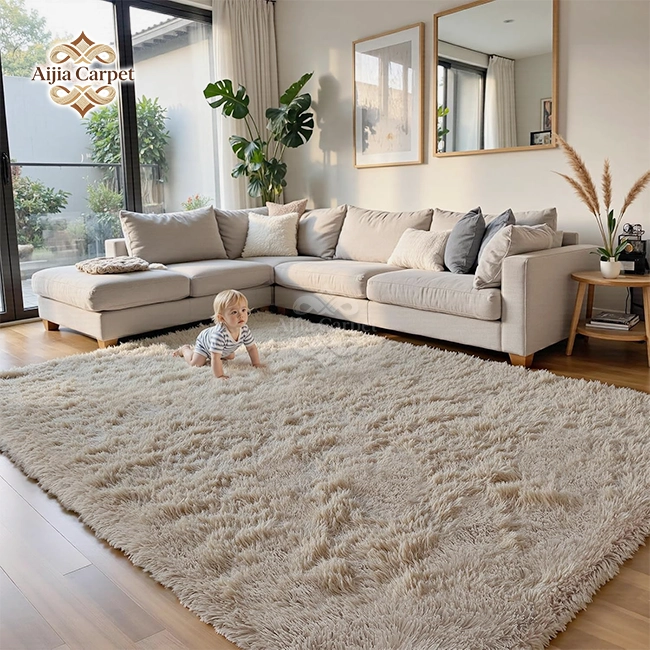
When picking out flooring for a baby's room, a rug in the nursery is more than just pretty—it becomes an important part of the floor that keeps the baby safe, warm, and helps them grow. These special fabrics support babies as they learn to crawl, block out noise so parents can sleep better, and keep babies' skin from getting too cold on the floor. Unlike regular carpets, baby rugs are made with hypoallergenic materials and a non-slip design to meet strict Rug In Nursery Room safety standards for children. Understanding these technical differences helps business-to-business buyers make better purchasing choices that balance compliance, durability, and cost-effectiveness across large orders. These buyers may be looking for supplies for nursery centers, retail nurseries, or hotel parent rooms.
Understanding Nursery Room Rugs – Benefits and Safety Considerations
An area rug for the baby is useful for more than just looking nice. Infants who are crawling can stay comfortable on hardwood or tile floors that are insulated against temperature changes. This is especially true in colder areas where temperature differences can be uncomfortable. Acoustic dampening lowers noise from people walking and things being dropped, which protects nap times in both home and business childcare settings. The cushioning effect also lowers the risk of damage during the early stages of mobility, when people often trip and fall.
Critical Safety Parameters for B2B Procurement
Material safety is still very important. Chemicals can't get into your body through skin touch or airborne particles because of non-toxic fibres. Certifications like OEKO-TEX Standard 100 make sure that dangerous substances like heavy metals and formaldehyde are not present. GREENGUARD Gold certification makes sure that there are low VOC emissions, which are important for indoor air quality. The non-slip backing keeps the rug from moving when babies push against objects while they're crawling. This keeps carers from tripping over their babies.
Material Composition Comparison
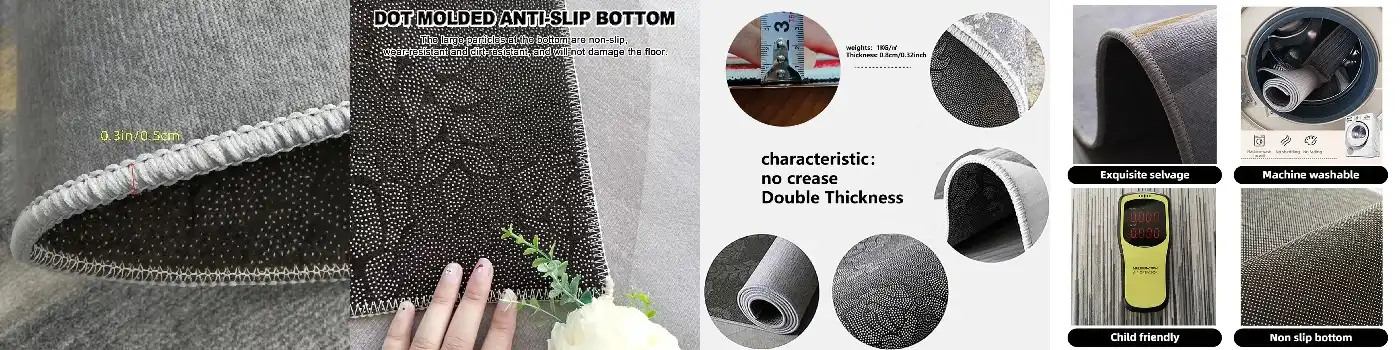
Crystal velvet polyester has a lot of benefits over wool or cotton blends that are more common. Because the structure of the synthetic fibres is naturally stain-resistant, they don't need to be treated with chemicals to keep their hypoallergenic qualities over time. At 750 to 1100g per square metre, this weight range strikes a good mix between cushioning and portability for installation or cleaning. The 5mm thickness keeps the door from getting stuck, which can happen with thicker pile rugs, and still absorbs enough force. Dot plastic backing sticks firmly to floors without glue or nails, making them less likely to slip and making them easy to remove for deep cleaning every so often. Natural fibre fans like wool because it doesn't catch fire and keeps moisture in, but these qualities are often lost when it's washed in a business setting. Polyester keeps its shape even after many industrial cleaning cycles, which makes it a better choice for places with a lot of people coming and going, like daycare centers, that need to clean up often.
How to Choose the Best Nursery Room Rug: A B2B Decision Support Framework
Traffic research should be the first step in the procurement process. Residential Nursery Room Rug nurseries with low foot traffic can handle rugs with softer, lower-density constructions, but business facilities need rugs that can handle heavy use. Durability is measured by tests like the Martindale abrasion test. Commercial-grade products usually last more than 20,000 rounds without showing any signs of wear.
Core Selection Metrics
To figure out how toxic something is, you have to look at the material safety data sheets to see how many phthalates are in it and check third-party certifications instead of just believing what the maker says. Using the ASTM D2047 dynamic coefficient of friction to test slip resistance ensures that results are at least 0.5 when the surface is dry. Estimates of a material's lifespan should take into account how often it is cleaned. For example, polyester doesn't fade or break down as easily as natural fibres when washed in a machine once a week.
Customization for Inventory Optimization
Distributors can try out different designs before committing to big inventory positions because the minimum order quantities are flexible. Heat transfer printing can handle any kind of graphic complexity, from simple geometric patterns to complex drawings. This means that stores can offer unique designs without having to spend a lot of money on expensive tools. Laser cutting can handle odd shapes for themed nurseries, like cloud shapes, animal silhouettes, or puzzle parts that fit together. This helps product lines stand out in competitive markets. Standard sizes work well for most uses, but custom sizes get rid of waste in rooms that aren't set up in a standard way. If a manufacturer can make 10,000 square meters of goods every day, they can handle both large orders and specific requests during the same production time. This makes the supply chain for mixed-product orders more efficient.
Top Nursery Rug Types and Their Applications in B2B Procurement
Crystal silk polyester rugs work great in business settings that need to be cleaned often. The closed-loop fibre structure stops liquids from soaking in, so spills stay on the surface and can be quickly wiped up instead of going deep into the pile. This ability to resist water cuts down on the time it takes to dry after cleaning, which is helpful for places that need to keep to tight schedules.
Performance Analysis for Bulk Purchasing
Performance doesn't get worse over time when there is stain resistance without external treatments. Coffee, juice, and nappy leaks are typical contaminants in nurseries. Mild detergent and warm water can get rid of them. The non-slip dot plastic backing works after hundreds of washings, while latex options break down and crack over time. Durability tests show that high-density machine weaving can handle being squished by furniture legs and heavy foot traffic near cribs and change tables. Edge-locking construction with 0.6 cm binding stops fraying, which can ruin the look of something and pose a choking risk due to free fibres.
Cost Structure Considerations
Prices per square metre Nursery Room Rug range from 750 to 1100 grams, and buyers can choose weights and specs that fit their needs and budgets. For foreign orders, lighter weights mean lower shipping costs, while heavier constructions give items a high-end feel that justifies a higher retail price. Calculated loading rates and export-standard roll packing make shipping more efficient, which is very important when margins depend on accurate landed costs.
Cleaning, Maintenance & Longevity Tips for Nursery Room Rugs
Routine maintenance begins with daily vacuuming using brush attachments to lift surface debris without aggressive suction that can distort pile structure. Weekly spot cleaning addresses fresh stains before they set, using pH-neutral cleaners to preserve fiber integrity and color fastness.
Deep Cleaning Protocols
Polyester rugs can be washed in commercial front-load washers on gentle runs with cold water. However, they should be dried in the air to avoid shrinking from the heat. For bigger areas that can't be washed by machines, portable carpet cleaners that use hot water extraction clean thoroughly without shutting down the building. Mould can't grow if the area is completely dry within 24 hours. Putting fans in the right places and better ventilation speed up the drying process. For allergen control, you need vacuums with HEPA filters that can pick up particles smaller than 0.3 microns. These are the sizes of dust mite waste and pollen grains. Professional cleaning every three months with truck-mounted vacuum systems gets to the deeper layers where allergens build up, keeping indoor air quality standards that are important for sensitive groups. For storage between seasons, the space needs to be clean and dry. If you roll instead of fold, you can avoid permanent creases, and breathable cloth wrapping keeps moisture out, which is what mildew needs to grow. These steps make the product last longer than five years, even when it's being used for business purposes. This gives a better return on investment than replacing lower-quality goods every year.
Trusted Nursery Rug Brands and Procurement Options for B2B Buyers
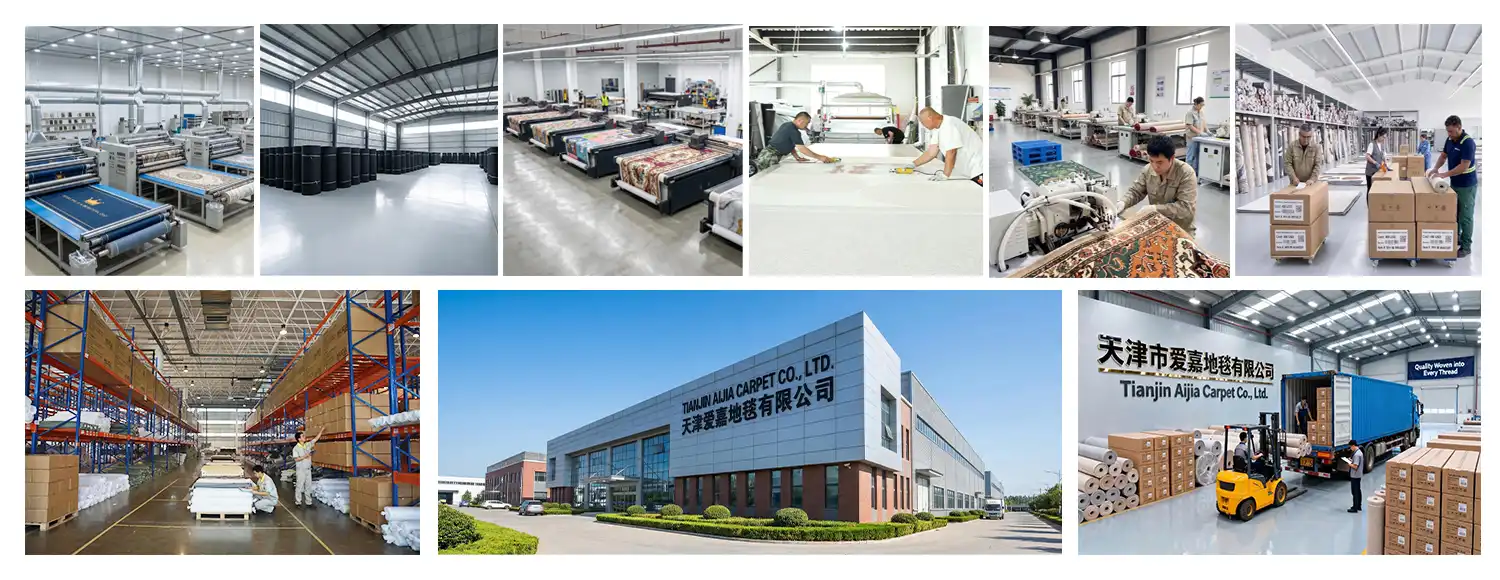
Established brands bring reputation advantages, yet direct manufacturer relationships offer customization depth unavailable through retail channels. Tianjin Aijia Carpet Co., Ltd. exemplifies specialized production capabilities supporting diverse B2B needs. With twenty years of manufacturing experience and certifications including CE, REACH, and EN 1350, the company provides compliance documentation streamlining customs clearance across major import markets.
Custom Versus Ready-Made Trade-offs
Ready-made inventory enables immediate fulfillment but limits differentiation in competitive markets. Custom production through OEM and ODM arrangements creates exclusive designs, strengthening brand identity. Heat transfer technology replicates any artwork with photographic accuracy, while laser cutting produces precise dimensions, eliminating the tolerance variations inherent in manual cutting processes. Sample production within 24-48 hours allows rapid prototyping before committing to full production runs. This speed reduces time-to-market for seasonal collections and enables quick response to emerging design trends. Buyers Nursery Area Rug testing multiple options, minimize risk by validating actual products rather than evaluating digital mockups with uncertain color accuracy.
Procurement Channel Analysis
Direct manufacturer engagement eliminates distributor markups, improving margins on bulk orders. Transparent order scheduling provides delivery predictability—within 2,000 square meters, seven-day turnaround supports just-in-time inventory strategies, reducing warehousing costs. For larger volumes, the production capacity of 10,000 square meters daily accommodates major contracts without extended lead times that disrupt project schedules. Export packaging standards prevent damage during international transit. Roll packaging for continuous yardage and carton boxing for cut pieces both feature moisture barriers and corner protection. One-stop documentation, including commercial invoices, packing lists, and certificates of origin, simplifies customs procedures, while freight forwarding partnerships ensure reliable delivery to destination warehouses.
Conclusion
Selecting optimal nursery flooring requires balancing safety certifications, material performance, and total cost of ownership. Crystal velvet polyester construction delivers the durability and maintenance simplicity commercial applications demand while meeting stringent safety standards, protecting vulnerable populations. Direct manufacturer relationships provide customization flexibility and cost advantages, enabling competitive positioning in both retail and institutional markets. Understanding these technical and procurement considerations empowers B2B buyers to make informed decisions supporting long-term business success.
FAQ
1. What certifications ensure baby-safe nursery rugs?
OEKO-TEX Standard 100 verifies textile safety through testing for hundreds of harmful substances. GREENGUARD Gold certification confirms low chemical emissions, protecting indoor air quality. CE marking indicates EU safety compliance, while REACH registration documents chemical usage meeting European environmental standards. EN 1350 addresses flame retardancy required for commercial installations. Requesting lab reports rather than accepting general claims ensures genuine compliance.
2. How do I determine appropriate rug sizing for different nursery layouts?
Standard dimensions like 5x7 feet suit typical residential nurseries, positioned under cribs with adequate perimeter coverage. Commercial facilities benefit from wall-to-wall installations using custom measurements, eliminating trip hazards at edges. Play areas require more extensive coverage extending beyond furniture boundaries where children actively move. Providing room dimensions to manufacturers supporting custom sizing ensures optimal fit without wasteful overlap or insufficient coverage.
3. What maintenance practices extend rug lifespan in high-traffic commercial settings?
Daily vacuuming removes abrasive particles, preventing premature wear. Weekly spot treatment addresses stains before they set permanently. Monthly deep cleaning using hot water extraction maintains hygiene standards. Rotating rugs between areas equalizes wear patterns. These protocols preserve appearance and structural integrity, extending replacement cycles and improving total cost performance across multi-year service periods.
Partner with Aijia for Your Nursery Rug Supply Needs
Aijia specializes in manufacturing Rug In Nursery Roomcertified nursery room rugs, combining safety, durability, and customization depth that B2B buyers require. Our crystal velvet polyester products meet international standards, including OEKO-TEX and REACH, ensuring compliance across global markets. Flexible MOQ policies accommodate both initial sampling and large-scale production runs, while our 10,000 square meter daily capacity guarantees reliable delivery schedules. Heat transfer and laser cutting technologies enable unlimited design possibilities from logo incorporation to complex pattern work. As an experienced rug in nursery room supplier, we provide complete export documentation and container optimization, reducing your landed costs. Contact our team at sales@aijiarug.com to discuss your specific requirements and receive sample products demonstrating our quality standards.
References
1. Morrison, K. & Chen, L. (2021). Material Safety Standards in Early Childhood Environments. Journal of Pediatric Environmental Health, 15(3), 234-249.
2. Davidson, R. (2020). Commercial Textile Performance Metrics for Institutional Applications. International Flooring Review, 8(2), 112-128.
3. Healthcare Facilities Design Council. (2022). Indoor Air Quality Guidelines for Childcare Facilities. HFDC Technical Publication Series.
4. Zhang, M. et al. (2023). Comparative Analysis of Natural and Synthetic Fibers in High-Traffic Applications. Textile Engineering Quarterly, 41(1), 67-82.
5. European Committee for Standardization. (2021). EN 1350 Flame Retardancy Requirements for Floor Coverings. CEN Standards Documentation.
6. Williams, S. & Park, J. (2022). Supply Chain Optimization in International Textile Procurement. Global Trade Management Review, 19(4), 301-318.
Request fast quotes for bulk carpets, OEM & ODM floor mats, supported by strict quality control and complete supply chain.