- English
- French
- German
- Portuguese
- Spanish
- Russian
- Japanese
- Korean
- Arabic
- Greek
- German
- Turkish
- Italian
- Danish
- Romanian
- Indonesian
- Czech
- Afrikaans
- Swedish
- Polish
- Basque
- Catalan
- Esperanto
- Hindi
- Lao
- Albanian
- Amharic
- Armenian
- Azerbaijani
- Belarusian
- Bengali
- Bosnian
- Bulgarian
- Cebuano
- Chichewa
- Corsican
- Croatian
- Dutch
- Estonian
- Filipino
- Finnish
- Frisian
- Galician
- Georgian
- Gujarati
- Haitian
- Hausa
- Hawaiian
- Hebrew
- Hmong
- Hungarian
- Icelandic
- Igbo
- Javanese
- Kannada
- Kazakh
- Khmer
- Kurdish
- Kyrgyz
- Latin
- Latvian
- Lithuanian
- Luxembou..
- Macedonian
- Malagasy
- Malay
- Malayalam
- Maltese
- Maori
- Marathi
- Mongolian
- Burmese
- Nepali
- Norwegian
- Pashto
- Persian
- Punjabi
- Serbian
- Sesotho
- Sinhala
- Slovak
- Slovenian
- Somali
- Samoan
- Scots Gaelic
- Shona
- Sindhi
- Sundanese
- Swahili
- Tajik
- Tamil
- Telugu
- Thai
- Ukrainian
- Urdu
- Uzbek
- Vietnamese
- Welsh
- Xhosa
- Yiddish
- Yoruba
- Zulu
Which Persian Rug Is Right for Your Hallway?
Choosing the right persian rug hallway runner starts with understanding your space, traffic level, and aesthetic goals. A well-matched runner does more than cover the floor — it defines a corridor's character, protects the subfloor from concentrated footfall wear, and signals quality to every visitor who passes through. Whether you manage a hotel lobby, a retail showroom, or a commercial property, the right hallway runner balances durability, design coherence, and maintenance practicality. This guide walks you through everything you need to know to make a confident, cost-effective procurement decision.
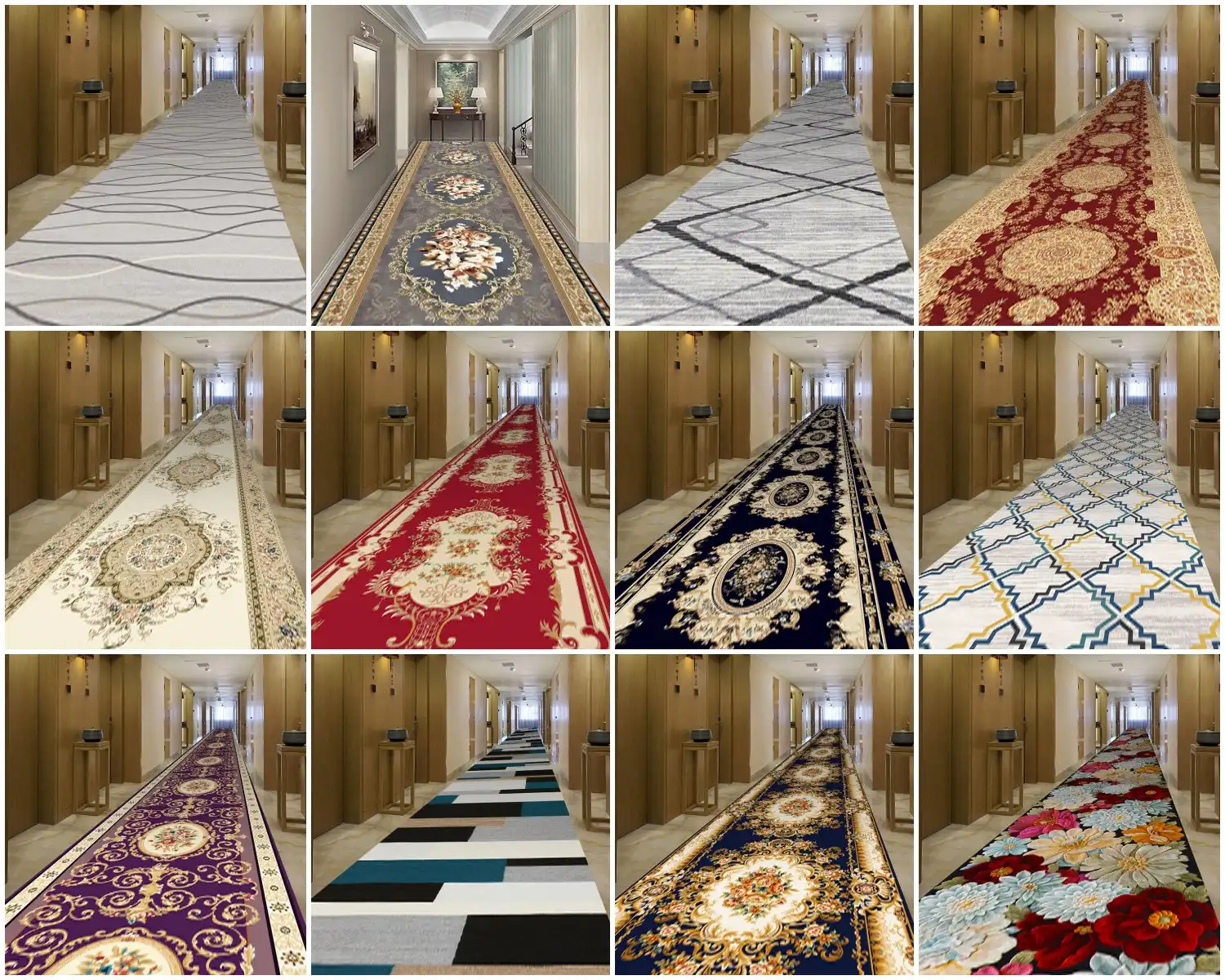
Understanding Persian Rug Hallway Runners: Features and Benefits
Persian-style hallway runners bring hundreds of years of design history into modern homes and businesses. The medallion, Herati, and Boteh patterns are not just pretty to look at; each has cultural meaning that turns a corridor from a place where people pass through to a design statement.
Why Material Selection Matters?
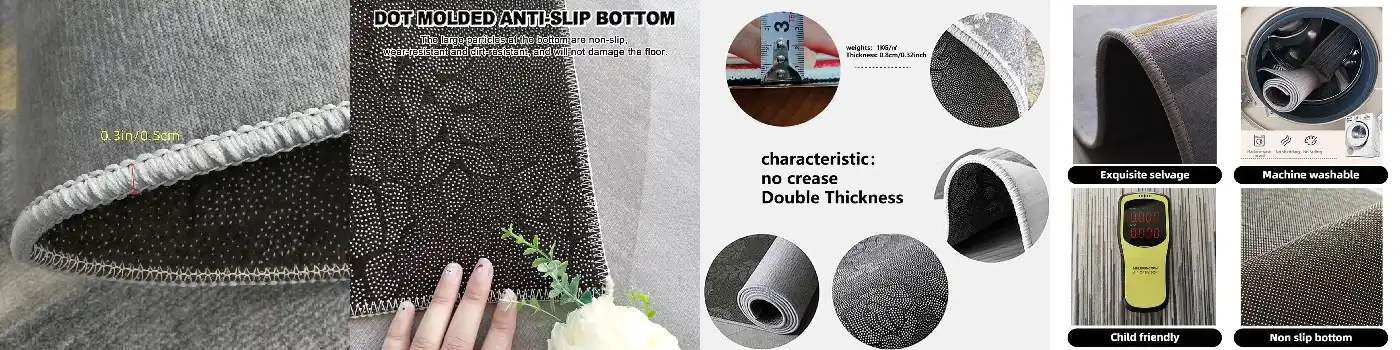
The material profile of a runner directly affects how long it will last in terms of performance. Wool runners naturally last longer and dry faster than other materials, so they are great for areas with a lot of foot traffic. Polyester fibre alternatives, like those made by Aijia, can look as rich as traditional Persian weaving by using high-definition heat transfer printing. They also have measurable practical benefits, like not staining easily, drying quickly, and feeling soft and smooth on your feet. The 5mm pile height keeps doors from sticking on the rug's surface, which is a very useful feature that is very important in office and hotel settings.
Key Product Parameters at a Glance
| Parameter | Specification |
|---|---|
| Surface Material | Polyester |
| Backing Type | Dot Plastic — Non-slip |
| Total Thickness | 5mm |
| Gram Weight | 750–1,100 g/㎡ |
| Production Cycle | 10,000 ㎡/Day |
| Edge Treatment | Edge-locking, Width 0.6cm |
These specs show that the product was made to work reliably in a business setting, not just look cool.
How to Choose the Right Persian Rug Runner for Your Hallway?
When buying a hallway rug, there are more factors to consider than when buying a rug for a room. A structured selection framework keeps your budget and your brand's reputation safe.
Sizing, Pattern, and Traffic Compatibility
It is imperative that the sizes are correct. Standard runner widths are between 60 cm and 90 cm, and custom lengths can be made to fit hallways that aren't exactly the same size as the ones in the catalog. For a persian rug hallway runner, the size of the pattern should match the width of the corridor. Medallion patterns that are too big can look squished in narrow passageways, while geometric repeat patterns naturally adjust to different lengths.
Here are the main things that procurement managers should think about when making decisions:
- Traffic intensity: Places with a lot of foot traffic, like hotel hallways and office thoroughfares, need gram weights in the upper range, between 900 and 1,100 g/㎡, to make sure the structure lasts.
- Backing compatibility: The dot plastic backing doesn't slip on hard floors by itself, so you don't have to buy extra flooring pads.
- Dye and print stability: Heat transfer printing with color-lock technology makes sure that patterns are reproduced consistently across big amounts. This lowers the chance that a large order will be rejected.
- Custom sizing: Laser-cut precision sizing can handle corridors with odd measurements, which is common in historic buildings and small hotels.
All of these factors work together to make a selection grid. By making sure they work with the way your facility is set up, you can avoid costly problems where the product doesn't work as expected in the real world.
Machine-Made vs. Hand-Knotted: A Practical Trade-Off
| Attribute | Hand-Knotted | Machine-Made |
|---|---|---|
| Unit Cost | High | Competitive |
| Batch Consistency | Variable | Uniform |
| Lead Time | 8–16 weeks | 7 days (≤2,000 ㎡) |
| Custom Pattern | Limited | Full (any design) |
| Certifications | Varies | CE, OEKO-TEX, ISO 9001 |
When buying from businesses on a large scale, machine-made runners made with certified production methods have a much better cost-performance ratio than hand-knotted options.

Maintenance and Longevity: How to Clean and Care for Persian Rug Hallway Runners?
To get the most use out of a hallway runner, it needs to be maintained in a way that is compatible with the materials it is made of. Regular suction cleaning works well for polyester fiber runners; a beater-bar adapter is not needed and can speed up pile wear. Spot cleaning with a light, neutral solution will get rid of most stains without having to take the rug off completely.
Commercial Maintenance Protocols
The water-absorbent and quick-drying design of Aijia's runners solves one of the most common maintenance problems in business hallways: water buildup from people walking on them in wet weather. A persian rug hallway runner with a quick-dry fiber design helps prevent bacteria and smelly chemicals from getting into the pile for as long.
In commercial spaces with a lot of foot traffic, it's best to have a professional deep clean every six to twelve months. The stain-resistant treatment on the surface of Aijia runners keeps most liquid spills away from the fibers, which means that professional cleaning isn't needed as often and doesn't cost as much. For building managers who keep track of the total cost of ownership, this means less money spent on care each year.
Comparing Types and Styles: Finding the Best Value Persian Rug Runner
There is a wide range of corridor runners on the market, from antiques that were hand-knotted by skilled artisans to modern ones that were machine-woven to look like they were inspired by Persian design. Procurement officers can more accurately use their budgets when they know where each option lies on the value curve.
Wool, Silk, and Polyester: What the Data Shows
Wool runners are naturally strong and have a high compression recovery rate, which makes them great for areas with medium traffic. Different types of silk have a great balance of shine and softness, but they can get stained and wet easily, which makes them less useful for hallways. This is where polyester fiber, especially high-density machine-woven varieties, comes in handy: it looks warm like wool, doesn't stain as easily as silk, and keeps its shape even when the temperature changes.
The runners from Aijia are made with high-density machine weaving and a gram weight range of 750–1,100 g/㎡. This means that they can be used in homes, hotels, and stores without losing design quality. The pile layer's ability to keep heat in also helps people stay comfortable in cooler temperatures, which is something that buyers in Northern Europe and Canada really like.
Procuring Persian Rug Hallway Runners: Where and How to Buy with Confidence?
Verification of the seller is the first step in reliable buying. Certifications are the best way to tell if a product is safe to buy. For example, CE marking shows that the product is safe for the EU market, OEKO-TEX certification shows that the fibers used are safe, and ISO 9001 shows that the company has a quality management system that checks every batch of production. REACH and EN 1350 certifications show that the product meets EU chemical limits and flame resistance standards, which is very important for people who are buying hotels or commercial projects.
Aijia was founded in 2006 in Tianjin's Wuqing District, which is the center of China's carpet-making industry. They make 10,000 square meters worth of carpets every day and can do both OEM and ODM work. Bulk orders are sent in export-standard roll packaging that is designed to make loading containers as easy as possible. There is also a dedicated customs clearance team to help, which lowers the risk of being held at the port.
The mix of 24–48 hour sample production, flexible MOQ, and 100% pre-shipment inspection removes the main risk factors from the buying choice for procurement managers looking at Persian rug hallway runner suppliers.
Conclusion
To choose the right hallway runner, you need to think about how well the material works, what patterns work best, how easy it is to maintain, and how reliable the supplier is. Designs such as a persian rug hallway runner add cultural depth and visual power to business areas, while modern polyester construction gives B2B buyers the sturdiness and consistency they need. With 20 years of experience, certified quality, and the ability to customize specs, Aijia is a reliable source for procurement workers looking for hallway runners that work in all markets and settings.
FAQ
1. Are Persian-style runners suitable for high-traffic commercial hallways?
Yes, machine-woven polyester runners with gram weights between 900 and 1,100 g/㎡ and PVC dot-backing work well in hotel lobbies, office buildings, and commercial corridors. Their non-slip backing and stain-resistant surface treatment are designed to handle a lot of foot traffic in a straight line.
2. How do I verify product quality before placing a bulk order?
Before agreeing to volume, ask for a real sample. Within 24 to 48 hours, Aijia makes pre-production samples that are an exact copy of the pattern and meet all the specifications. All large packages are inspected before they are sent out.
3. What custom options are available for hallway runners?
You can change the size, color, design, name, and backing weight. Both standard stock designs and custom brand patterns can be used with OEM and ODM services.
4. What is the expected lifespan of a commercial hallway runner?
With regular care, a high-density polyester runner in a business setting should keep its shape and color for three to seven years, though this depends on how much traffic there is and how often the floor is cleaned.
Source Your Next Hallway Runner with Aijia—Built for B2B Scale
With 20 years of export-focused production experience, Aijia is a reputable persian rug hallway runner maker. Our runners are regulated by CE, OEKO-TEX, ISO 9001, REACH, and EN 1350. They also have a flexible MOQ, can be delivered in 7 days for orders under 2,000 ㎡, and can be fully customized for OEM/ODM. You can email our team at sales@aijiarug.com to get samples and bulk pricing that fits your needs.
References
1. Eiland, Murray L., & Eiland, Murray III. Oriental Rugs: A Complete Guide. Bulfinch Press, 1998.
2. Ford, P.R.J. The Oriental Carpet: A History and Guide to Traditional Motifs, Patterns, and Symbols. Harry N. Abrams, 1981.
3. International Wool Textile Organisation. Wool Performance in Commercial Flooring Applications. IWTO Technical Report, 2019.
4. OEKO-TEX Association. OEKO-TEX Standard 100: Testing for Harmful Substances in Textiles. OEKO-TEX Annual Report, 2023.
5. Floor Covering Weekly. Commercial Carpet Specification and Maintenance Benchmarks in Hospitality Environments. Floor Covering Weekly, 2022.
6. Carpet and Rug Institute. Carpet Specification Guide for Commercial Applications. CRI Technical Publication, 2021.
Request fast quotes for bulk carpets, OEM & ODM floor mats, supported by strict quality control and complete supply chain.